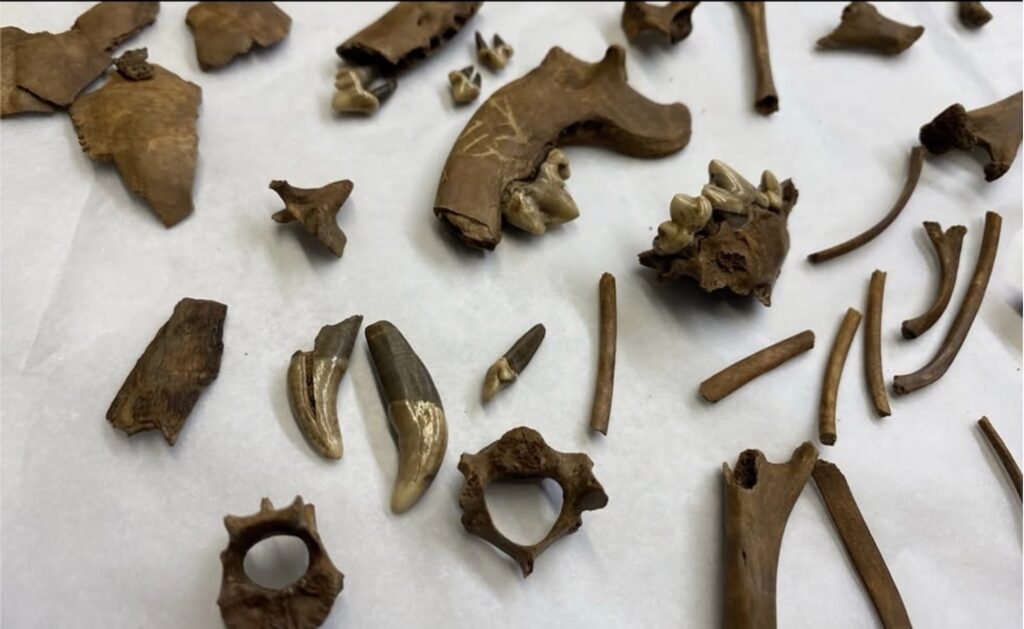
Archaeologists working ahead of a construction project in Spilsby, in eastern England, have uncovered the almost complete skeleton of a small dog that dates to between 40 B.C. and A.D. 60. The find, reported by Lincolnshire World, is notable because the animal appears to have been a household pet kept in a rural setting at a time when such animals were rare outside urban centres.
Lorrain Higbee of Wessex Archaeology, the organisation carrying out the excavation, said the dog could not be matched to any modern breed. Its size and skeletal form, however, point to a companion animal that depended on people for its survival. «While we cannot identify the dog with any modern breed, its size and skeletal form indicate it was a house pet that wouldn’t have survived without human care—a very unusual find in a rural setting of this date,» Higbee said.
The dog’s remains were not the only significant discovery at the site. The excavation also revealed more than 30 Anglo-Saxon graves, together with gold and silver jewellery, pottery and weapons. The combination of a Roman-era lap dog and a later Anglo-Saxon cemetery suggests the location was used over a long period, although the sources do not specify how the two phases relate to one another.
The dating of the dog places it in the late Iron Age or the earliest years of Roman Britain, a period of transition in eastern England. Small companion dogs are known from Roman towns and military sites, but their presence in the countryside is far less common, which makes the Spilsby find unusual for its date and location. The animal’s survival would have required feeding, shelter and protection, implying a close relationship with its owners.
The excavation was conducted ahead of construction work, a standard practice in England where developers are required to fund archaeological investigation before building begins. Such projects frequently uncover burials and settlement traces that would otherwise remain unknown, and the Spilsby site adds to a growing record of dog burials from ancient Britain.
The Anglo-Saxon graves and their contents point to a community with access to precious metals and imported goods. Gold and silver jewellery, pottery and weapons are typical of furnished burials from the period, and their presence at Spilsby indicates a cemetery of some status. The sources do not give the number of individuals buried or the precise age of the graves.
Wessex Archaeology has not announced further analysis of the dog’s bones, and it is not yet clear whether isotopic or DNA testing will be carried out. Such studies could shed light on the animal’s diet, its geographic origin and its relationship to modern dog populations. For now, the skeleton stands as a rare physical trace of a pet kept by people in rural eastern England two millennia ago.
9