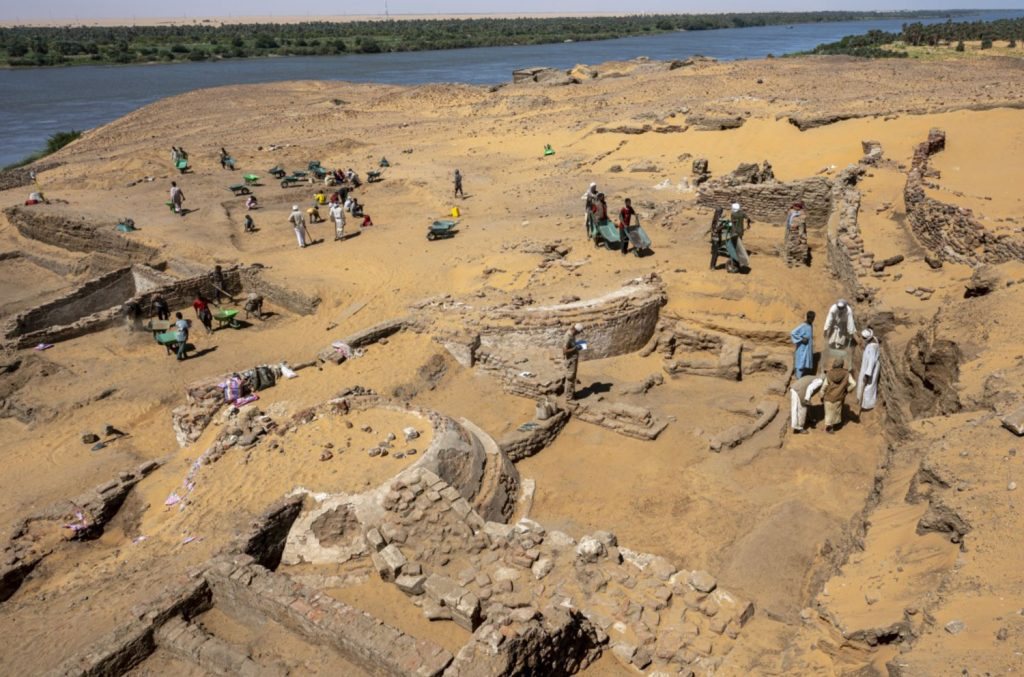
Czech archaeologists have located the tomb of an Egyptian official named Khuwy in the Saqqara cemetery, near Cairo. The burial place, which dates to about 2400 B.C., surrounds the pyramid of the pharaoh Djedkare Isesi, and the find adds a personal voice to one of the oldest periods of royal burial in Egypt.
Although the upper part of the tomb has largely disappeared, the inscribed wall blocks survived. They are among the oldest known examples of decorated underground burial apartments, and they preserve a biography of Khuwy's career and achievements. In the text, he states that he never took property from anyone and says he served under six different administrative courts.
The inscriptions also name King Djedkare and Queen Setibhor. The passage is fragmentary, so the exact nature of Khuwy's relationship with the royal family is not clear; the text only implies a connection. Much of the wording is incomplete or illegible, and the original form of the tomb's upper structure remains unknown.
The quality of the stonework suggests that a royal workshop produced the decoration, which points to the high status of the official. A closing passage warns anyone against harming the tomb or the people buried in it, a common feature of Egyptian funerary texts meant to protect the burial. Further study of the blocks may clarify the gaps in the record.
Credit. Based on reporting by Jason Urbanus for Archaeology Magazine. Is this your work? Write to us.
77