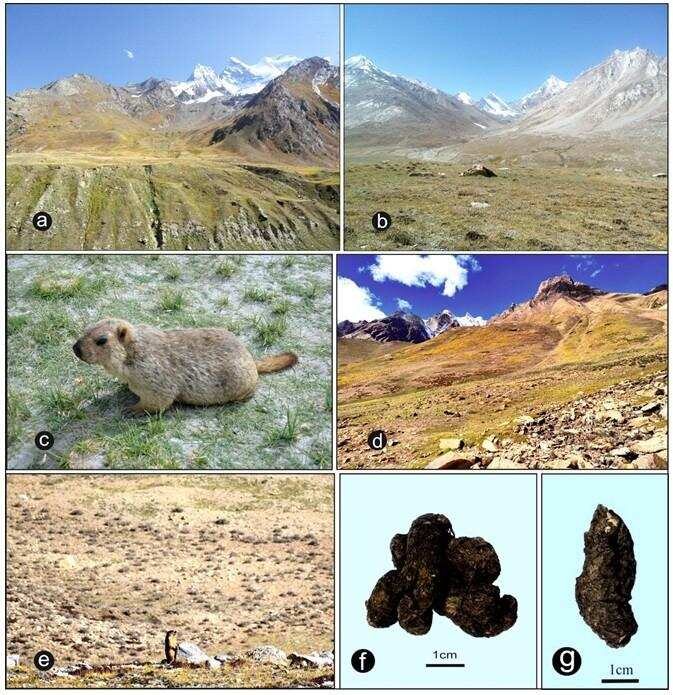
Scientists are looking at an unlikely source of environmental data: the droppings of the Himalayan marmot. Because these animals live year-round in high-altitude habitats, their feces carry chemical and biological traces of what they eat and the land they inhabit, offering a way to read changes in the mountain environment over time.
The approach treats the marmots as natural recorders. As their diet shifts with the vegetation around them, the droppings may reflect changes in alpine plant communities, which are themselves sensitive to rising temperatures and altered rainfall. Analyzing the samples could therefore provide indirect evidence of how the landscape is responding to a warming climate.
The work matters most in remote parts of the Himalayas, where direct weather monitoring is sparse. Conventional climate records are thin across much of this terrain, leaving gaps in understanding how quickly conditions are changing and how local ecosystems are reacting. A biological archive that operates in these places could fill some of those gaps at relatively low cost.
Significant uncertainties remain. It is not yet clear how reliably the signals found in marmot droppings track actual climate trends, and the method will need to be validated against established climate data before it can be used with confidence. Researchers will have to confirm that the patterns they detect genuinely reflect environmental change rather than short-term variation in diet or local conditions.
Credit. Based on reporting for Environment News, Earth News, Global Warming, Wild Life, Carbon Trading, Climate Business, Climate Change & Pollution Ne. Is this your work? Write to us.
19