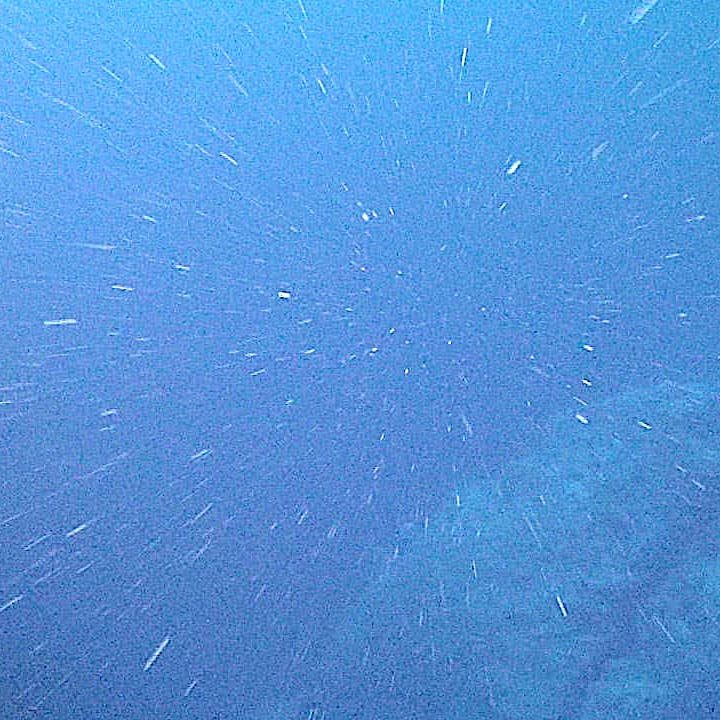
Tiny bits of organic material drifting through the ocean, often called marine snow, play a larger role in the climate system than many people realize. New research shows that how sticky these particles are can make a major difference in how much carbon they carry down into the deep sea, where it can stay out of the atmosphere for long periods.
According to the reporting, the researchers found that stickier particles are more resistant to being broken down by bacteria during their descent. That resistance allows them to keep sinking, and in the study's comparison, the gooier particles could carry more than six times as much carbon to depth as less sticky ones. The finding links the ocean's slime directly to processes that affect the global carbon cycle.
The reporting describes the work as a discovery about the mechanics of deep-sea carbon transport rather than a measurement of its overall scale. The article provides no measured figures beyond the six-fold comparison, so how much this effect matters across the entire ocean has not yet been quantified. The story was published by ScienceDaily in November 2026, and the research institution and study authors are not named in that account.
The work adds to a growing understanding that the ocean's biological particles are not simply passive debris. Because carbon that reaches the deep sea can remain there for extended periods, the behavior of marine snow is a factor scientists consider when thinking about how the ocean absorbs carbon dioxide from the air.
Credit. Based on reporting for ScienceDaily. Is this your work? Write to us.
8