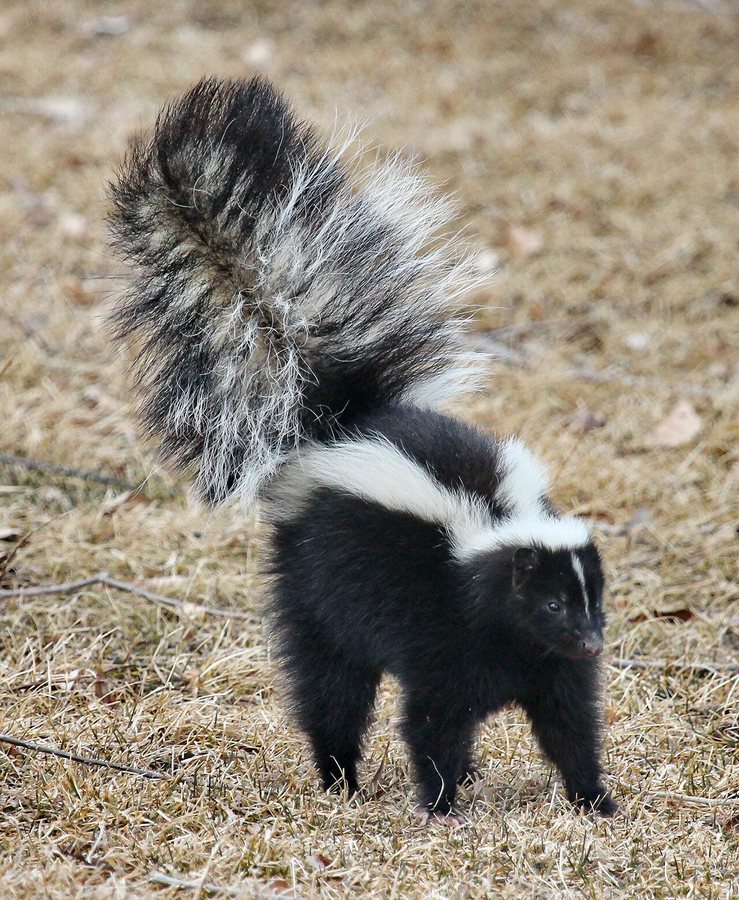
When a skunk begins stomping its front feet, it is not performing a harmless dance. It is issuing a final warning before deploying its notorious chemical defense. Wildlife experts say that recognizing this signal can be the difference between a close encounter and a direct hit.
Skunks are equipped with two anal glands that produce a sulfurous, oily spray. The animals can aim this spray with surprising accuracy at targets up to several feet away. Before spraying, however, they typically run through a sequence of escalating warnings. These include raising their tail, hissing, and stomping their feet. The stomp is often the last clear cue before the spray is released.
According to wildlife specialists, the stomping behavior serves as a visual and auditory threat. It signals that the skunk feels cornered or threatened and is prepared to defend itself. If a person or animal sees a skunk stomping, the best response is to slowly back away without making sudden movements or loud noises. Trying to scare the skunk or approaching it further almost guarantees a spray.
Skunks are nocturnal and generally non-aggressive. They prefer to avoid conflict and will usually flee if given the chance. Their spray is a last resort, because producing the chemical is metabolically costly and leaves the skunk vulnerable for a short time. The stomping warning gives potential threats a chance to retreat, which benefits both parties.
The spray itself is a mixture of thiols, the same compounds that give garlic and onions their pungent smell. These thiols bind to skin and clothing and are notoriously difficult to remove. Common home remedies like tomato juice are ineffective; experts recommend a mixture of hydrogen peroxide, baking soda, and dish soap. The spray can also cause temporary blindness if it gets in the eyes, and it can trigger nausea or respiratory irritation in sensitive individuals.
For pet owners, a skunk encounter is a common summer hazard. Dogs are frequently sprayed because they investigate skunks too closely. If a pet is sprayed, it should be kept outside to avoid contaminating the house, and the eyes should be flushed with water. The hydrogen peroxide mixture should be applied promptly, followed by a thorough rinse.
Wildlife officials emphasize that skunks play an important role in ecosystems. They eat insects, small rodents, and carrion, helping to control pest populations. They are also resistant to snake venom, which allows them to prey on venomous snakes. Despite their reputation, skunks are beneficial and generally avoid human contact unless provoked.
The stomping warning is part of a broader repertoire of defensive behaviors. Other animals, including some rodents and birds, also use foot-stomping to signal alarm. But the skunk's stomp is uniquely associated with the imminent threat of a chemical spray. Recognizing it can prevent a painful and malodorous experience.
As human development encroaches on natural habitats, encounters between people and skunks are becoming more frequent. Experts advise securing trash cans, removing pet food from outdoors, and sealing off crawl spaces under decks and sheds. These measures reduce the likelihood of skunks denning near homes. If a skunk is spotted, the safest approach is to give it plenty of space and let it move on.
In the end, the skunk's stomp is a clear message: back off. Heeding that warning is the best way to avoid the animal's infamous defense and to coexist peacefully with a species that would rather be left alone.