Deep inside the Earth, slow currents in the mantle may have pushed up whole continents for hundreds of millions of years, helping to explain one of geology's most stubborn puzzles: a missing chunk of the rock record known as the Great Unconformity. A study published in the journal Nature by Nicolas Flament of the University of Wollongong and Santosh Dhungana offers a new explanation for how that gap came to be.
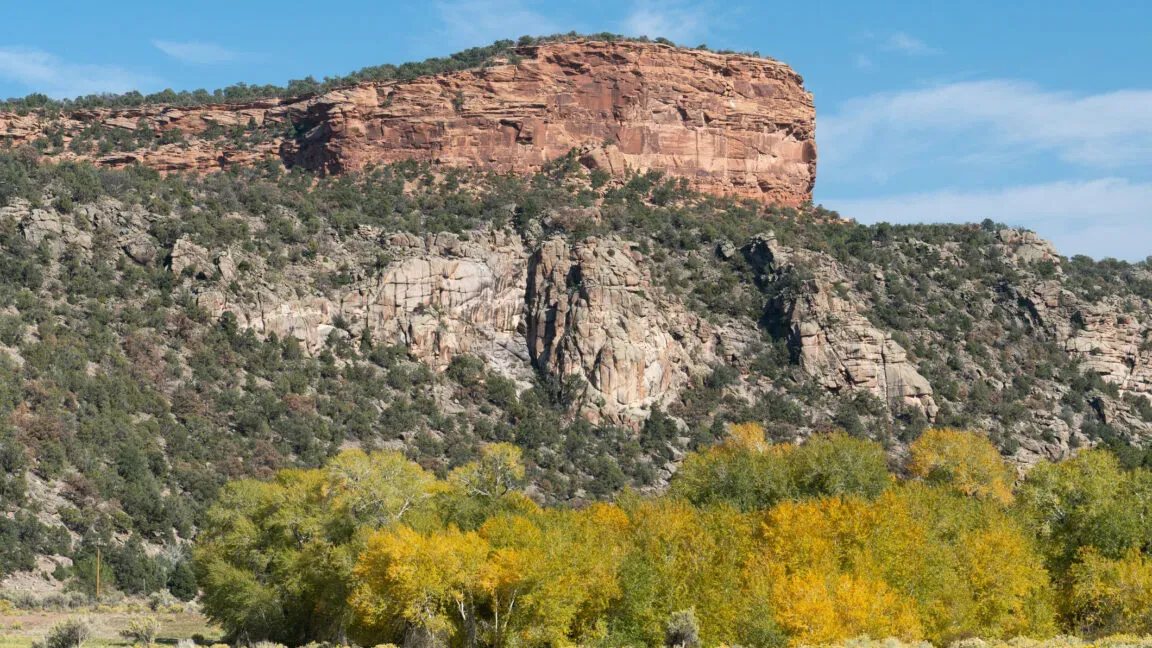
The Great Unconformity is most visible at the Grand Canyon, where ancient crystalline rocks sit directly beneath Cambrian-era sandstones. Between them lies a span of time that can stretch from roughly 200 million years to more than a billion, depending on location. The gap appears across most of North America and in parts of northern Europe and China, making it a global feature of the geological record that scientists have struggled to account for.
For years, the leading explanation has pointed to Snowball Earth, a period of severe glaciation between about 720 and 635 million years ago. But that idea runs into trouble because the gap is patchy rather than worldwide, and it does not fit neatly with the glacial timing. Rifting and falling sea levels have also been considered, though neither seems able to account for the pattern on its own.
Flament and Dhungana take a different approach. Their models suggest that slow convection in the mantle gradually lifted large areas of continental crust, and in most simulations the core of North America, known as Laurentia, rose and then sank between roughly 930 and 510 million years ago. Uplift alone, however, would not remove enough rock. The researchers argue that glaciers then eroded the elevated land, stripping away material before the continent subsided and new sediments buried the surface.
The work relied on six mantle-convection simulations spanning one billion years, combined with tectonic reconstructions. The authors acknowledge real limits. The starting arrangement of the continents is uncertain, and paleomagnetic data can indicate latitude but not longitude, which could place some landmasses in the wrong positions. Perhaps the most important open question is why only one such unconformity formed across the globe, a point the study does not fully resolve.
Credit. Based on reporting by Noti Group for Noti Group. Is this your work? Write to us.
23