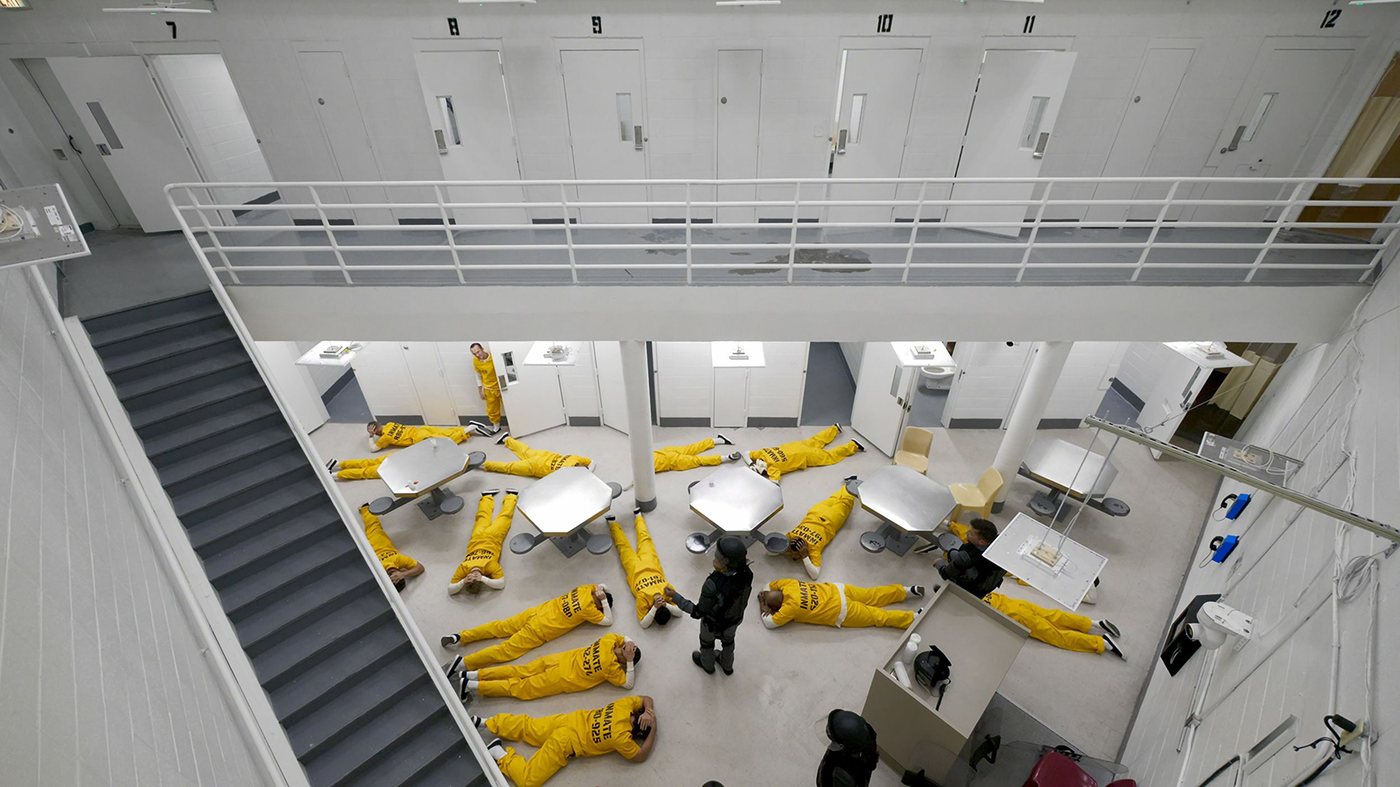
A new Netflix series is bringing the Stanford Prison Experiment back into public view, reviving scrutiny of one of psychology's most famous and most contested studies. Organized by American psychologist Philip Zimbardo in 1971, the experiment placed college students in a mock prison in a Stanford University basement and has shaped popular ideas about authority and human behavior for more than five decades.
The study recruited 24 male college students from more than 70 respondents to a newspaper advertisement seeking participants for «a psychological study of prison life.» The men were randomly assigned to roles as prisoners or guards. Zimbardo, who died in 2024, served as the prison's superintendent, observing and recording the proceedings.
At the center of the work was a question about good and evil. Catherine Sanderson, the Poler Family Professor of Psychology at Amherst College and a former student of Zimbardo's, said the researcher wanted to understand whether ordinary people would give and follow orders when placed in a particular environment. «What he wanted to show is that normal people can do horrible things,» Sanderson said. She was not involved in the experiment.
The study was designed to run for up to two weeks but was halted after six days. According to the official account, one prisoner showed signs of a mental breakdown within 36 hours, and a rebellion broke out on the second day. Guards responded by spraying fire extinguishers, stripping prisoners naked and confining them in a dark closet known as «the hole.» Three inmates were released within the first four days after showing distress.
The experiment unfolded amid real-world unrest over prison conditions. Weeks after it ended, a deadly uprising at Attica Correctional Facility in New York left 43 people dead and drew media attention to Zimbardo's work, pushing it beyond academia and into broader public debate.
Over the years, the study's reputation has shifted sharply. Once treated as an unprecedented window into human psychology, it is now widely criticized for its methods and conclusions. Sanderson said understanding of the events has evolved considerably, with ethical challenges raised alongside questions about whether the behavior occurred spontaneously or was directed by Zimbardo.
Audio and video recordings from the experiment, along with post-study interviews, later showed that Zimbardo influenced the outcome by interacting with participants, coaching guards and preventing some inmates from leaving when they first asked. Sanderson described the experimenter's deep involvement as a major problem. «One of the hallmarks of good experimental design is that we don't have the experimenter in charge of the study interacting with the participants,» she said.
The study was partly conceived as a follow-up to obedience experiments by American psychologist Stanley Milgram in the early 1960s, in which 65% of participants continued delivering what they believed were painful electric shocks to an unseen person. Both studies would face serious obstacles under modern ethical rules because of deception, psychological harm, conflict of interest and incomplete informed consent.
In the Stanford study, prisoners were arrested at their homes by local police without knowing the study would begin that way. They underwent strip searches and wore loose smocks without underwear, with nylon stockings over their heads to simulate shaved hair. Guards wore uniforms and mirrored sunglasses to avoid eye contact and were given wooden batons with instructions not to physically harm prisoners.
The experiment ended after Christina Maslach, then a recent Stanford graduate in social psychology who later married Zimbardo, visited the prison and was horrified by what she saw. Zimbardo stopped the study the next day. The Netflix series now returns audiences to the central question: whether the study revealed something fundamental about authority or whether its methods helped produce the behavior it became famous for.
13