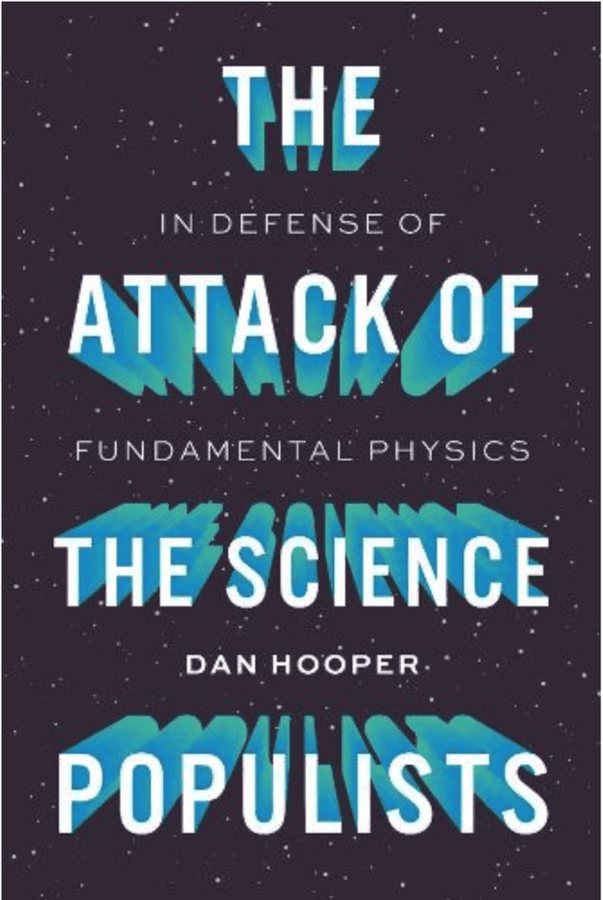
A growing wave of criticism aimed not at specific scientific theories but at the scientists and institutions that produce them poses a serious threat to physics and to rational expertise, according to physicist and cosmologist Dan Hooper of the University of Wisconsin, Madison. In his forthcoming book, The Attack of the Science Populists: In Defense of Fundamental Physics, to be published by Harvard University Press in early 2027, Hooper describes what he calls «populist physics» — a narrative that portrays contemporary physics as stagnant, dishonest, and driven by misaligned incentives.
Hooper first encountered this narrative at a family gathering, when a well-educated relative told him that dark matter — his own life's work — had been proven not to exist and that his field was full of dishonest people motivated only by money. Colleagues reported similar experiences. Some believers in this narrative, Hooper found, were angry enough to threaten him and his colleagues with violence.
The critics Hooper identifies range from podcasters and YouTubers who use their fame to make sensationalist claims, to figures with no scientific credentials at all, such as the actor Terrence Howard, who promotes a personal theory he calls «Terryology» and even asserts that 1 x 1 = 2. Others, like former academic theoretical physicist Sabine Hossenfelder, now a popular YouTuber, do have scientific credentials. Hooper accuses her of claiming that scientists working on supersymmetry are guilty of scientific malpractice, assertions he says have little to do with reality. He also targets venture capitalist Eric Weinstein, who holds a PhD in mathematics but uses popular podcasts to attack contemporary theoretical physics and promote an evidence-free «theory of everything» called «Geometric Unity».
According to Hooper, these influencers claim that theoretical physics is stagnant and riddled with blind spots, biases, and misaligned incentives created by the dishonesty and opportunistic behavior of researchers. Such attacks, he writes, are amplified by social media, videos, and podcasts, amounting to carefully orchestrated and highly effective campaigns of science populism that reach increasingly large audiences. Most of Hossenfelder's YouTube videos, for instance, have hundreds of thousands of views.
What makes these attacks new, Hooper argues, is that they are directed not against specific theories but against the scientists and institutions of science themselves. He calls this a global threat not only to physics but to expertise and rational behavior more broadly. Others have noticed the trend as well. In the Wall Street Journal, science writer Dan Kagan-Kans has labeled it «conspiracy physics,» while University of Rochester astrophysicist Adam Frank wrote in the New York Times about conspiracy-tinged mazes rooted in misinformation emitted by the «manosphere.»
Hooper's book, despite its title, is a popular-science work that distinguishes itself by explaining contemporary physics while also emphasizing its failures. Physicists had hoped for great things from the Large Hadron Collider, for example, but those hopes have not been fully realized. The book offers a staunch defense of science and of the integrity of the profession.
The question of how to respond to populist physics remains open. One approach is to ignore or laugh off the critics, as many physicists do. But ignoring exaggerated and wrongheaded opinions can encourage them and may be read as an implicit admission of guilt. It also tolerates scientific illiteracy in ways that can ultimately affect political support for the field.
A second response is to engage opponents on their own rhetorical turf, becoming as aggressive and polemical as they are. A recent podcast confrontation between theoretical physicist Sean Carroll and Eric Weinstein, billed as a «fight club,» exemplifies this approach. While it can be inspiring to see a scientist stand his ground, most researchers are not equipped for such brawls, and losing in that arena can be costly.
A third response, which Hooper's book takes, is to sigh and give an earnest account of what scientists are doing and why, emphasizing the integrity of the profession and acknowledging both accomplishments and failures. Whether that approach can counter the rising tide of populist physics is a question the field will have to answer in the coming years.
7