
Scientists have achieved a significant breakthrough in tracking space debris by successfully using radio telescopes to monitor the growing population of objects in Earth orbit. The technique, which some experts had previously dismissed as impractical, has now been validated through actual observations, opening new possibilities for managing the increasingly congested orbital environment.
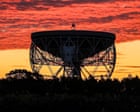
Radio telescopes, typically employed to study distant galaxies, pulsars, and cosmic phenomena, have proven capable of detecting and tracking relatively small pieces of debris that conventional radar systems often miss. By leveraging the extreme sensitivity of these instruments, researchers can bounce signals off debris fragments and precisely measure their positions and trajectories. This capability is critical because even tiny fragments, measuring just a few centimeters across, carry enough kinetic energy to severely damage or destroy active satellites and spacecraft.
Space debris has become a pressing concern for space agencies and commercial operators alike. Thousands of tons of material — including defunct satellites, spent rocket stages, and fragments from collisions — now circle the planet at high velocities. The risk of cascading collisions, known as Kessler syndrome, grows with each new piece added to the debris belt. Improved tracking is essential to predict close approaches and perform collision avoidance maneuvers, protecting both crewed missions and valuable infrastructure such as communication and navigation satellites.
The recent success stems from what was initially considered a « crazy idea » within the scientific community. Skeptics argued that radio telescopes were too specialized and that the faint signals from small debris would be drowned out by noise. However, through careful calibration and innovative signal processing techniques, the team demonstrated that these instruments can reliably detect objects that are otherwise invisible to standard radar networks. The findings represent a proof of concept that could be scaled up into a global monitoring system.
One of the key advantages of using radio telescopes is their existing infrastructure. Many large radio observatories are already distributed across the globe, and with relatively modest modifications, they could be enlisted for routine debris surveillance. This approach would complement existing radar-based systems, filling gaps in coverage and improving detection of smaller debris at higher altitudes. Collaboration between astronomical institutions and space agencies could accelerate deployment of such a network, providing real-time data to satellite operators.
Looking ahead, researchers plan to integrate automated data analysis and artificial intelligence to handle the vast streams of observational data that a network of radio telescopes would produce. Machine learning algorithms could quickly identify debris tracks, distinguish between different types of objects, and issue alerts for potential collisions. The scientific community has welcomed the advance as a practical, cost-effective solution to an urgent problem that threatens the long-term sustainability of space activities.
While the technique is still in its early stages, the successful demonstration marks an important step toward more comprehensive space situational awareness. As the number of satellites in low Earth orbit continues to surge — driven by mega-constellations for internet and Earth observation — the ability to monitor even small debris becomes increasingly vital. With further refinement, radio telescopes could become a standard tool in the global effort to keep Earth's orbits safe and accessible for future generations.