SpaceX is preparing to attempt something it has never done before: catching a Starship upper stage returning from orbit using the giant mechanical arms at its Starbase launch site in south Texas. The so-called chopsticks, a pair of arms mounted on the launch tower, are designed to grab the rocket as it descends, letting the company recover the vehicle without landing legs and reuse it.
The upper stage is expected to circle Earth about 14 times before heading back toward the tower. The full orbital loop lasts roughly 22 hours. Starship stands about 407 feet tall, making it the largest rocket ever built, and the company hopes that a successful recovery will bring its design closer to routine reuse, a goal that underpins its long-term plans.
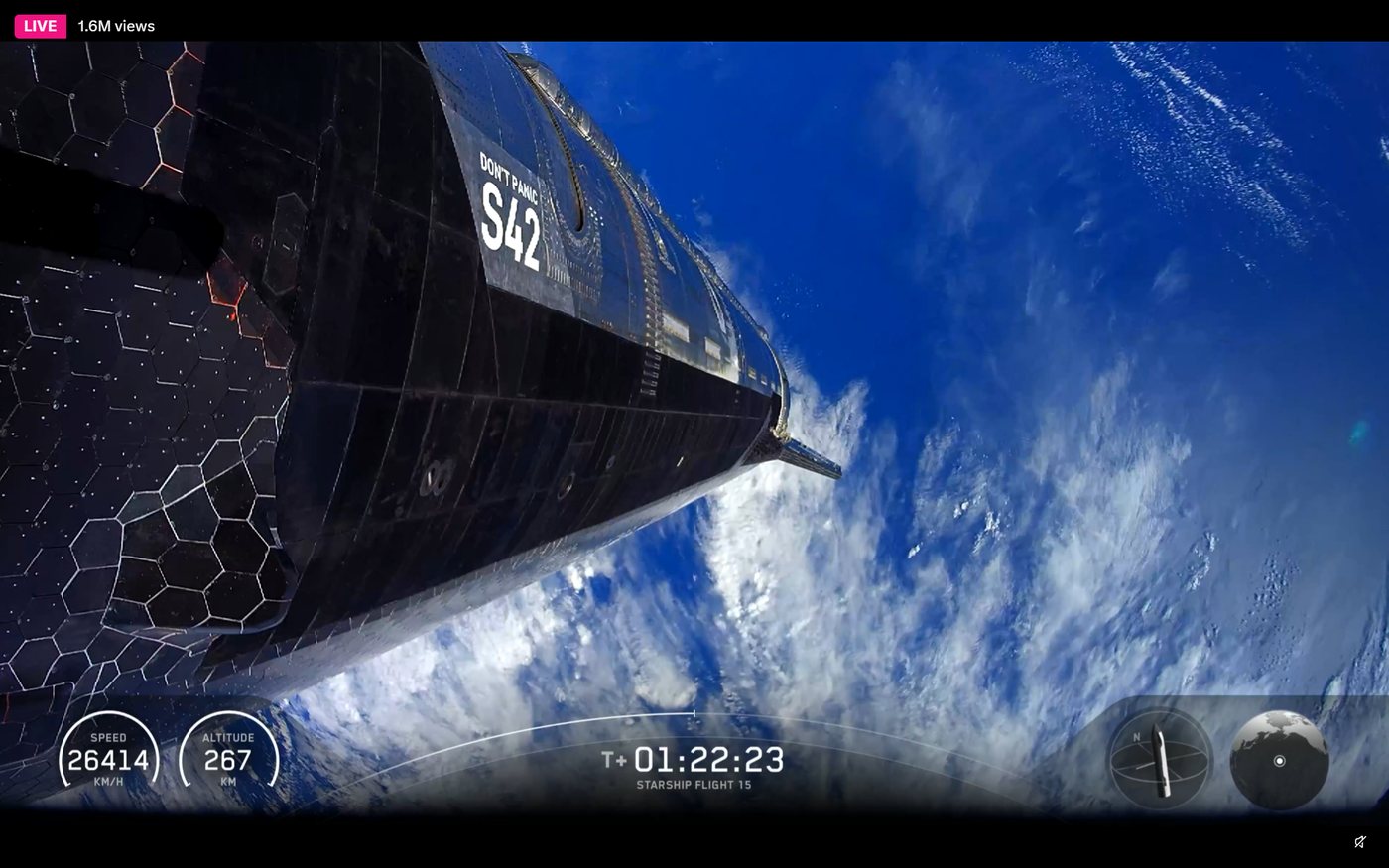
The attempt follows a setback during the Friday launch of Flight 15 from Texas, when SpaceX tried for a double catch. The booster catch failed and the booster fell into the ocean, and the double catch ultimately fell short, according to a Guardian report. Today's orbital catch is therefore the second try in quick succession, and it will test whether the arms can handle a returning upper stage rather than the heavier booster.
The outcome of today's attempt has not been confirmed in the available reporting. SpaceX typically streams its test flights publicly, and the result will determine whether the chopsticks method can move from experiment to a regular part of Starship operations.
Credit. Based on reporting by Mike Wall for Space.com. Is this your work? Write to us.
7