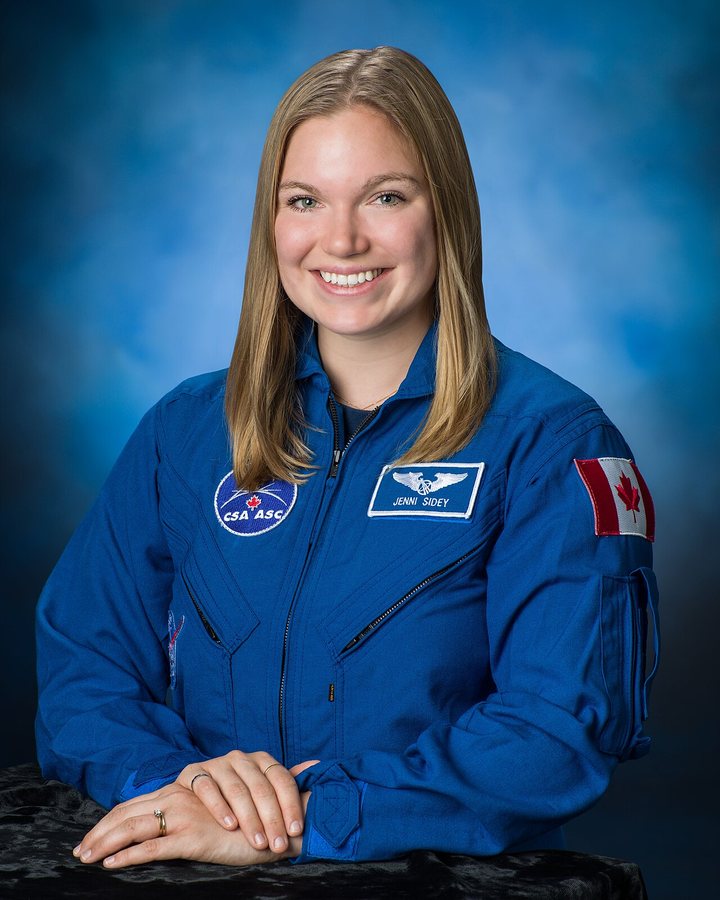
Canadian astronaut Jenni Gibbons is in the thick of preparations for Artemis II, the mission that will send four astronauts around the Moon and back, marking the first crewed lunar flight since the Apollo era. In a wide-ranging discussion of her training, Gibbons described the demanding regimen that prepares crews for the risks and complexities of deep-space travel, from spacecraft systems and emergency procedures to the physical conditioning needed for a journey beyond low Earth orbit.
Gibbons, who serves as a backup crew member for the mission, has been immersed in simulations and technical instruction alongside the primary crew. Her role requires mastering the Orion spacecraft's operations, practicing contingency scenarios, and building the teamwork that becomes critical when a crew is millions of kilometers from home. The training reflects the layered approach NASA and its partners are taking as they move from the uncrewed Artemis I test flight toward missions that will eventually return humans to the lunar surface.
Artemis II is designed as a crewed flyby rather than a landing, a stepping stone that will validate life-support systems, communications, and navigation under real deep-space conditions. Gibbons framed the mission as part of a longer arc that includes the lunar Gateway station and future surface expeditions. The experience gained on the flyby, she suggested, will inform the hardware and procedures needed for sustained operations at and around the Moon.
The astronaut also spoke about the international character of the program. Canada's participation through the Canadian Space Agency has secured a seat on the mission and a role in developing technologies such as the Canadarm3 robotic system planned for Gateway. For Gibbons, that partnership is not symbolic: it places Canadian expertise at the center of a multinational effort to establish a durable human presence beyond Earth orbit.
Beyond the technical dimensions, Gibbons addressed the human side of exploration. She described the psychological preparation crews undergo, the importance of communication and trust within a small team, and the perspective that comes from training for a mission whose trajectory will carry astronauts farther from Earth than any person has traveled in more than half a century. Those lessons, she noted, extend to how agencies select and support crews for increasingly long and isolated missions.
Gibbons also emphasized the scientific value of lunar exploration. The Moon preserves a record of the early solar system, and renewed study of its surface and environment could sharpen understanding of planetary formation and the conditions that shaped Earth. Crewed missions, she argued, allow researchers to make real-time decisions and adapt experiments in ways robotic probes cannot, complementing the data returned by orbiters and landers.
Looking ahead, Gibbons described Artemis as a framework for the next era of exploration rather than a single event. The program's cadence of missions, its reliance on commercial and international partners, and its focus on building infrastructure at the Moon all point toward a sustained campaign. For the astronauts in training, that means preparing not just for one flight but for a career defined by repeated journeys and evolving hardware.
Her remarks come as the Artemis program moves through a critical phase of testing and integration. Each milestone, from crew training to spacecraft assembly, feeds into a schedule that aims to carry humans back to the lunar vicinity and eventually to the surface. Gibbons's account offers a window into the preparation behind those headlines: long hours of simulation, careful attention to procedure, and a clear-eyed understanding of the risks involved in pushing human spaceflight outward once again.
11