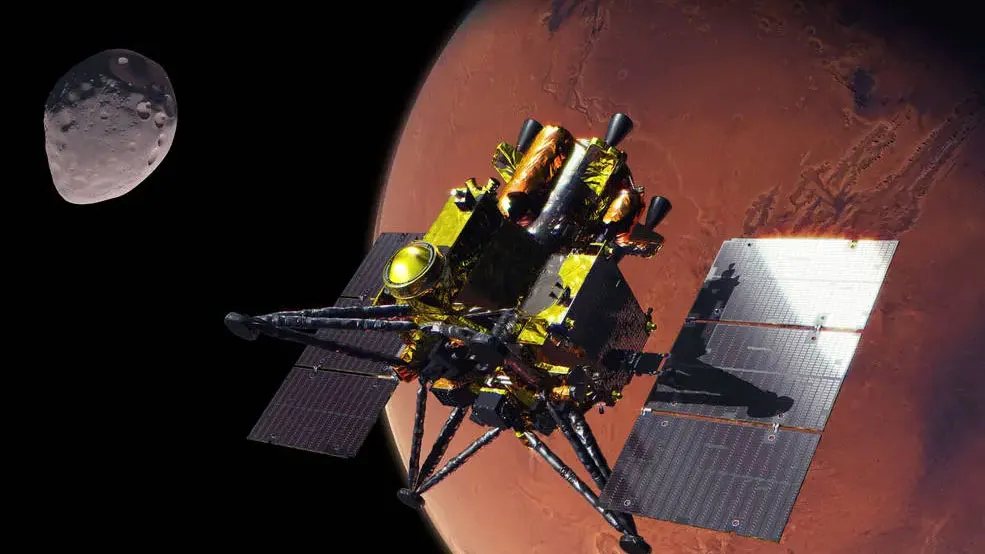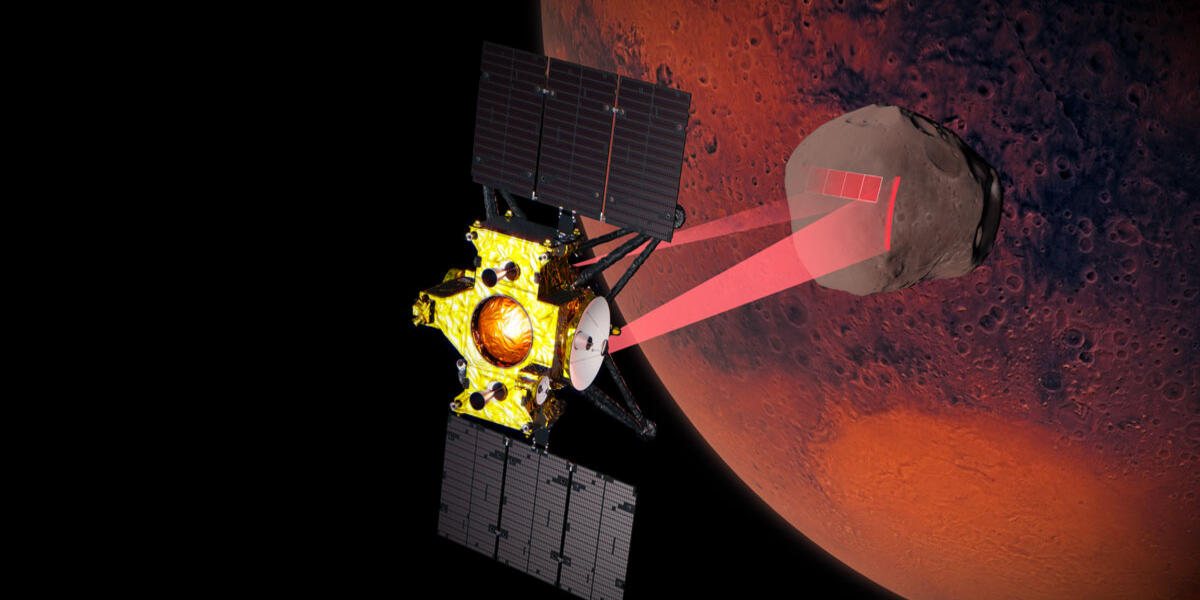
Japan has launched an ambitious sample-return mission to Phobos, one of the two small moons orbiting Mars, with the goal of bringing back the first pristine material from the Martian system. The MMX spacecraft lifted off on October 19, beginning a multi-year journey that will culminate in a brief touchdown on the irregular, cratered moon and the delivery of a capsule to Earth.
The mission is led by the Japan Aerospace Exploration Agency, known as JAXA, and represents the first attempt by any nation to visit the moons of Mars. Unlike previous Mars missions that have studied the planet from orbit or from its surface, MMX is designed to touch down on Phobos, collect surface material, and return it for laboratory analysis. Scientists hope the samples will shed light on the origin of the Martian moons and, potentially, on the early history of the solar system.
A central element of the mission is a small French-built rover named Idefix, weighing about 23 kilograms. It is designed to become the first rover to land on a Martian moon. Because Phobos has extremely weak gravity, the rover faces an unusual challenge: it must be able to fall, bounce, right itself, and then continue exploring. Idefix will act as a scout for the main spacecraft, testing the terrain and gathering data before the sample collection attempt.
The MMX mission is not only a Japanese endeavor. The French space agency CNES and other European partners are contributing to the project, reflecting a broader international interest in the exploration of Mars and its moons. The rover's development has been closely followed by researchers who see it as a technological proving ground for operating in microgravity environments on small bodies.
Phobos and its companion Deimos are thought to be either captured asteroids or debris left over from a giant impact on Mars. The samples returned by MMX could help settle that debate. If the material matches the composition of Martian surface rocks, it would support the impact theory; if it resembles certain types of asteroids, it would point to a captured origin. Either way, the samples would provide a new window into the processes that shaped the inner solar system.
The mission also carries the possibility of collecting material that originated on Mars itself. Dust and debris ejected from the Martian surface by ancient impacts may have settled on Phobos over billions of years. If such material is present in the samples, scientists could study pieces of Mars without the cost and complexity of a full Mars sample-return mission.
MMX is expected to arrive in the Martian system in the coming years, spend time surveying Phobos, and then attempt its landing and sampling operations. The spacecraft will then depart for Earth, releasing a reentry capsule containing the collected material. If successful, Japan would become the first country to return samples from a Martian moon, adding to its growing record of asteroid sample-return achievements.
The launch marks a significant moment for planetary science, as interest in the Martian moons has grown in recent years. Both Phobos and Deimos are considered potential stepping stones for future human exploration of Mars, and detailed knowledge of their surfaces and composition could inform mission planning. For now, the MMX team is focused on the long cruise ahead and the delicate operations that will follow.
11