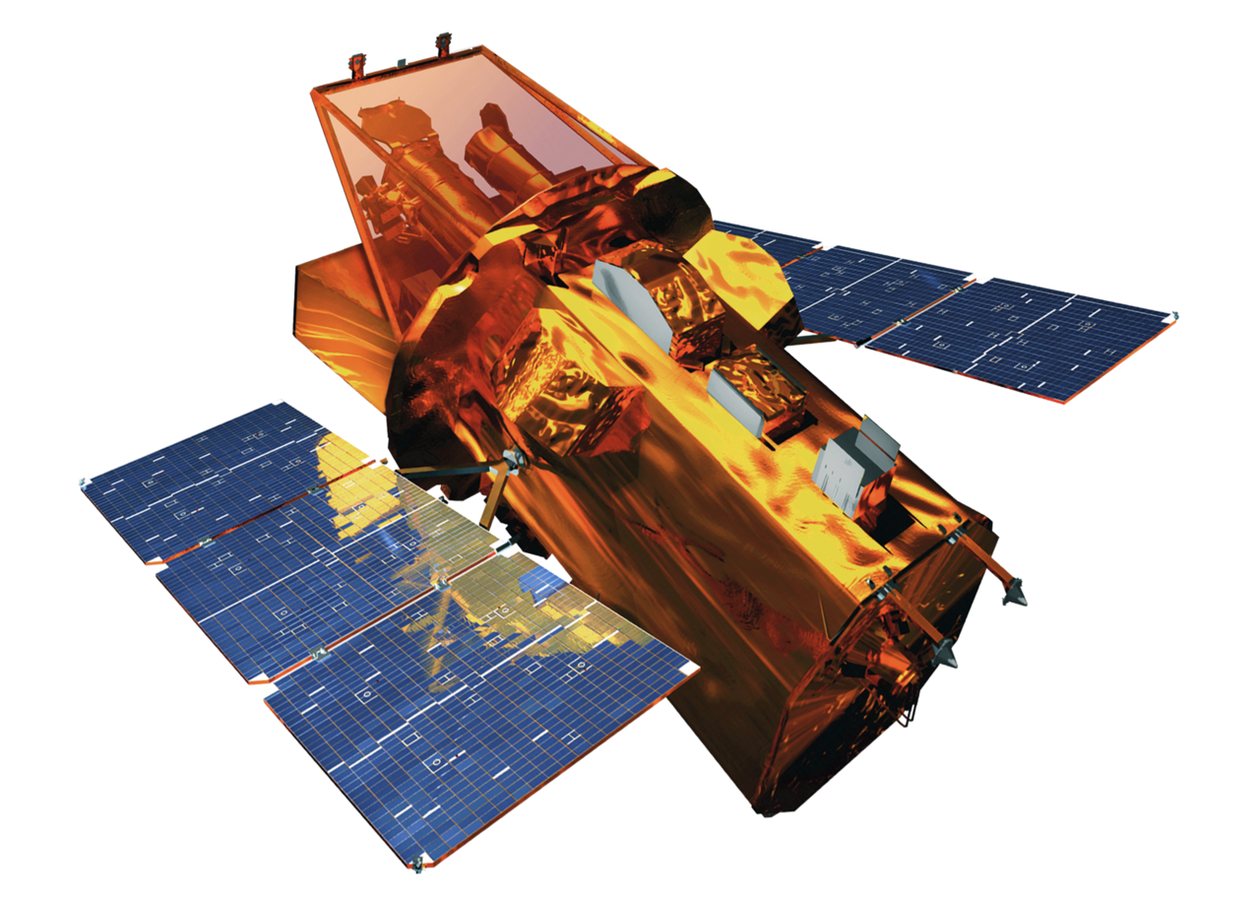
NASA's Neil Gehrels Swift Observatory, a space telescope that spent two decades studying some of the most violent events in the universe, reentered Earth's atmosphere on Wednesday over western Indonesia, near North Sumatra. The agency expected most of the spacecraft to burn up during descent, though some fragments may survive to reach the ground.
The reentry occurred at 7:39 a.m. Eastern Time, about 12:39 UTC. The U.S. Space Force had forecast a window of 6:42 to 8:42 a.m. Eastern, and the observatory came down roughly in the middle of that span. NASA estimated the risk of harm to anyone on the ground from surviving debris at about 1 in 2,100.
Swift launched in November 2004 from Cape Canaveral aboard a Delta 2 rocket. It was designed to operate for two years, but it kept working for more than twenty. During that time it observed more than 2,000 gamma-ray bursts, brief and intense flashes of high-energy radiation that signal some of the universe's most powerful explosions, and studied over 1,400 supernovae. The data it collected have supported roughly 7,000 scientific papers.
The spacecraft's end came after it lost altitude faster than expected. Swift carried no engine that could correct its path, and drag increased as solar activity caused the upper atmosphere to swell. To counter this, NASA paid Katalyst Space $30 million for a robotic capture tug designed to grab the observatory and raise its orbit. The tug launched on July 3, but weeks later it lost control of its orientation, and NASA cancelled the capture attempt on August 19.
Swift made its final scientific observation on October 20, while flying at about 171 miles above the planet. Its reentry marks the close of a mission that outlasted its planned lifespan by a wide margin and left a large body of research behind it.
Credit. Based on reporting by Houston Harwood for Spaceflight Now. Is this your work? Write to us.
79