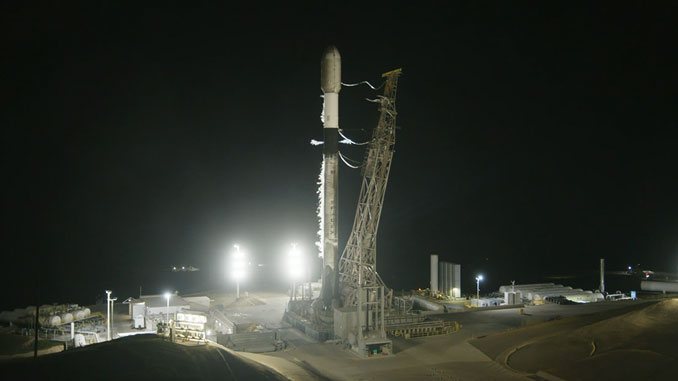
A SpaceX Falcon 9 rocket launched a batch of intelligence-gathering satellites for the National Reconnaissance Office early Sunday from Vandenberg in California. Liftoff came at 4:23 a.m. Pacific time under the mission designation NROL-136, adding more spacecraft to the agency's proliferated satellite constellation.
The launch also rewrote the record books for turnaround at the Vandenberg pad known as SLC-4E. The team readied the pad for this flight in 32 hours, 3 minutes and 21 seconds after the prior mission, beating the previous site record of 55 hours and 48 minutes set in June by more than 23 hours. Across SpaceX's network, the company's best pad turnaround remains 45 hours, a mark set at Cape Canaveral by back-to-back Starlink flights in January.
The first stage booster, tail number B1097, was flying for the 14th time. About 7.5 minutes after liftoff it touched down at Landing Zone 4 at Vandenberg, the 38th landing at that site and the 680th landing of a Falcon booster overall. Reusing boosters of this kind is central to SpaceX's approach to keeping launch costs down.
The NRO does not disclose how many satellites are included in each batch, and the agency has not released details of their specific sensing roles. Sunday's mission was the fourth NRO launch of the year and the 15th overall for the agency's proliferated architecture program, which relies on large numbers of small satellites working together rather than a few large spacecraft. The rapid pace of launches from Vandenberg reflects the growing role of frequent, reusable rockets in national security space missions.
Credit. Based on reporting by Will Robinson-Smith for Spaceflight Now. Is this your work? Write to us.
23