Scientists have found that trace amounts of lead in ancient ink can make writing inside burned papyrus scrolls stand out sharply in X-ray scans, an advance that could help recover lost Greek and Roman texts carbonized by the eruption of Mount Vesuvius nearly 2,000 years ago.
The approach centers on the Herculaneum scrolls, a library of papyrus rolls turned to fragile carbon during the eruption that destroyed Pompeii and Herculaneum in AD 79. Because the scrolls are too brittle to unroll by hand, researchers have relied on high-resolution imaging to detect the ink hidden inside them. The new finding suggests that lead, present in tiny quantities in the ink, can act as a natural contrast agent in those scans.
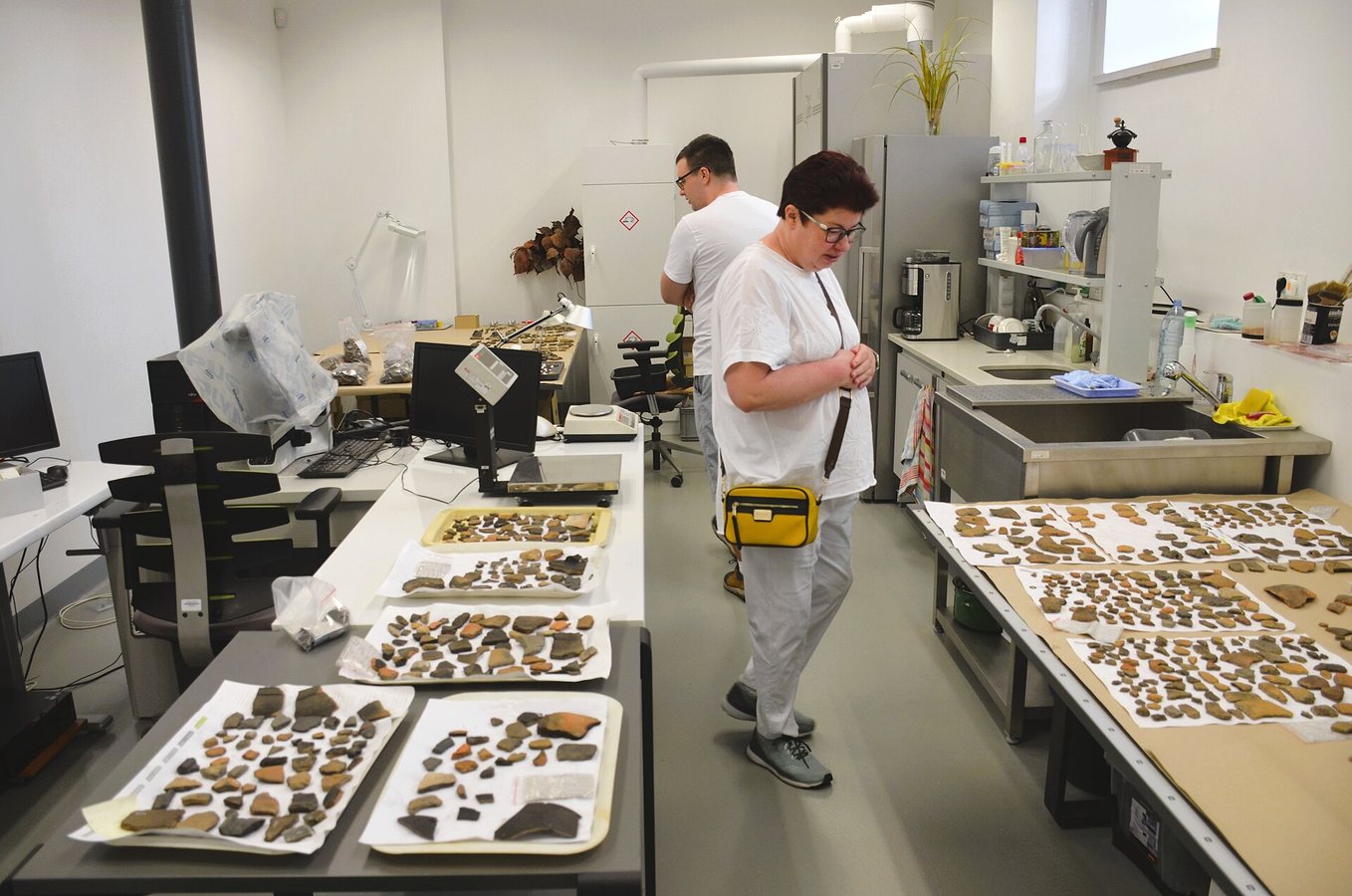
To test the idea, the team made its own papyrus scrolls and then burned them, reproducing the conditions that preserved — and nearly erased — the ancient texts. The experiment allowed researchers to compare how different inks behave when a scroll is charred, and to confirm that lead-bearing ink produces a signal strong enough to be distinguished from the surrounding papyrus.
The work matters because the Herculaneum collection is the only large library known to have survived from the classical world. Most of its contents remain unread. If the lead signal can be reliably detected, scholars may be able to identify letters and words inside scrolls that have never been opened, potentially recovering works of philosophy, literature, and science that have been lost for two millennia.
The technique builds on years of effort to read the scrolls without physically handling them. Earlier imaging methods have struggled to separate ink from the carbonized material, because both are largely made of carbon and respond similarly to many scanning techniques. Lead changes that equation by introducing an element that stands out in X-ray fluorescence and related imaging methods.
Researchers caution that not every ancient ink contained lead, and that the amount present can vary widely. That variability means the method may work well for some scrolls and less well for others. The team's decision to create and burn its own scrolls was intended to establish a controlled baseline, so that signals from real artifacts can be interpreted with greater confidence.
The eruption of Vesuvius in AD 79 buried the town of Herculaneum, including a villa that housed the scroll library, under volcanic material. The intense heat carbonized the papyrus but also preserved it, creating a rare archive of ancient writing. Excavations in the eighteenth century recovered hundreds of scrolls, many of which were damaged or destroyed by early attempts to open them.
Modern efforts have focused on non-invasive reading. The new lead-based approach adds a possible tool to that toolkit, and its developers suggest it could be applied to other charred documents from the ancient world as well. The next step will be testing the method on actual Herculaneum scrolls to see how much text it can reveal.
If successful, the technique could shift the study of the classical world by making a large body of lost writing accessible again. For now, the results offer a proof of concept: lead in ink, long overlooked, may be the key to reading what fire nearly destroyed.
10