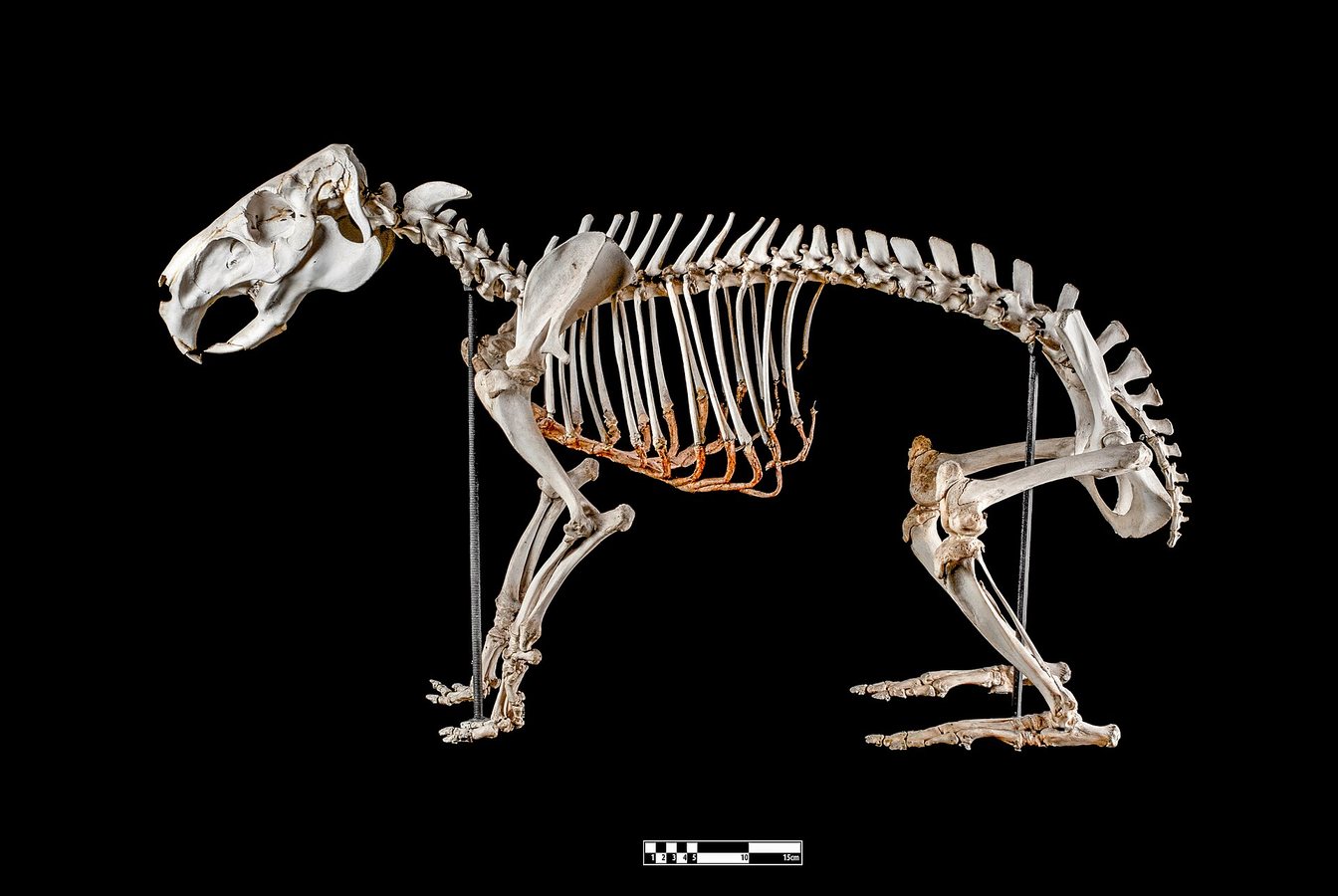
A nearly complete fossil discovered in Mongolia's Gobi Desert has resolved a nearly four-decade-old paleontological mystery, revealing that a group of small Cretaceous mammals long thought to be early relatives of modern placental mammals actually belonged to a separate evolutionary lineage.
The fossil, described as a new species named Tamirkhan balcarceli, shows that zhelestids — a group of extinct mammals whose teeth had convinced generations of researchers of a close kinship with today's placental mammals — were not ancestral to the lineage that includes humans, dogs, and whales. Instead, the animal was a rabbit-like creature that evolved its own distinct adaptations during the Cretaceous period.
For nearly 40 years, zhelestids occupied a central place in debates about mammalian evolution. Their molars and premolars bore striking similarities to those of early placental mammals, and paleontologists widely interpreted those dental features as evidence of a direct evolutionary relationship. That interpretation shaped textbook accounts of how and when placental mammals diversified.
The new specimen, recovered from Gobi Desert sediments, preserves enough anatomical detail to test that assumption. According to the research, the fossil demonstrates that the dental similarities were the product of convergent evolution — independent lineages arriving at similar tooth shapes — rather than shared ancestry. Tamirkhan balcarceli instead belongs to a separate branch of small Cretaceous mammals.
The finding carries implications beyond the classification of a single species. It suggests that the Cretaceous landscape supported a wider variety of small mammal lineages than previously recognized, and that dental evidence alone can mislead researchers attempting to reconstruct evolutionary trees. The rabbit-like body plan of the animal adds another unexpected element, indicating that some Cretaceous mammals had already developed ecological specializations reminiscent of much later species.
Paleontologists have long relied on teeth as the primary basis for identifying and classifying fossil mammals, since jaws and molars are the most commonly preserved parts of the skeleton. The zhelestid case illustrates the limits of that approach when convergent evolution produces misleading anatomical signals. The Mongolian fossil provides a rare opportunity to evaluate those signals against a more complete anatomical record.
The Gobi Desert has produced a series of important Cretaceous mammal discoveries in recent decades, and the region remains a focus for researchers studying the early diversification of mammals. The new species adds to that record and underscores how much of mammalian evolutionary history remains to be reconstructed from fragmentary evidence.
The research also touches on broader questions about the timing of the placental mammal radiation. If zhelestids were not early placentals, then the group's presumed role in that story must be reassessed, and other fossils previously linked to the placental lineage may need reexamination. The authors of the study indicate that the corrected placement of zhelestids alters the picture of mammalian diversity in the Cretaceous.
For now, Tamirkhan balcarceli stands as a corrective to a long-standing error, one that persisted for nearly four decades because the available evidence — mostly teeth — pointed in the wrong direction. The fossil's preservation allowed researchers to see past that signal and recognize a separate lineage of small mammals that shared the Cretaceous world with the ancestors of modern placentals.
26