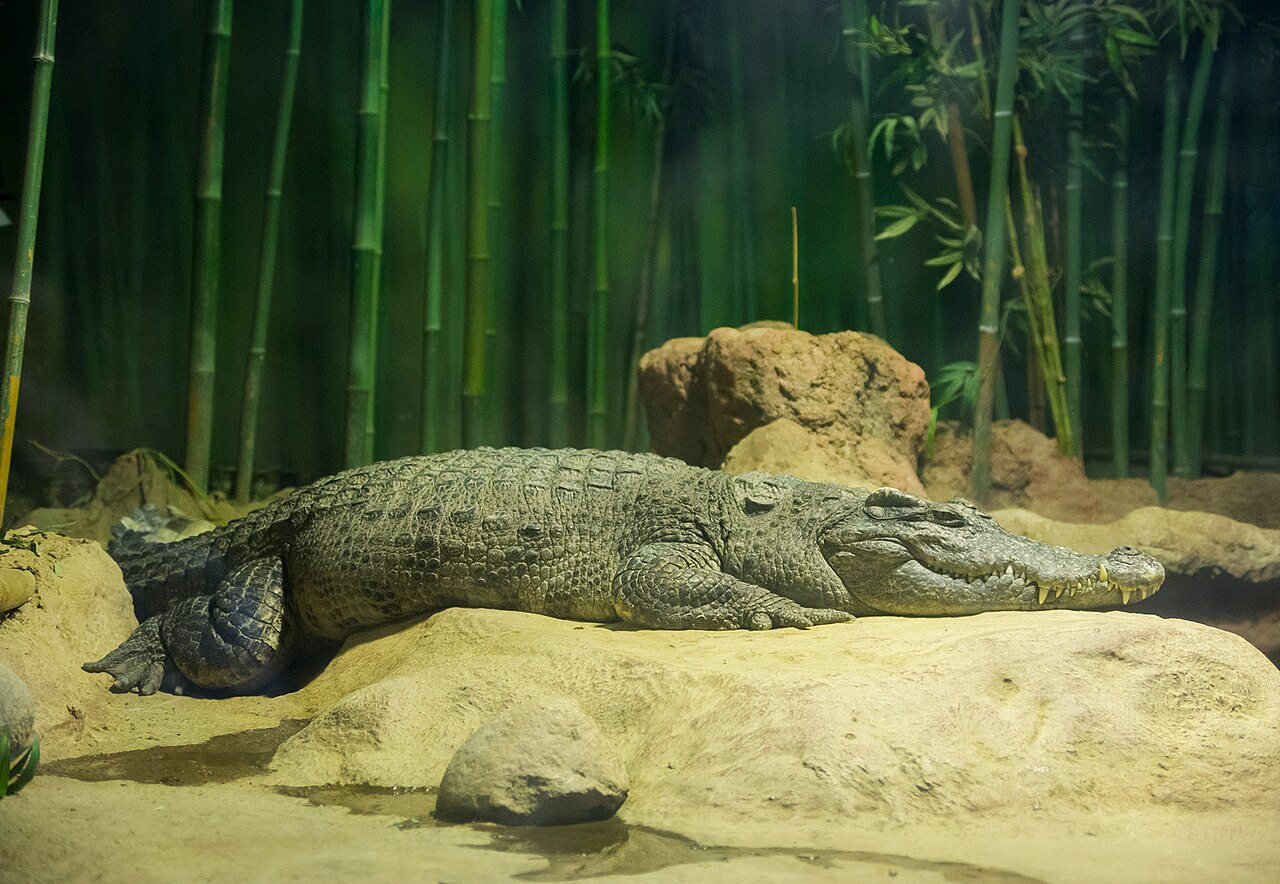
Cambodia is stepping up protection for one of the last remaining wild populations of the Siamese crocodile, a critically endangered reptile that conservationists once feared had vanished from the country entirely. The effort centers on wetlands in the remote Cardamom mountains, where Indigenous Chorng communities played a decisive role in proving the species still survived.
In the 1990s, researchers and conservationists believed the Siamese crocodile might have disappeared for good. Fishing and hunting had devastated the species throughout the 20th century, pushing populations across its native range in south-east Asia to the brink of extinction. Yet in villages scattered among the wetlands of the Cardamom mountains, Chorng communities continued to report sightings of the crocodiles.
That local knowledge proved pivotal. When researchers surveyed the area in 2000, the accounts passed on by the Chorng led to an official recording of the species. The confirmation reinvigorated the mission to revive the population and established the region as a stronghold for a reptile that had been largely written off.
The wetland area is now described as a «genetic bank» for the Siamese crocodile, a designation that underscores its importance for the species' long-term survival. By preserving a reservoir of wild genetic diversity, the site offers hope for a reptile whose numbers had been reduced to precarious levels across south-east Asia.
The involvement of Indigenous communities is central to the conservation effort. The Chorng, who live among the wetlands, hold generations of observational knowledge about the crocodiles and their habitat. Their reports were not only the first sign that the species persisted in Cambodia but also a foundation for subsequent scientific work.
Cambodia's move to protect the remaining wild population reflects a broader recognition that conservation succeeds when it combines scientific survey work with the expertise of the people who live closest to the land. The Cardamom mountains, long isolated and difficult to survey, have become an unexpected refuge for a species that once seemed lost.
The Siamese crocodile's decline was driven by decades of hunting and fishing pressure across its native range. By the 1990s, the species was feared extinct in Cambodia, and populations elsewhere in south-east Asia were also in steep decline. The rediscovery in the Cardamom wetlands therefore marked a turning point, shifting the focus from mourning a lost species to managing a surviving one.
Protection efforts now hinge on keeping the wetland habitat intact and limiting the threats that pushed the crocodile to the brink. The area's designation as a genetic bank signals that its value extends beyond a single population, offering a source of diversity that could support recovery efforts more widely.
For the Chorng communities, the crocodile's survival is intertwined with their own presence in the landscape. Their role in the 2000 survey illustrates how local testimony can guide formal research, particularly in regions that are hard to access and poorly documented.
The story of the Siamese crocodile in Cambodia remains one of narrow survival rather than full recovery. But the confirmation of a wild population in the Cardamom mountains, and the decision to protect it as a genetic reservoir, gives conservationists a concrete target: safeguarding one of the world's last wild strongholds of a critically endangered reptile.
11