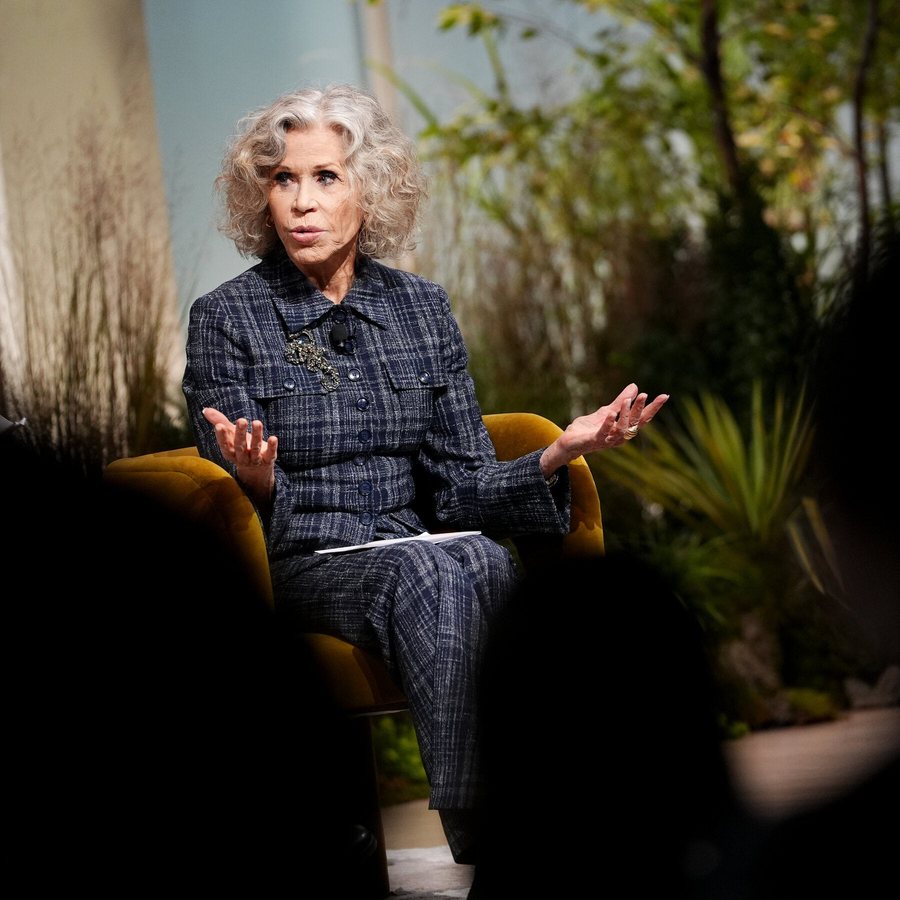
Jane Fonda sharply criticized both major political parties for what she described as their failure to confront climate change, using a public appearance to argue that the United States is now «dealing with an authoritarian regime.» The actor and longtime environmental advocate made the remarks onstage Wednesday, according to her own account of the country's political condition.
Fonda's decision to condemn both parties reflects a long-standing frustration among climate activists who argue that neither Democrats nor Republicans have treated global warming as an emergency requiring urgent, large-scale action. By naming an authoritarian turn in the country, she linked the climate fight to a broader defense of democratic institutions, suggesting that environmental progress depends on preserving basic political freedoms.
The comments place Fonda once again at the center of a public debate over how aggressively the United States should reduce greenhouse gas emissions and transition away from fossil fuels. She has for years used her platform to press for stronger climate policies, and her latest remarks signal that she intends to keep pressure on political leaders regardless of party affiliation.
Her criticism of both parties also highlights a persistent tension within the climate movement. Some advocates argue that one party remains far more open to climate action than the other, while others contend that even that party has failed to match the scale of the crisis. Fonda's language appeared to side with the latter view, framing the problem as a systemic failure rather than a partisan one.
The phrase «authoritarian regime» carries particular weight in the current political climate, where debates over voting rights, judicial independence, and executive power have intensified. By joining those concerns to climate policy, Fonda suggested that the two issues cannot be separated, and that environmental advocates must also defend democratic norms.
Fonda's appearance comes as climate change remains a divisive topic in American politics, with sharp disagreements over the pace of renewable energy development, the future of fossil fuel production, and the role of government regulation. Her remarks are likely to resonate with activists who feel that the political system has not responded adequately to scientific warnings.
Scientists have repeatedly warned that the window for limiting the worst effects of climate change is narrowing, and that current policies remain insufficient to meet international temperature goals. Fonda's criticism taps into that sense of urgency, arguing that political leaders have not treated the issue with the seriousness it demands.
Whether her comments will shift the political debate is uncertain, but they add a prominent voice to a growing chorus of critics who say that both parties have fallen short. For Fonda, the message was clear: the country's climate crisis is inseparable from its broader struggle over democracy and governance.
8