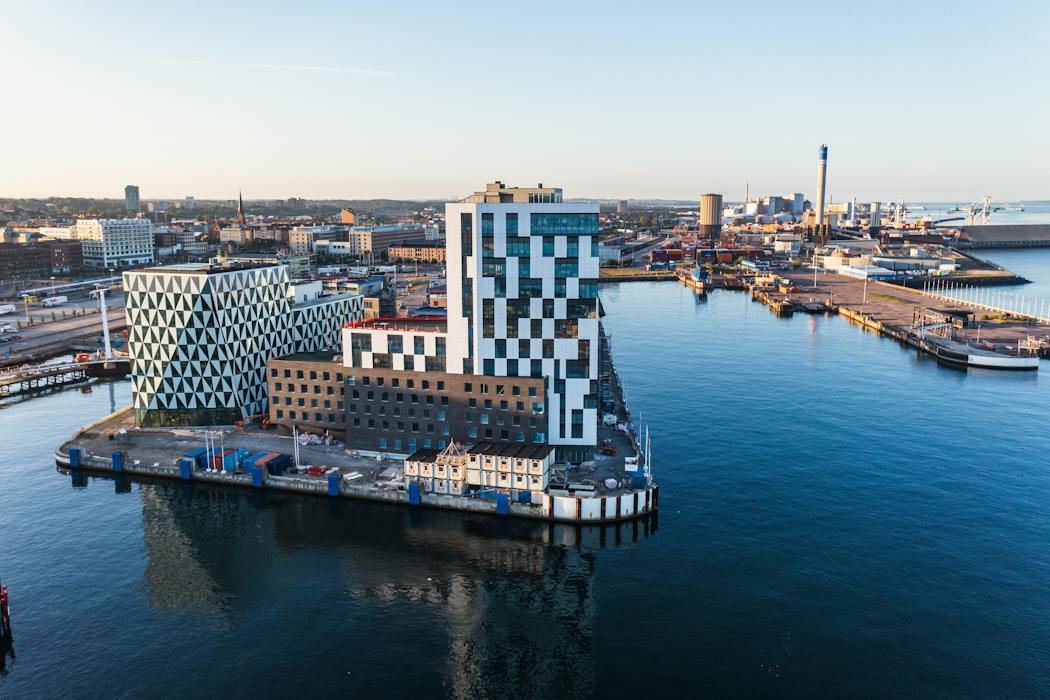
A new district in the southern Swedish city of Helsingborg is demonstrating how separating wastewater at the source can turn what is normally treated as a disposal problem into a reliable supply of water, energy, and fertiliser. The Oceanhamnen development collects household wastewater through three distinct pipelines — one for toilet waste, known as blackwater, one for greywater from showers, sinks, laundry, and dishwashers, and a third that takes food scraps from kitchen sinks directly into biogas production.
The approach, called source separation, has historically been limited to single households or small neighbourhoods. Oceanhamnen is now testing it at city scale through what the treatment company RecoLab describes as the world's largest source-separated sanitation plant. The system is being watched as a potential model for European cities facing mounting water stress, as extreme temperatures, droughts, and wildfires intensify pressure on freshwater supplies.
Europe's reuse of wastewater remains very low. In Sweden, only 0.6% of wastewater is recycled, yet 15 of the country's 21 counties already face a high risk of water scarcity. By keeping blackwater and greywater apart, the Helsingborg system makes it easier to recover resources that would otherwise be lost or degraded in mixed sewage. Greywater is more diluted and contains no human excrement, so it can be treated to a high standard using conventional technologies such as activated sludge processes, or through nature-oriented methods like wetland filtration that tend to draw less public resistance.
At Oceanhamnen, treated greywater is clean enough for toilet flushing and irrigation. The city plans to use it in a new public swimming pool if the required bathing water quality can be achieved. Recycled wastewater of this kind can also irrigate farmland or replace freshwater in water-intensive industries such as paper manufacturing, reducing the unnecessary use of drinking water.
Energy recovery is another benefit. Heat can be captured from drained shower water, and although in-building heat recovery is not yet part of the Oceanhamnen development, the treatment plant already uses the process to preheat water flowing through its chain. Blackwater and food waste are also excellent raw materials for biogas. Compared with mixed wastewater, they can produce around 80% more methane, the main component of biogas.
Nutrient recovery is equally significant. Blackwater is rich in nitrogen and phosphorus and can be turned into organic fertiliser, offering a less energy-intensive alternative to mineral fertiliser production. More than half the nitrogen in mixed wastewater is typically lost to the atmosphere during treatment, but source separation captures about 80% of the available nitrogen. RecoLab's blackwater-derived fertilisers are chemically identical to commercial mineral fertilisers and compatible with existing farming equipment.
Separating urine from faeces could bring further gains. Urine contains the larger share of nitrogen, phosphorus, and potassium, and these nutrients are already in a form plants can take up. Collected through urine-diverting toilets, it can be used as liquid fertiliser or dried to concentrate nutrients before being applied to crops.
Challenges remain, including the lack of legal frameworks, acceptable pricing, logistics, and public perception. Treated wastewater is easily condemned as unhygienic even when it meets safety standards, and pathogens such as Legionella or E. coli must not reach food through irrigation or fertiliser. The World Health Organization has outlined how source-separated wastewater can be used safely in agriculture. Greywater generally carries fewer pathogens than blackwater and can be used for irrigation with simple risk management, such as cleaning equipment to avoid contact with blackwater. Before being spread on fields, blackwater must be sanitised through storage for at least a year, composting in special reactors, or heat treatment. Chemicals such as urea can speed up pathogen inactivation; urine naturally contains urea, but faeces do not, so extra urea must be added when faeces is treated separately.
Residues of pharmaceuticals such as paracetamol and personal care products also remain difficult to remove from wastewater, adding another layer of complexity for cities hoping to scale up reuse. Still, Helsingborg's experiment suggests that treating wastewater as a resource rather than a burden could help close the gap between shrinking freshwater supplies and growing demand.
11