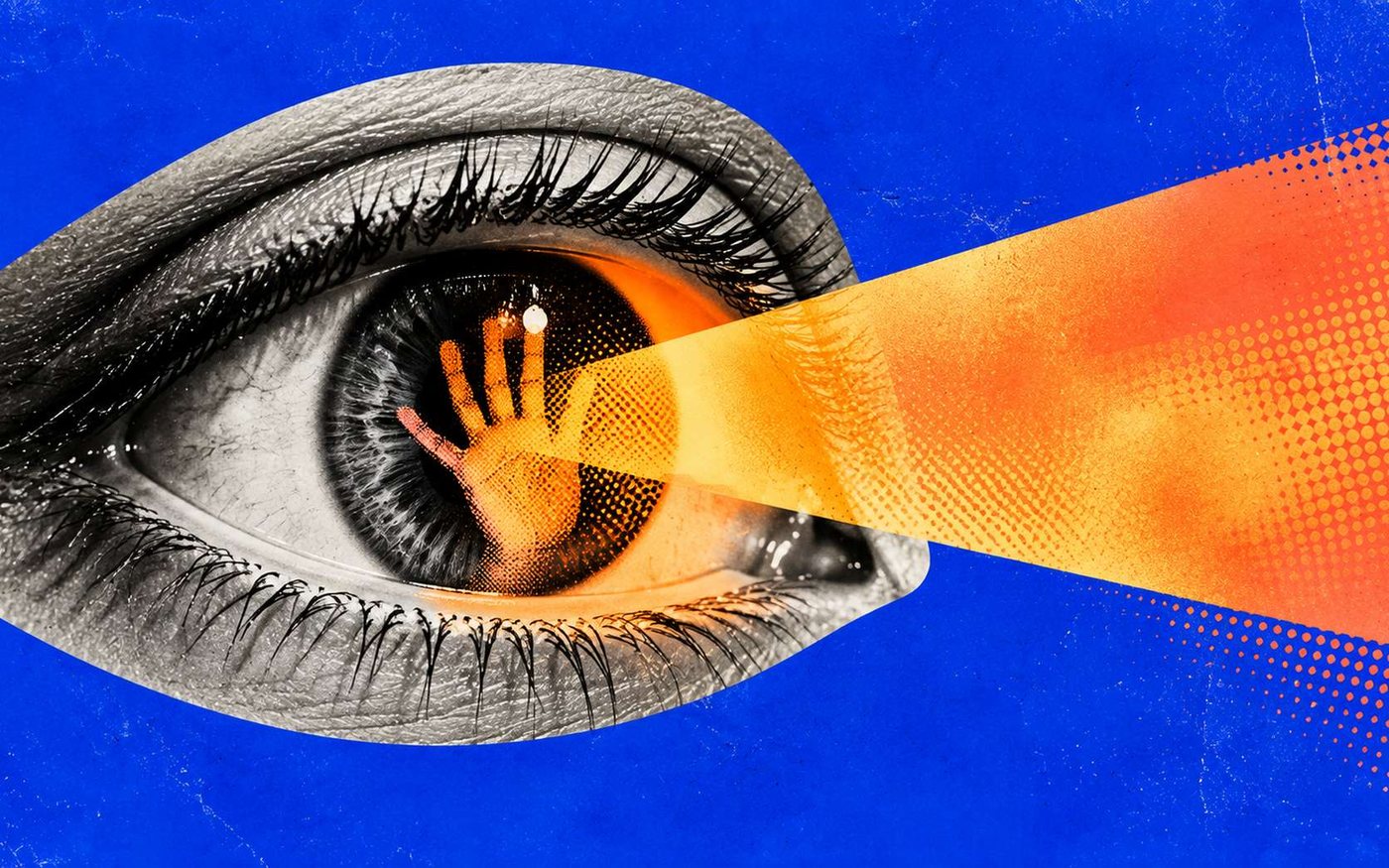
A light-sensitive protein borrowed from algae, delivered into the eye with modified viruses, has allowed seven people with a severe form of inherited blindness to recover part of their sight. The results mark the first time optogenetics — a technique that uses light to control cells — has been tested in humans, moving it from laboratory experiments to a clinical setting.
The approach targets the retina, the light-sensing tissue at the back of the eye. In conditions such as retinitis pigmentosa, the photoreceptor cells that normally detect light degenerate, but the inner retinal neurons they connect to often remain intact. Optogenetics bypasses the lost photoreceptors by introducing a gene that makes those surviving neurons fire when struck by light. The gene comes from algae, where the protein normally helps the organism respond to sunlight.
Because the algal protein is sensitive only to certain wavelengths, researchers must deliver it precisely. They used modified viruses — stripped of their ability to cause disease — as molecular couriers to carry the gene into retinal cells. Once expressed, the protein sits in the cell membrane and opens an ion channel when illuminated, triggering an electrical signal that travels to the brain.
The seven patients received the treatment as part of an early-stage trial designed primarily to assess safety. According to the results, all seven showed partial recovery of vision, though the extent and nature of that recovery varied. The trial represents a milestone: optogenetics had previously been demonstrated only in animals and in lab-grown tissue.
The technique was recognized with the 2026 Nobel Prize in Medicine, underscoring its scientific significance. But the path from bench to bedside has been long. One major challenge is that the algal protein requires relatively bright light to activate, and the human eye does not naturally emit light. Researchers have had to develop special goggles that project patterned light onto the retina, converting visual scenes into the specific wavelengths the protein can detect.
Even with these aids, the vision restored is not identical to natural sight. Patients typically learn to interpret the new signals, which may appear as phosphenes — flashes or spots of light — rather than detailed images. The brain must adapt to the artificial input, a process that can take months of training.
The trial’s small size and early phase mean that many questions remain. It is not yet clear how long the effect lasts, whether the viral delivery is safe over the long term, or how well the approach works for different genetic forms of blindness. The researchers caution that larger studies are needed before optogenetics can become a standard therapy.
Still, the outcome offers a proof of principle. For people with no other treatment options, even partial vision can improve mobility, orientation, and quality of life. The trial also opens the door to applying optogenetics to other neurological conditions, from epilepsy to chronic pain, where precise control of specific neurons could offer new therapeutic avenues.
The work reflects a broader trend in medicine: therapies that were once purely experimental are increasingly reaching patients. Gene therapy, once plagued by setbacks, has now produced approved treatments for several inherited diseases. Optogenetics may follow a similar trajectory, though its reliance on light delivery and viral vectors means it will likely remain a specialized option for carefully selected patients.
For now, the seven individuals who regained some sight represent a first step. Their experience will inform the design of next-generation trials, helping scientists refine the viral dose, the light-delivery system, and the criteria for who might benefit most. The field is watching closely, because success here could reshape the treatment of blindness and beyond.
18