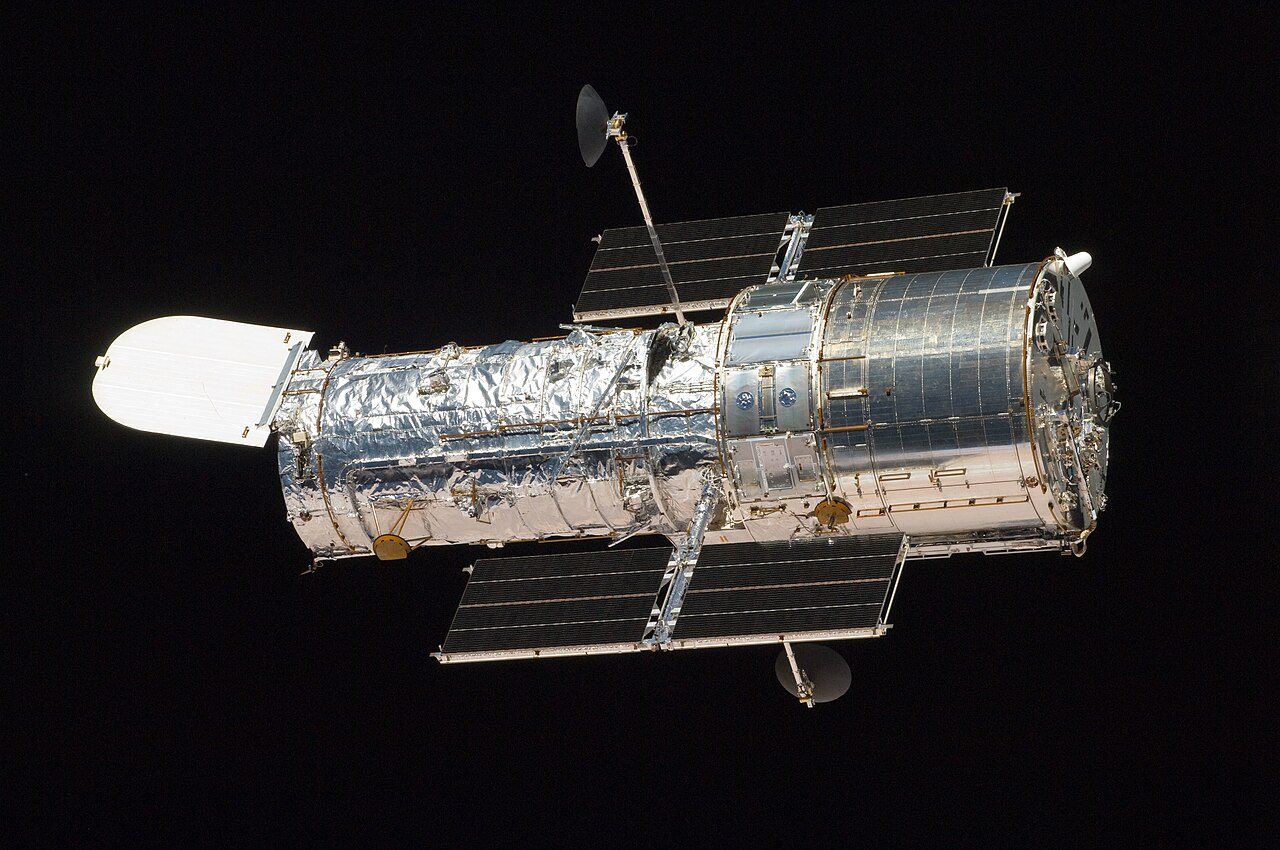
Astronomers examining archival Hubble Space Telescope observations have identified a chemical anomaly around a dead star that may signal the presence of a planet born after its host star had already ended its life. The white dwarf HS 0209+0832 shows unusually high levels of niobium, an element rarely seen in such environments, according to the analysis.
The finding raises the possibility that some of the material expelled by the dying star later reassembled into a new gas giant. If confirmed, the planet would represent a second generation of planetary formation, emerging from the debris of a stellar death rather than from the original protoplanetary disk.
Data from NASA's Transiting Exoplanet Survey Satellite, or TESS, also hints at a Jupiter-sized planet orbiting the white dwarf at a distance of just 3.7 million miles. That is extraordinarily close by planetary standards, placing the candidate world far inside the orbit of Mercury around the Sun.
White dwarfs are the dense, cooling remnants left behind after Sun-like stars exhaust their nuclear fuel and shed their outer layers. The expelled material forms a surrounding nebula that gradually disperses, and conventional theory holds that any planets orbiting such a star would have formed much earlier, before the star's death, and would likely be destroyed or severely disrupted during the transition.
The niobium signature complicates that picture. Niobium is a refractory element, meaning it condenses at high temperatures, and its presence in unusual concentrations around HS 0209+0832 suggests that material from the star's ejected envelope may have clumped together in a disk capable of spawning new planetary bodies.
If a gas giant did form from this recycled material, it would have coalesced within a relatively short window before the disk dissipated. The proposed orbit at 3.7 million miles would place the planet in an extreme environment, bathed in radiation from the hot white dwarf and likely subject to intense tidal forces.
The research relies on reanalysis of old Hubble spectra rather than new observations, a reminder that archival data can yield discoveries years after they were collected. The TESS signal provides independent circumstantial support, though the planet candidate has not been confirmed through additional detection methods.
Astronomers caution that alternative explanations for the niobium excess remain possible, including unusual abundance patterns in the white dwarf's atmosphere or contamination from an unseen companion. Follow-up spectroscopy and transit monitoring will be needed to distinguish between a genuine second-generation planet and other scenarios.
The result adds to a growing body of work on planetary systems that survive, or even arise from, the violent end stages of stellar evolution. Understanding how material behaves around white dwarfs could inform models of planet formation under conditions very different from those in young stellar systems.
HS 0209+0832 is not the first white dwarf to show signs of orbiting debris, but the combination of a chemical anomaly and a possible close-in gas giant makes it an intriguing target for further study. The team's findings are based on Hubble observations and TESS photometry, and the candidate planet remains subject to verification.
12