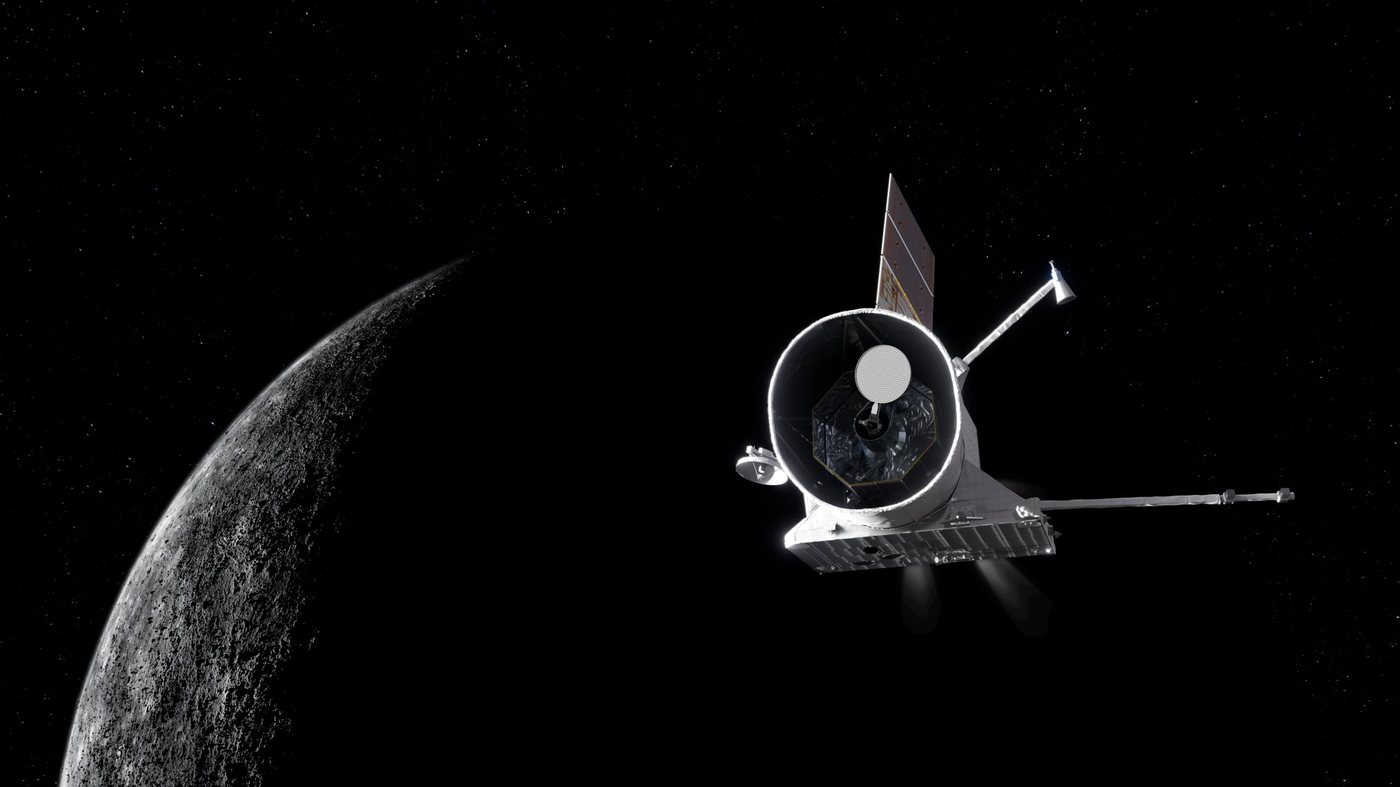
The European-Japanese BepiColombo spacecraft has entered orbit around Mercury, the innermost planet of the solar system, but a software glitch during the crucial braking maneuver left the mission in a larger and slower orbit than engineers intended. The spacecraft, a joint effort of the European Space Agency and the Japan Aerospace Exploration Agency, was built to study the planet's surface, interior, magnetic field and thin exosphere.
The insertion burn was scheduled for November 21, 2026, and was designed to run for 37 minutes. Signal contact was confirmed at about 01:02 UTC on November 22, several hours later than expected. Mission controllers later learned that the engines had shut off early because of a software fault, and the spacecraft automatically switched into safe mode. The thrusters delivered roughly 77 percent of the velocity change the flight plan called for.
As a result, the orbital period is now about 75 hours, compared with the planned 58 hours. The spacecraft nevertheless captured into orbit through a weak stability capture, a technique that uses the Sun's gravity to help a probe settle into orbit with less fuel. It is the first time a spacecraft has used this approach to enter orbit around a planet, which gives the event particular significance for future missions.
The cause of the glitch has not yet been identified. Engineers at the European Space Operations Centre and the spacecraft's industrial partner, Airbus, are analyzing telemetry data, a process expected to take several weeks. The flight team has said that no major corrective action is required, though further engine burns will be needed to reshape the orbit over the coming months.
BepiColombo was launched in October 2018 on an Ariane 5 rocket after years of delays. Its route to Mercury involved nine gravity-assist flybys, one past Earth, two past Venus and six past Mercury, which used the gravity of the planets to slow the craft down. According to recent mission updates, the two orbiter modules are scheduled to separate around December 9, after which each will begin its own scientific work.
Credit. Based on reporting by Haygen Warren for NASASpaceflight. Is this your work? Write to us.
11