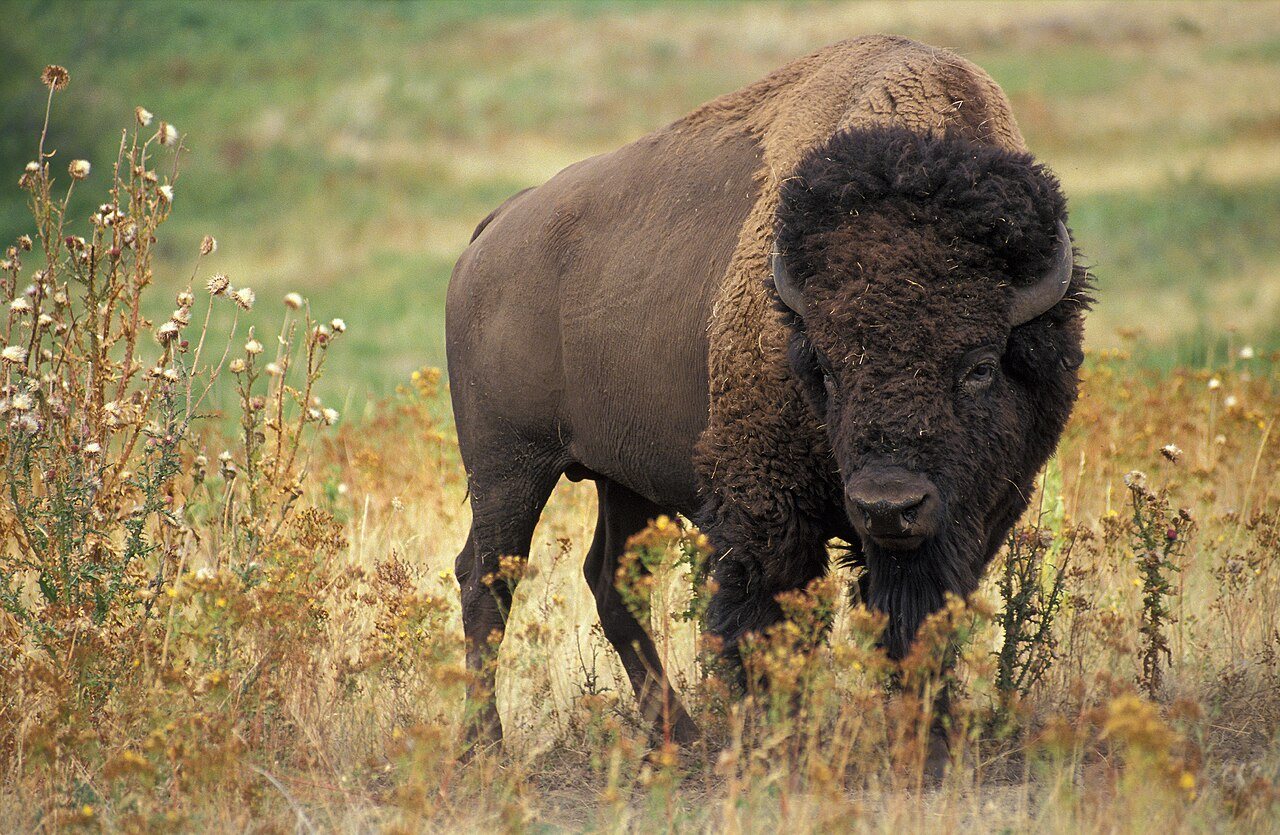
The animal that generations of Americans have called the buffalo is not a buffalo at all. It is a bison — specifically the American bison, a species native to North America whose lineage diverged from the ancestors of true buffalo long before humans began naming the continent's wildlife.
The confusion is one of the most enduring misnomers in natural history. True buffalo — the African cape buffalo and the Asian water buffalo — belong to entirely different genera and evolved on separate continents. The American bison, by contrast, is a distinct species shaped by the grasslands, plains, and ecological pressures of North America.
The distinction is not merely semantic. Taxonomists classify the American bison as Bison bison, while true buffalo fall under the genera Syncerus and Bubalus. The two groups share a common ancestor deep in the evolutionary record, but their paths diverged millions of years ago, producing animals with different body structures, horn shapes, and habitat preferences.
How the name «buffalo» became attached to the bison is a matter of linguistic history. Early European explorers and colonists applied the term loosely to unfamiliar large mammals, drawing on the word's roots in French and Latin. The label stuck, even as naturalists recognized the animal's true identity. By the time scientific taxonomy matured, the popular name was too deeply embedded in American speech to dislodge.
The consequences of the misnomer extend beyond vocabulary. Conservation policy, wildlife management, and public education have all had to navigate the gap between common usage and scientific accuracy. When lawmakers and agencies draft legislation or signage, they often use both terms to avoid confusion, even though only one is technically correct.
The bison's story is also a lesson in how language shapes public understanding of nature. Calling the animal a buffalo can blur its unique evolutionary heritage and obscure the fact that it is not closely related to the buffalo of Africa or Asia. That blurring matters when the public is asked to support conservation efforts for a species that once numbered in the tens of millions and was driven to the brink of extinction in the nineteenth century.
Today, the American bison is recognized as a keystone species of the Great Plains, with ongoing restoration programs across federal, tribal, and private lands. Its scientific identity as a bison is central to those efforts, informing everything from genetic research to habitat planning. The animal's cultural role, meanwhile, remains tied to the name «buffalo» in songs, place names, and everyday speech.
The persistence of the misnomer is a reminder that common names and scientific names serve different purposes. Common names evolve through usage, migration, and cultural exchange; scientific names are designed for precision and stability. The American bison sits at the intersection of both systems, carrying a popular label that misleads and a taxonomic identity that clarifies.
For researchers and educators, the takeaway is straightforward: the American buffalo is a bison, and saying so is not pedantry but accuracy. The distinction connects the animal to its true evolutionary lineage and helps the public understand why it is not the same creature as the buffalo of other continents.
That clarity may matter more than ever as bison restoration continues and as debates over public lands, Indigenous sovereignty, and wildlife policy keep the species in the news. Using the right name is a small but meaningful step toward understanding the animal itself.
8