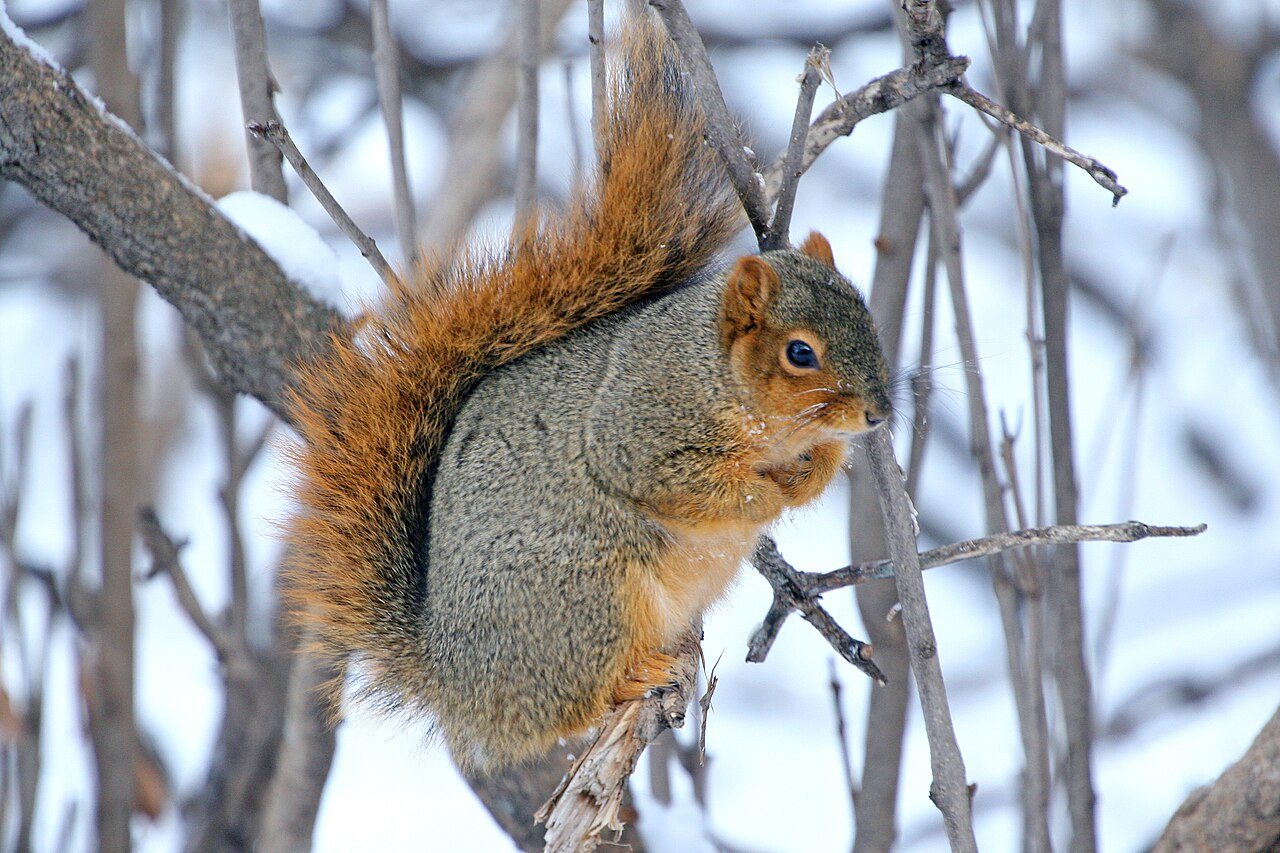
As autumn settles across the Northern Hemisphere, squirrels are entering their annual burying season, a period of intense food caching that will determine whether they survive the coming winter. The small rodents spend weeks gathering nuts, acorns, and seeds and hiding them in scattered locations, a behavior that is as much about memory and strategy as it is about instinct.
The timing is driven by shortening daylight and falling temperatures, which signal that food will soon become scarce. Squirrels respond by shifting much of their activity toward collection and storage, often making hundreds of trips between trees and hiding spots in a single day. Each cache typically holds a single nut or a small cluster of seeds, buried shallowly and then covered with soil or leaf litter.
Not all of the buried food is recovered. Squirrels rely on spatial memory to find their caches, but they also benefit from a kind of insurance policy: the seeds they fail to relocate can germinate in the spring, helping forests regenerate. This makes the burying season ecologically significant beyond the survival of individual animals. Oak, hickory, walnut, and beech trees all depend in part on scatter-hoarding rodents to disperse their seeds.
The behavior varies by species. Eastern gray squirrels, common in much of the United States, are scatter hoarders, distributing their caches widely. Red squirrels and some other species are larder hoarders, concentrating food in a single protected stash. Both strategies have trade-offs. Scattered caches are less vulnerable to being lost to a single thief, but they demand more memory and more energy to retrieve. A central larder is easier to defend but becomes a target for competitors.
Competition is intense. Blue jays, chipmunks, mice, and even other squirrels may raid caches. Some squirrels respond by digging decoy holes or by moving food when they sense they are being watched. Researchers have documented squirrels returning to caches and reburying them, sometimes multiple times, to reduce the risk of theft.
The burying season also has implications for backyard observers. Homeowners often notice squirrels digging in lawns and gardens in autumn, a behavior that can be frustrating but reflects a survival imperative. Wildlife biologists note that the animals are not simply storing food for a single winter; they are managing a resource that must last through months of scarcity and unpredictable weather.
Climate change is adding new uncertainty. Warmer autumns can delay the onset of caching behavior, while milder winters may allow some squirrels to remain active longer. Mismatches between food availability and caching timing could affect survival rates and, over time, the regeneration of tree species that depend on squirrels for seed dispersal.
For now, the burying season is proceeding as it has for millions of years, a quiet but consequential ritual that plays out in parks, woodlands, and backyards. It is a reminder that autumn is not only a season of falling leaves but also a season of preparation, memory, and hidden stores that will shape the next generation of forests.
10