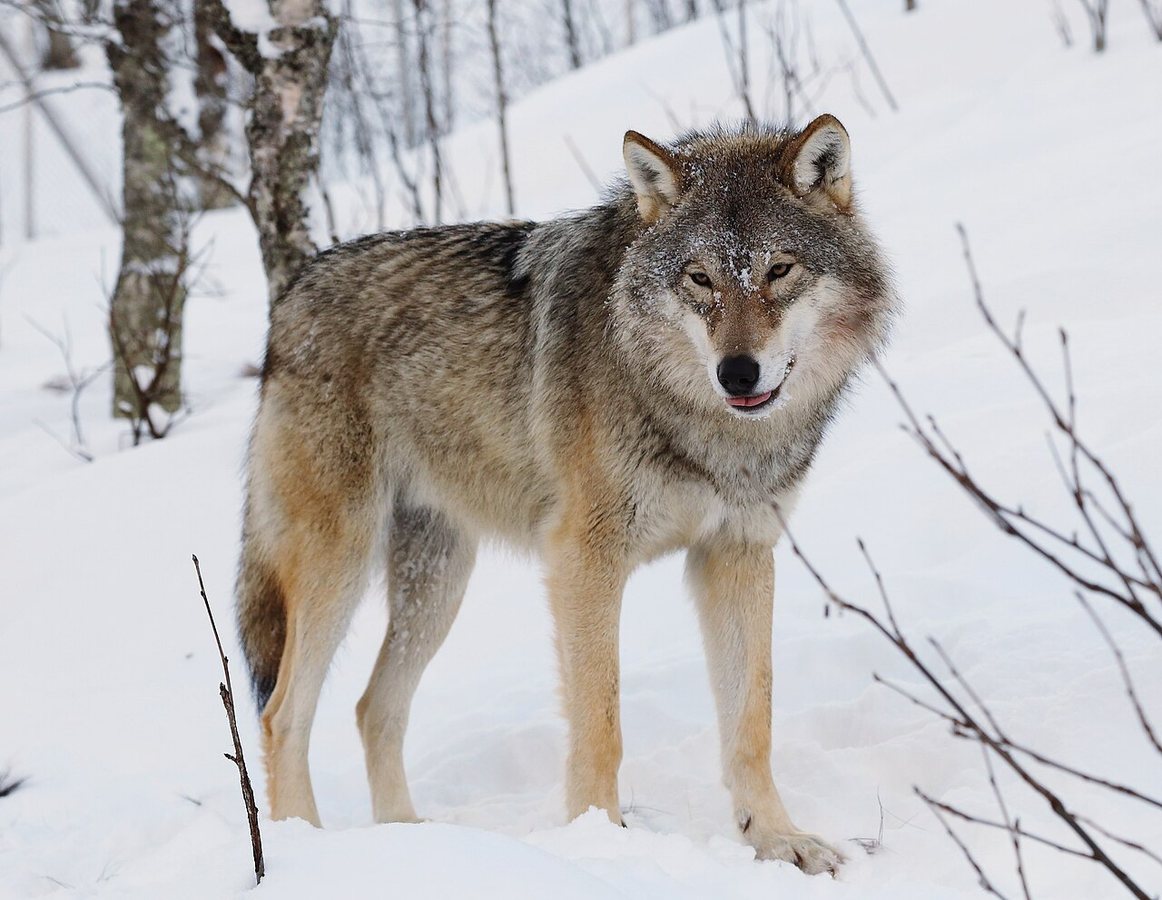
US President Donald Trump has signed an executive order directing the interior department to consider removing gray wolves from the Endangered Species Act list, a move that could ease restrictions on killing the animals and shift federal wildlife policy toward rancher interests.
The order, signed Friday, gives interior secretary Doug Burgum three months to determine whether gray wolves and Mexican gray wolves have recovered enough to be de-listed. It also asks the agency to explore whether it could make it easier to authorize lethal control of the animals.
Supporters of the measure argue that wolf populations have rebounded sufficiently in some regions and that current protections impose heavy costs on livestock producers. Ranchers have long complained about wolf predation on cattle and sheep, and the administration framed the order as a practical response to those economic pressures.
Conservationists, however, warn that de-listing could derail ongoing recovery efforts. Gray wolves were nearly wiped out in the lower 48 states by the mid-20th century, and while populations have grown in the Northern Rockies and the Great Lakes region, their range remains far smaller than historical levels. Mexican gray wolves, a distinct subspecies, number only in the low hundreds in the southwestern United States.
The Endangered Species Act has been a flashpoint in American environmental politics for decades. The law, enacted in 1973, provides federal protection for species at risk of extinction and prohibits activities that harm them. Removing a species from the list transfers management authority to state agencies, which typically allow more hunting and trapping.
Gray wolves were previously de-listed in the Northern Rockies during the Trump administration's first term, leading to hunting seasons in Montana, Idaho, and Wyoming. Courts later restored protections in some areas, creating a legal back-and-forth that has left the species' status uncertain across different states.
The new order appears designed to settle that uncertainty by directing a comprehensive federal review. If Burgum determines that wolves have recovered, the interior department would begin formal rulemaking to de-list them nationwide, a process that would invite public comment and likely trigger lawsuits from environmental groups.
Conservation scientists note that wolf recovery is uneven. While the species occupies suitable habitat in parts of the West and Upper Midwest, it remains absent from most of its former range, including the Northeast and much of the Rocky Mountain region. The Mexican gray wolf population, reintroduced in Arizona and New Mexico in the 1990s, has grown slowly and faces genetic challenges from a small founding population.
The order also raises the possibility of expanded lethal control measures. Federal wildlife agents already kill wolves that prey on livestock, but the administration could broaden those authorities or encourage states to adopt more aggressive management once federal protections are lifted.
Opponents argue that such policies prioritize short-term economic interests over ecological stability. Wolves are a keystone predator, and their presence influences deer and elk populations, vegetation, and the behavior of other carnivores. Removing protections, critics say, could reverse decades of investment in wolf conservation and undermine public support for the Endangered Species Act itself.
The three-month review period will conclude early in the new year, setting the stage for a decision that is likely to shape American wildlife policy well beyond the current administration.
141