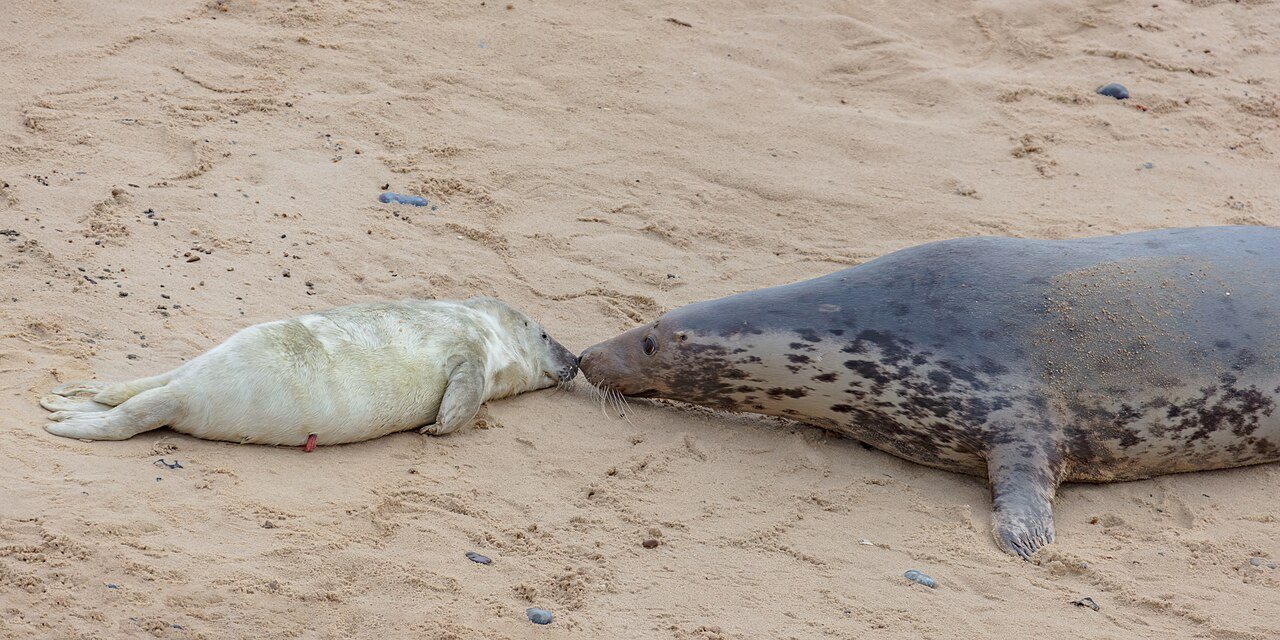
Two grey seal pups have been recorded at South Walney, the nature reserve that hosts Cumbria's only breeding colony of the species. The births mark the twelfth consecutive year that seals have given birth at the site, a milestone for a colony that conservationists have monitored closely since it became established.
The reserve, located on the Walney Island peninsula in Cumbria, has become a reliable pupping ground for grey seals in recent years. Each season, adult females come ashore to give birth and nurse their young before the pups are weaned and enter the water on their own. The arrival of two pups this year continues a pattern that has held steady for more than a decade.
Grey seals are one of the larger seal species found in British waters, and the UK hosts a significant share of the global population. Breeding colonies are sensitive to disturbance from people and dogs, which is why reserves like South Walney manage access carefully during pupping season. The twelfth consecutive year of births suggests the site continues to offer suitable conditions for the animals to raise their young.
South Walney's status as Cumbria's only breeding grey seal colony gives the reserve a particular role in regional wildlife monitoring. Conservation staff and volunteers typically track the number of pups born each season, along with the timing of births and the condition of the mothers. These observations help build a picture of how the local population is faring over time.
The news of two pups this year follows a run of annual births at the reserve that has now extended through twelve seasons. While two pups is a modest number, the consistency of breeding at the site is notable for a colony that remains the only one of its kind in the county. Each successful pupping season adds to the record that researchers and reserve managers use to assess the health of the colony.
Grey seal pupping typically occurs in autumn and winter around the British coast, with females giving birth to a single pup after an eleven-month gestation that includes a period of delayed implantation. Pups are born with a white coat and are nursed for roughly three weeks before they are left to fend for themselves. During this time, mothers stay close to their pups, and the pair remain vulnerable to disturbance.
For visitors to South Walney, the presence of seals is one of the reserve's attractions, but the animals' needs take priority during breeding season. Reserve managers generally ask the public to keep their distance and to keep dogs on leads near areas where seals are hauled out. These precautions are intended to reduce stress on mothers and pups during the critical early weeks.
The twelfth year of pupping at South Walney also highlights the broader recovery of grey seals in UK waters. After historic declines, the species has rebounded over the past century, and breeding colonies have expanded along many parts of the coastline. South Walney's colony is a small but consistent part of that wider picture, and its annual births provide a local measure of how the population is doing.
With two pups recorded this season, the reserve's run of breeding years remains intact. Conservationists will continue to monitor the site through the pupping period, watching for signs of disturbance and tracking the pups' progress as they prepare to leave the shore. The twelfth consecutive year of births is a modest but meaningful marker for a colony that has become a fixture of Cumbria's coastal wildlife.
12