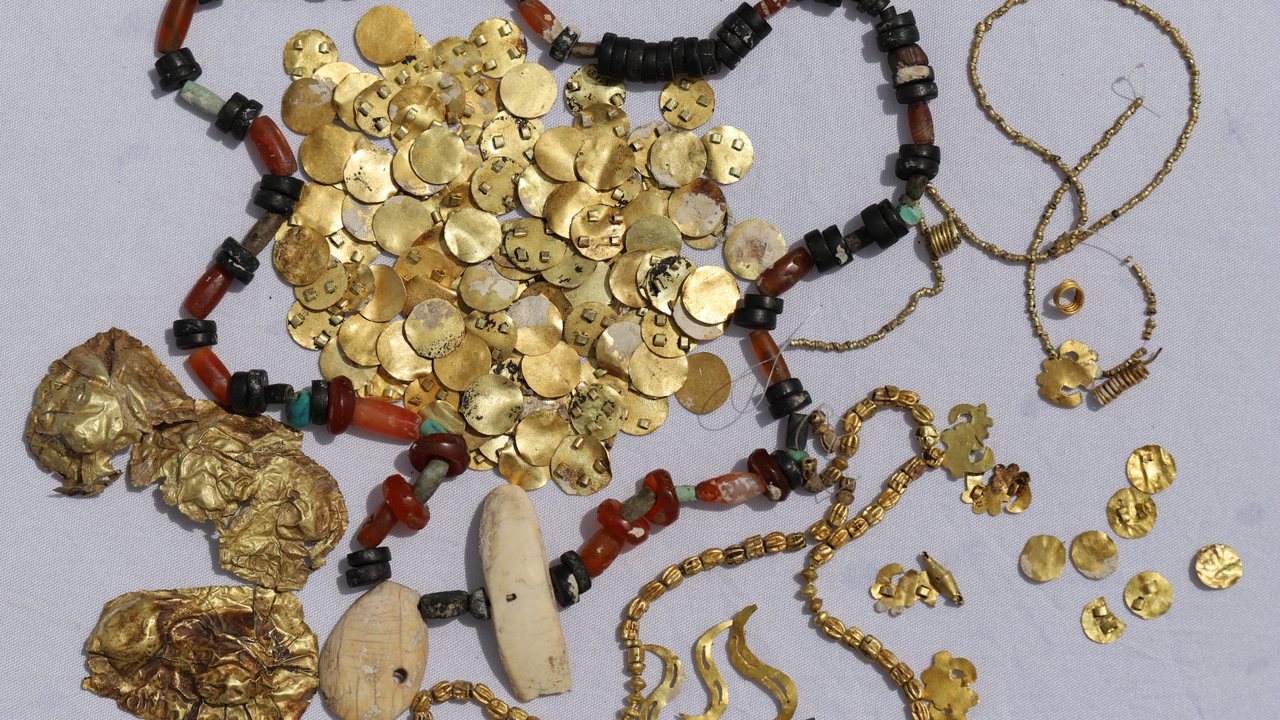
Ancient DNA analysis of Scythian remains from burial mounds in southern Siberia has revealed that elite families held power over the nomadic society approximately 2,500 years ago, overturning long-held assumptions that these steppe peoples were largely egalitarian. The study, published in the journalScience Advances, provides the first direct genetic evidence of social stratification among the Scythians, a group of horse-riding pastoralists who dominated the Eurasian steppes from around 900 B.C. to 200 B.C.
Researchers from the Max Planck Institute for Evolutionary Anthropology in Leipzig, Germany, and their international collaborators sequenced the genomes of 31 individuals buried in elite Scythian tombs known as kurgans in the Tuva region of Russia. The tombs, which contained rich grave goods such as gold ornaments, weapons, and horse harnesses, were found to belong to closely related individuals, indicating that power was concentrated within specific family lines over multiple generations. The genetic data showed that these elite individuals shared a common ancestry, with some burials containing father-son pairs and other close relatives, suggesting hereditary rule.
«Our findings demonstrate that Scythian society was not a simple, egalitarian nomadic culture but had a complex social hierarchy with powerful families at the top,» said Dr. Cosimo Posth, a senior author of the study and a researcher at the Max Planck Institute. «The genetic links between individuals in different kurgans show that these elite families maintained their status over centuries, likely through inheritance and strategic marriages.» The study also found that the elite individuals were genetically distinct from the broader Scythian population, which included individuals from diverse genetic backgrounds, indicating that social status was tied to lineage.
The Scythians are known from historical accounts by the ancient Greek historian Herodotus, who described them as fierce warriors and skilled horsemen. However, archaeological evidence has long suggested that some Scythians were wealthier than others, with elaborate burials contrasting with simpler graves. The new DNA analysis provides a biological basis for this inequality, showing that the richest tombs belonged to members of a few dominant families. The researchers also identified evidence of female lineage continuity, suggesting that women played a role in maintaining elite status, though the study focused primarily on male burials due to sample availability.
The findings have broader implications for understanding the social organization of ancient nomadic societies. «This challenges the stereotype of nomadic peoples as being more egalitarian than settled agricultural societies,» said Dr. Posth. «In fact, the Scythians had a structured society with clear hierarchies, much like their contemporaries in the Mediterranean and Near East.» The study also sheds light on the mobility of these groups, as the genetic data showed that some individuals had migrated from distant regions, possibly as part of trade networks or through conquest. The Scythians were known for their extensive trade routes, which connected them to civilizations such as the Greeks, Persians, and Chinese.
The research team used advanced ancient DNA techniques to extract and sequence genetic material from bone and tooth samples, overcoming challenges posed by degradation over millennia. They compared the Scythian genomes with those of modern and ancient populations from across Eurasia, confirming that the elite individuals were genetically similar to other steppe groups but formed a distinct cluster. The study also included radiocarbon dating to establish the chronology of the burials, which ranged from the 7th to the 3rd centuries B.C.
Experts not involved in the study have praised its contribution to the field. «This is a landmark study that uses genetics to uncover social structures that are invisible from archaeology alone,» said Dr. Sarah Leggett, an archaeologist at the University of Cambridge who specializes in ancient societies. «It shows how interdisciplinary research can transform our understanding of the past.» The study also highlights the importance of preserving and studying ancient remains, as they hold key information about human history.
The Scythians left no written records of their own, so much of what is known about them comes from external accounts and archaeological excavations. The new genetic evidence adds a crucial layer of detail, revealing that their society was more complex than previously thought. The researchers plan to expand their analysis to other Scythian sites across the steppes, from Ukraine to Mongolia, to see if the pattern of elite family rule was widespread. «This is just the beginning,» said Dr. Posth. «We are now able to ask questions about social organization that were impossible to answer before.»
190