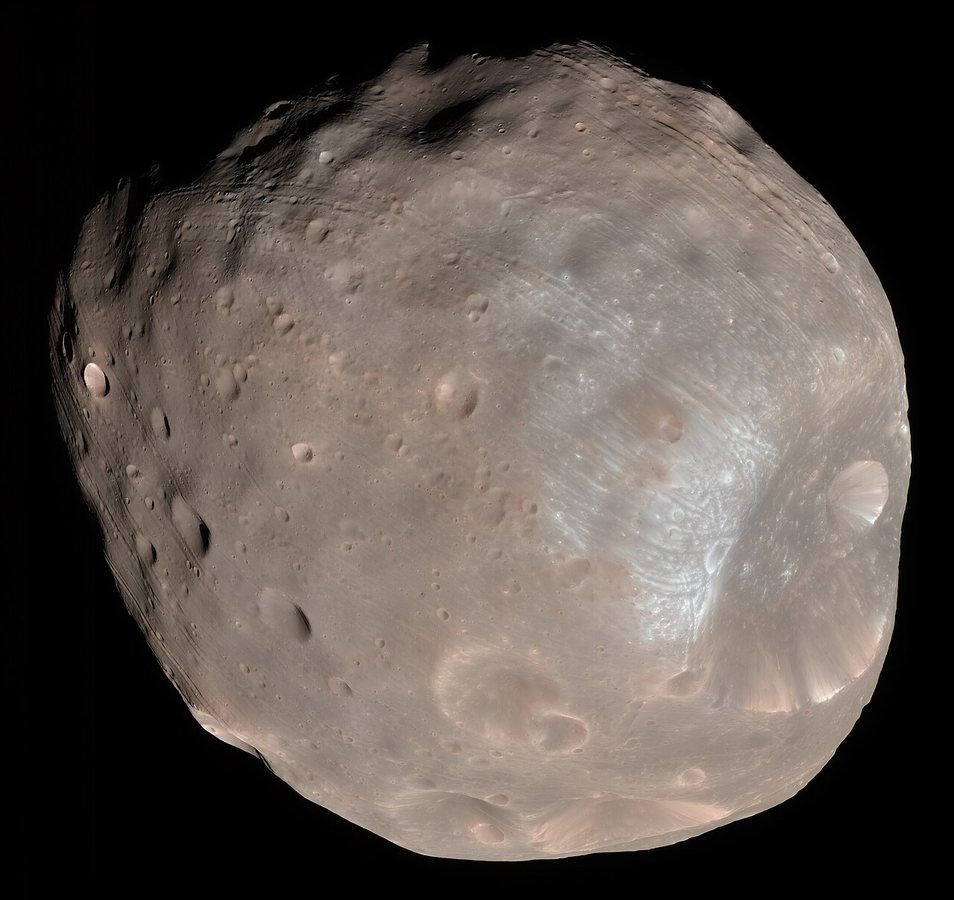
Japan is preparing a historic mission to Phobos, the larger of Mars' two moons, in an effort to answer fundamental questions about the red planet's history and the origins of its satellites. The Martian Moons eXploration mission, known as MMX, is led by the Japan Aerospace Exploration Agency and is designed to travel to the Mars system, conduct detailed observations of Phobos and Deimos, and bring samples from Phobos back to Earth.
The mission's central goal is to determine whether Mars' moons are captured asteroids or the remnants of a giant impact on Mars itself. By collecting material from Phobos and analyzing it in laboratories on Earth, scientists hope to settle a long-running debate about the moon's origin. The samples could also preserve records of the early solar system and of Mars' evolution, including clues about whether the planet once supported conditions suitable for life.
MMX is expected to enter orbit around Mars and spend time studying both moons before descending to the surface of Phobos. The spacecraft will use a sampler to collect material and then return to Earth, making Japan the first country to bring back samples from a Martian moon. The mission builds on Japan's experience with the Hayabusa and Hayabusa2 asteroid sample-return missions, which demonstrated the country's capability to collect and deliver extraterrestrial material.
The scientific community has a strong interest in Phobos because its surface may contain material ejected from Mars by ancient impacts. If so, the samples could provide a window into the Martian crust and atmosphere without the cost and complexity of a full Mars sample-return mission. The data could also help researchers understand the delivery of water and organic compounds to the inner solar system.
MMX is part of a broader international push to explore Mars and its moons. The mission is expected to contribute to future human exploration by characterizing the environment around Mars and testing technologies for landing and sample collection on a low-gravity body. Japan's partners, including space agencies and research institutions, are contributing instruments and expertise to the effort.
The mission's timeline calls for launch in the coming years, with the spacecraft arriving at Mars after a cruise phase and returning samples to Earth later in the decade. If successful, MMX would mark a major milestone in planetary science and strengthen Japan's role as a leader in sample-return exploration.
For scientists, the samples from Phobos could be among the most valuable extraterrestrial materials ever collected. They may contain a mixture of material from the moon itself and from Mars, offering a unique opportunity to study two worlds at once. The results could reshape understanding of how planets and their satellites form and evolve, and they could inform the search for evidence of past life beyond Earth.
12