Nine rockets are scheduled to lift off this week from launch sites in California, Florida, New Zealand, Japan, and China, in one of the busiest stretches of the year for global launch activity. The manifest spans interplanetary science, commercial rideshare, and satellite constellation deployment, with three SpaceX Falcon 9 flights, a debut variant of Japan's H3 rocket, a Rocket Lab Electron mission, and four launches from China.
The headline event came Monday, Oct. 19, when the Japanese Aerospace Exploration Agency launched the Martian Moons eXploration mission aboard the maiden flight of the H3-24L configuration. The rocket lifted off from pad LA-Y2 at the Tanegashima Space Center at 19:41 UTC. The H3 is a two-stage vehicle built by Mitsubishi Heavy Industries, burning liquid hydrogen and liquid oxygen. The H3-24L designation reflects two first-stage LE-9 engines, four SRB-3 solid boosters, and the long payload fairing. The flight marked the third H3 launch of 2026, with the next expected in the first half of 2027.
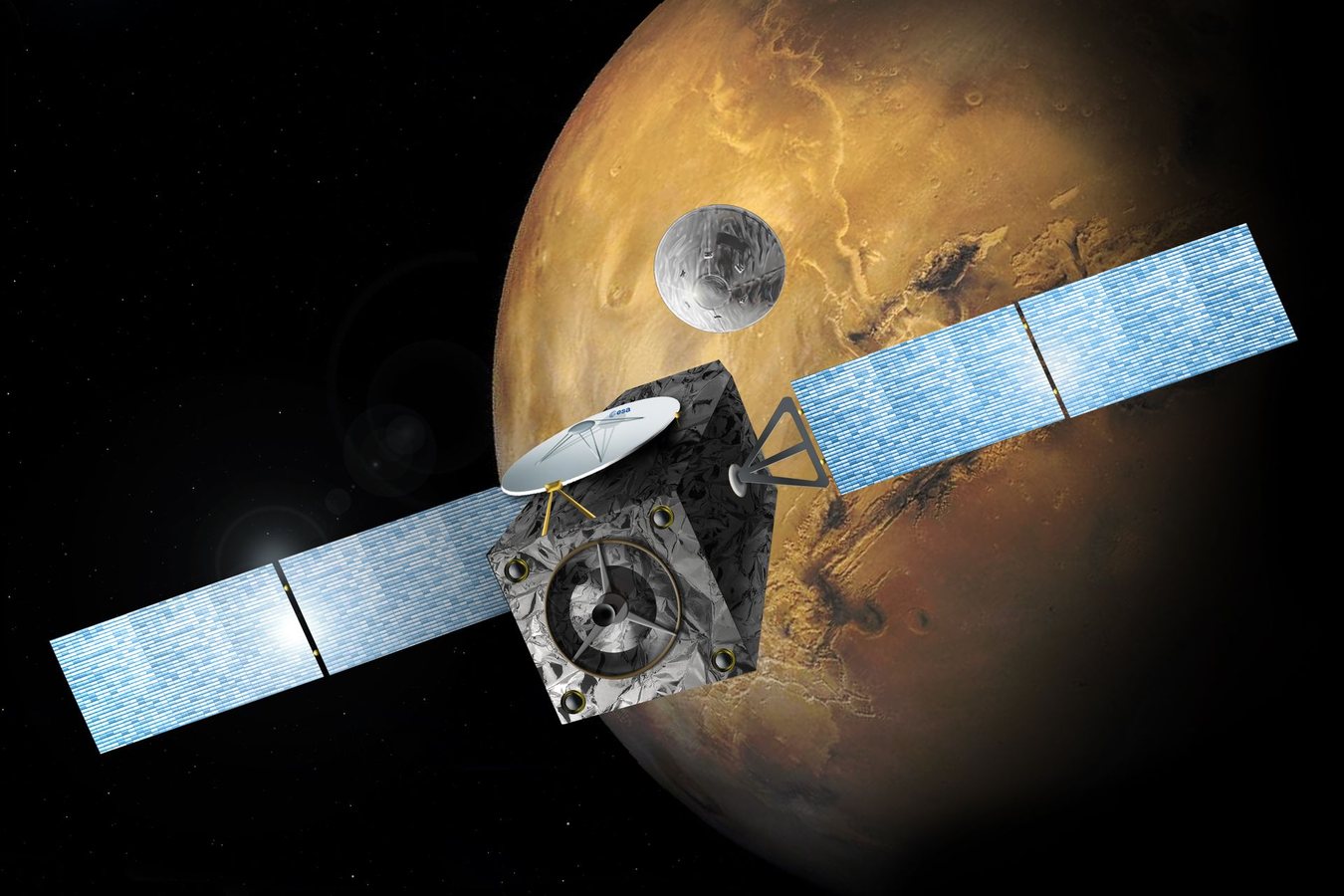
MMX will spend about a year in transit to Mars before entering a quasi-stationary orbit around Phobos, a trajectory made possible by the extremely low mass of the Martian moons. Led by JAXA with partners including NASA, France's CNES, Germany's DLR, and the European Space Agency, the mission will study the topography, structure, composition, and gravity of Phobos, with additional observations of Deimos. Riding along is the IDEFIX rover, a CNES-DLR vehicle weighing just under 23.5 kilograms that will be deployed from an altitude of 40 to 100 meters above the surface. MMX will then land and collect roughly 10 grams of soil using two sampling instruments, with the samples scheduled to return to Earth in Australia in 2031 after the spacecraft departs Mars in 2030. The probe carries a suite of instruments including the TENGOO telescopic imager, the OROCHI optical radiometer, LIDAR, the MIRS infrared spectrometer, the MEGANE gamma-ray and neutron spectrometer, a circum-Martian dust monitor, and a mass spectrum analyzer.
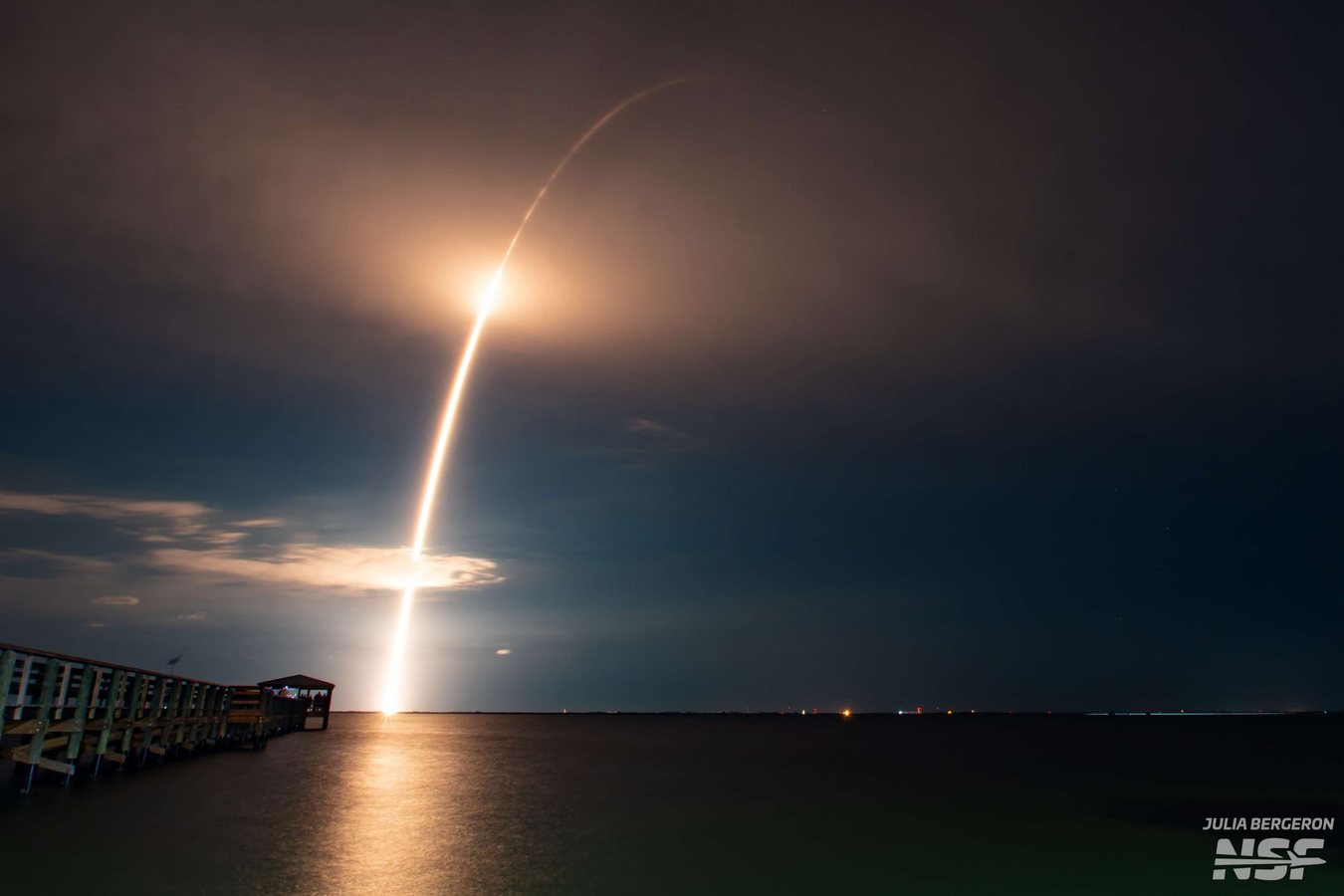
SpaceX opened its week on Tuesday with the Bandwagon-5 rideshare mission, launching southeast from Space Launch Complex 40 at Cape Canaveral Space Force Station at 7:04 AM EDT. The flight carried 31 payloads, including 19 from Exolaunch, two each from Umbra Lab and from Tomorrow.io and Capella Space, and one apiece from Planet IQ, Varda Space Industries, Planet Labs, Portal Space Systems, Viasat, and Fergani. Bandwagon-5 also deployed the second of SpaceX's Starfall demonstration capsules. The booster, B1085, flew its 19th mission and landed on the droneship A Shortfall of Gravitas. The launch was SpaceX's 121st of 2026.
Later Tuesday, a second Falcon 9 was set to fly from Space Launch Complex 4 East at Vandenberg Space Force Base in California, carrying 27 Starlink v2 Mini satellites to low-Earth orbit. A third Falcon 9 flight was also on the week's schedule, delivering another batch of Starlink satellites. Rocket Lab's Electron was slated to carry a payload for HawkEye 18, while China planned four payloads to orbit across its launches.
The concentration of activity reflects the growing cadence of both government and commercial launch providers. Japan's H3 program continues to expand its flight record with a new configuration, while SpaceX's rideshare programs, Bandwagon for mid-inclination orbits and Transporter for polar orbits, offer lower-cost access for small satellite operators. The MMX mission, meanwhile, represents a significant step in the scientific study of Mars' moons, which may hold clues about the formation of the Martian system.
13