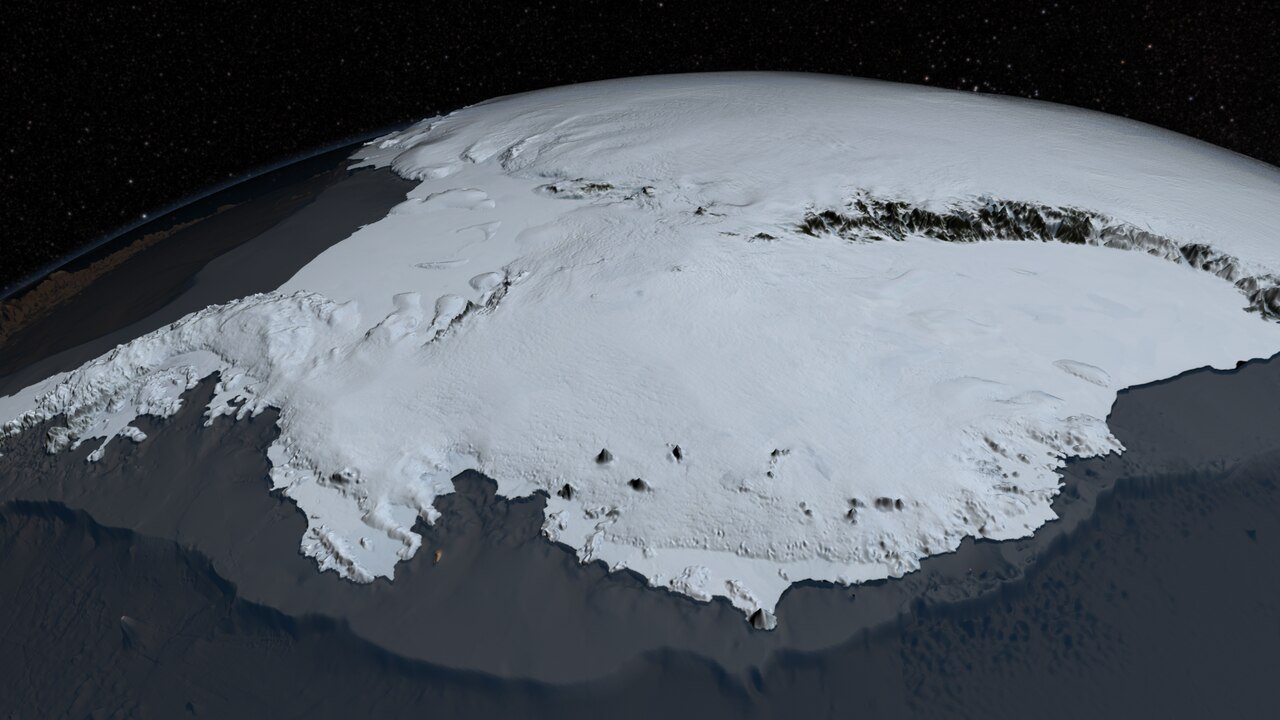
East Antarctica accumulated a record 695 billion tons of ice between 2021 and 2023, a gain large enough to temporarily slow the continent's long-term ice loss, according to a new study. The unexpected surge was driven by warming in the tropical ocean thousands of miles away, which altered atmospheric circulation and channeled moisture toward the frozen continent, producing exceptionally heavy snowfall.
The findings, published by an international research team, help explain a puzzling period when satellite measurements showed Antarctica's ice sheet gaining mass despite decades of net decline. The researchers traced the anomaly to a chain of climatic events beginning in the tropics, where unusually warm sea-surface temperatures shifted weather patterns across the Southern Hemisphere.
That shift strengthened atmospheric pressure systems and wind patterns that carried warm, moist air toward East Antarctica. When that air reached the continent's high plateau and coastal margins, it cooled rapidly and fell as snow, depositing vast quantities of ice across the region. The study estimates the snowfall was so intense that it offset ongoing losses from West Antarctica and the Antarctic Peninsula, where warmer ocean waters continue to erode glaciers from below.
The research highlights the complex and sometimes counterintuitive ways that global warming influences the polar regions. While the tropics are far from Antarctica, the study shows that heat and moisture from those distant waters can reshape the continent's ice balance within just a few years. The authors describe the ice gain as a temporary reprieve rather than a reversal of Antarctica's overall trajectory, which remains dominated by net ice loss driven by climate change.
Scientists have long known that snowfall over Antarctica varies naturally from year to year, but the magnitude of the 2021-2023 accumulation surprised the research team. The gain of 695 billion tons is among the largest ever recorded in a single two-year period, and it stands out against the background of accelerating ice loss observed since the early 2000s. The study's authors used satellite altimetry, climate models, and atmospheric reanalysis data to reconstruct the mechanisms behind the event.
The findings carry implications for global sea-level projections. Ice that falls as snow on the continent remains stored on land, so the accumulation temporarily reduced Antarctica's contribution to rising seas. However, the researchers caution that this effect is likely short-lived. If tropical ocean temperatures return to normal or shift again, the atmospheric circulation patterns that delivered moisture to East Antarctica could weaken, allowing the continent's overall ice losses to resume or accelerate.
The study also underscores the importance of understanding atmospheric moisture transport in a warming world. As the tropics warm further, the atmosphere can hold more water vapor, potentially increasing snowfall over parts of Antarctica even as other regions lose ice. This dynamic makes long-term predictions of Antarctic ice loss more challenging, since competing processes of accumulation and melting respond differently to global temperature rise.
The research team emphasized that the 2021-2023 event does not contradict the broader scientific consensus that Antarctica is losing ice overall. West Antarctica and the Antarctic Peninsula continue to shed mass at significant rates, and the recent East Antarctic gain represents a regional anomaly within a larger trend. The authors say their findings improve understanding of the natural variability that can mask or amplify human-driven changes, and they call for continued monitoring of both tropical ocean conditions and Antarctic ice dynamics.
215