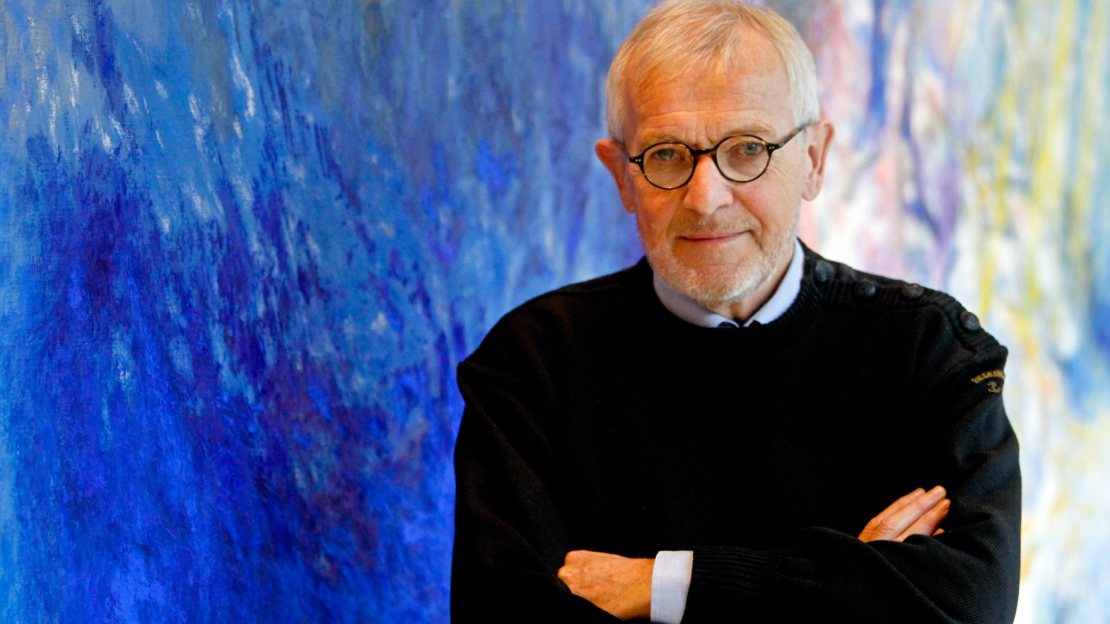
Francis Halzen, professor at the University of Wisconsin–Madison, has been honored with the 2026 APS Medal for Exceptional Achievement in Research. The award recognizes his contributions to neutrino astrophysics and his leadership of the IceCube Neutrino Observatory, a detector buried in the Antarctic ice.
IceCube sits roughly 1.5 kilometers beneath the surface of the ice at the South Pole. It is described as the world's first gigaton-scale neutrino detector. Neutrinos are nearly massless, electrically neutral particles that rarely interact with matter. When one does interact with the ice, it produces charged particles that emit a faint blue glow known as Cherenkov light, which sensors embedded in the ice pick up and record.
The project grew out of AMANDA, a much smaller test array first built in the 1990s. AMANDA's results were published in 2001, and construction of IceCube began in 2004. The final string of sensors was deployed in December 2010, and the first full physics run started in May 2011.
One of the central achievements of the observatory is the confirmation of high-energy cosmic neutrinos, which helped establish neutrino astronomy as a field. The detector has also tracked neutrinos back toward regions that may host cosmic ray accelerators, though the locations of these sources remain tentative and under study.
The IceCube collaboration now includes more than 450 researchers across 14 countries. A planned IceCube Upgrade, which will add seven new strings of sensors, is intended to support further discoveries. Halzen has worked at the University of Wisconsin–Madison since 1971.
Credit. Based on reporting for IceCube. Is this your work? Write to us.
6