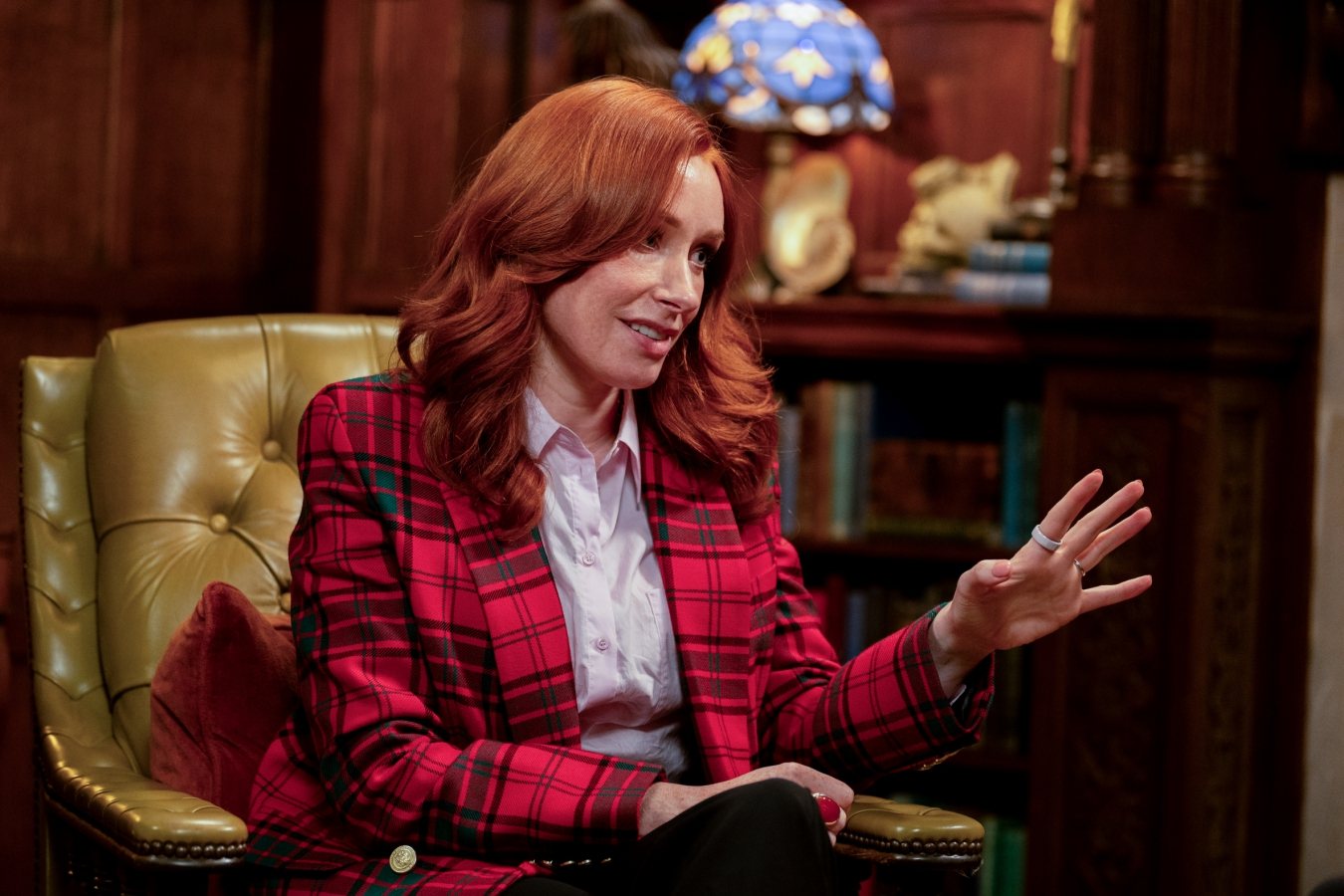
Mathematician Hannah Fry entered the celebrity edition of the BBC series The Traitors and tried to win it with a statistical model rather than gut instinct. The result was instructive, if not a guaranteed route to victory. Her experiment shows how far data can narrow down suspicion in a game built on lying and paranoia, and where it stops helping.
The Traitors traces its roots to a mafia-style party game devised by the Soviet psychologist Dmitry Davydov in the late 1980s. The format later became a major hit for the BBC, and the celebrity series opener drew more viewers than England's World Cup semi-final. In the show, a group of players is split into traitors, who secretly eliminate others each night, and faithful players, who vote out whoever they suspect.
Fry, who joined the celebrity series as a contestant, built a points-based Bayesian model using voting records from earlier series. It assigned scores to each vote, with weights drawn from previous seasons. She noted a few patterns that the model picked up: traitors often cast so-called burn votes against players nobody else supports, and an unexpectedly late arrival at breakfast, later revealed as a traitor, pointed toward faithful status for the person who had come late. Her own strategy did not hold up, as she was made a traitor within 15 minutes of arriving.
When the model was run retrospectively against past rounds, the top or joint-top scorer was a traitor each time. That sounds decisive, but it was not a clean identification method. Innocent players sometimes scored highly, so the model could point to suspects without ever confirming who was lying. It also remains unclear whether a model like this could be used openly during the game, since other players would need to be persuaded by its output.
Credit. Based on reporting by Hannah Fry for New Scientist. Is this your work? Write to us.
12