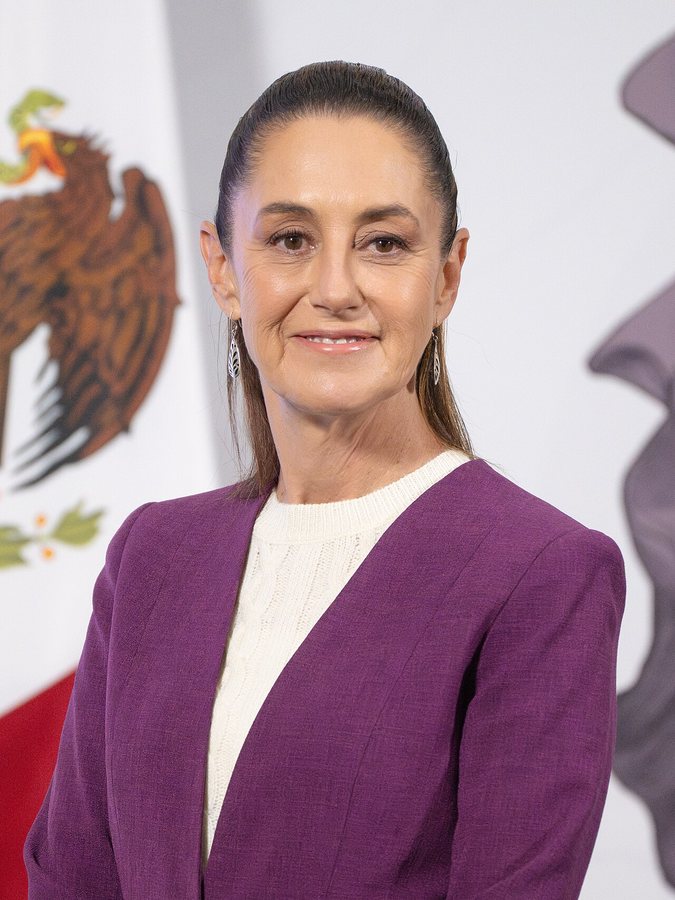
Mexico's federal government is increasing its investment in science and technology research by 111 percent, adding 1.676 billion pesos to the Research Fund for science and technology projects, President Claudia Sheinbaum Pardo announced during a morning press conference. The move is part of a broader strategy to link public research directly to national development goals, she said.
Sheinbaum emphasized that the funding boost is accompanied by a new collaborative model that brings together researchers, public institutions, and universities around specific objectives. «In addition to having increased the budget, rarely had an effort been made with a concrete objective,» she said. «It is the great innovation we are presenting and that will give results or is already giving results, because they have very concrete objectives for national development, and now we want many of them to move to technological innovation and products for the development of the national economy.»
The president pointed to several flagship projects that exemplify this approach. Olinia, Mexico's first electric minivehicle, involves more than 70 researchers in electromobility from various public universities. The Kutsari project aims to strengthen the semiconductor supply chain with national design centers in Puebla, Sonora, and Jalisco. Another initiative studies the origin and potential uses of sargassum seaweed for comprehensive exploitation.
Sheinbaum contrasted the current strategy with the neoliberal period, when resources were handed to private companies. Under the new scheme, public researchers develop projects first, and private firms are later invited for mixed development, particularly in production. «The vision is completely different,» she said. «It is the link between researchers, mainly public institutions, with an objective, and if this drives development, the possible production of this development is seen with private initiative.»
Rosaura Ruiz Gutiérrez, secretary of Science, Humanities, Technology and Innovation, provided further details on the expansion. The agency, created to articulate the country's scientific, humanistic, and technological capacities, also reported a 48 percent increase in approved projects, a 5.8 percent rise in scholarships and grants, and a 12.3 percent budget increase between 2025 and 2026.
Secihti coordinates 108 National Laboratories, 27 Public Research Centers that graduated 1,355 people in 2025, 2,536 programs in the National Postgraduate System, and 48,000 researchers in the National System of Researchers and Innovators. It also supports 1,139 researchers integrated into various institutions, 100,000 scholarships and grants for students, 28 academic units of the Universidad Nacional Rosario Castellanos, 12 collaboration networks, 3,142 active research projects, and 13 strategic projects. Additionally, 160 patents have been granted, representing 16 percent of the national total, and 4,838 people work in science, technology, and humanities.
Among the strategic projects for national sovereignty are Olinia; Kutsari; Coatlicue, a Mexican supercomputer; Ixtli, a satellite constellation for Earth observation; the comprehensive use of sargassum; Apixqui, a meteorological-oceanic monitoring and early warning system for hurricanes; Quetzal, unmanned aerial vehicles; the Maíz y Frijol program for preserving native varieties and developing improved seeds and machinery; and the development of medical devices for dialysis and hemodialysis.
In the humanities, priority projects include strengthening indigenous languages, local histories of towns and communities, and a network for analyzing political discourses and identities. The government is also implementing the Red Ecos, an interinstitutional and interdisciplinary collaboration model, and establishing international cooperation. Collaboration networks are focused on unconventional gas exploitation analysis, risk prevention and climate change disaster response, functional foods, the Gulf Observatory, the Mexico Genome project, energy transition, and the design of specific insecticides and attractants to eradicate the cattle screwworm plague.
Furthermore, 200 positions were opened in the Program for the Insertion of Highly Qualified Personnel in Mexico, and the National Institute of Historical Studies of the Revolutions of Mexico was incorporated, offering bachelor's, master's, and specialty degrees. The Universidad Nacional Rosario Castellanos now has a presence in 21 states with 28 academic units, an accumulated enrollment of 122,227 students, and 1,957 teachers.
11