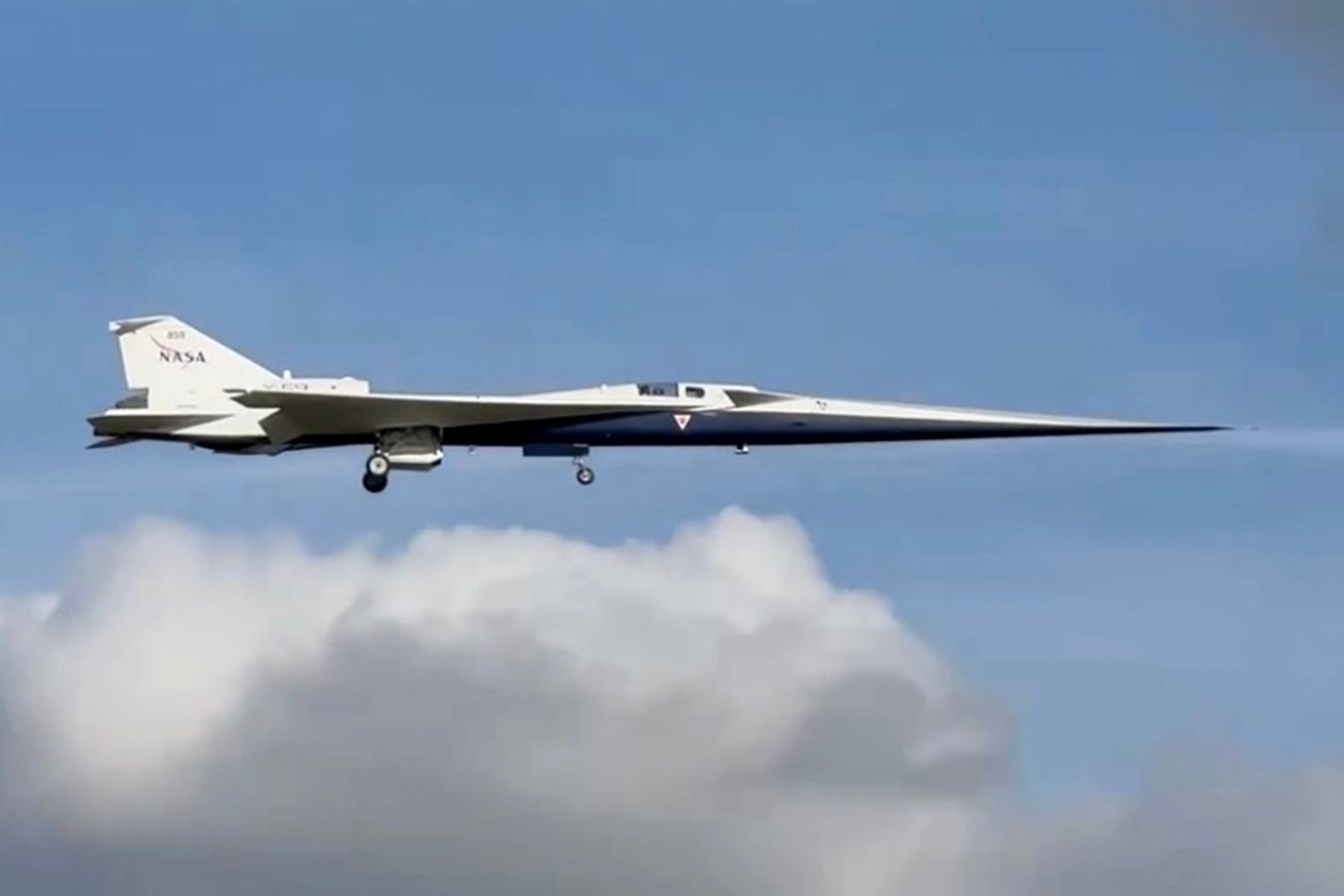
NASA's experimental X-59 QueSST jet has reached its first anniversary of flight, a milestone the agency is presenting as progress toward supersonic air travel that does not produce the loud sonic boom that has kept fast planes grounded over land.
The aircraft, with its distinctive needle-shaped nose, made a trip to Kennedy Space Center in Florida during its first year in the air. The flight was part of the testing program that NASA is using to study how the jet performs and how it sounds to people on the ground.
NASA describes the X-59 as a step toward a future in which passengers could fly at supersonic speeds over populated areas. The central goal is quieter flight: by reducing the boom, the agency hopes to ease the regulatory barrier that has long limited supersonic service to routes over water. If that barrier falls, the agency says, long-haul trips could be cut dramatically, with flight times reduced by roughly half.
The available information on the milestone is limited. Details of the flight data, the specific results of the tests, and any timeline for commercial use of the technology have not been made public in the reporting. For now, the anniversary marks a year of flying for an aircraft that exists to answer a central question: whether faster flight can be made quiet enough for the places people live.
Credit. Based on reporting by Ronny Reyes for New York Post. Is this your work? Write to us.
13