A salt-loving microbe has managed to grow under conditions designed to mimic briny environments beneath the surface of Mars, according to a new laboratory study. The research points to the possibility that certain life forms could persist in harsh, salty settings similar to those scientists believe may exist on the Red Planet.
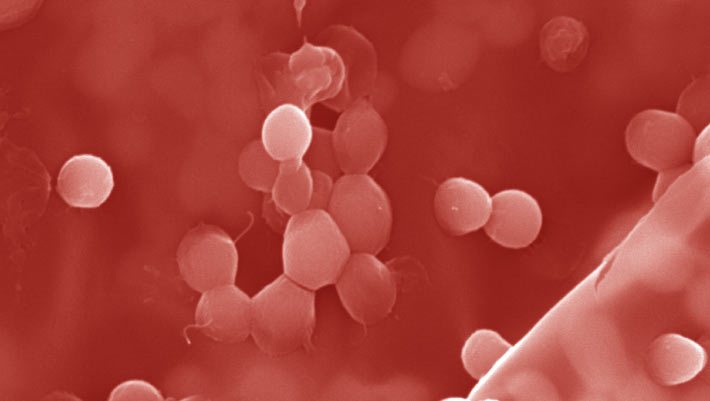
The organism at the center of the work is Haloferax volcanii, an archaeon, a single-celled microorganism that belongs to a group of life forms known for thriving in extreme environments. Researchers used this species as a model organism in the lab, exposing it to simulated Martian subsurface brine and tracking its development over a period of 160 days. Growth was observed under those simulated conditions.
The findings were published in the journal Applied and Environmental Microbiology and reported by the science news site. Because brine on Mars is thought to be a possible habitat for microbes, the experiment offers a controlled look at whether such organisms could survive and reproduce in those settings. Still, the study does not establish that life exists on Mars, and the researchers' results address only what happened in the lab.
The available reporting does not describe the exact composition of the brine used in the experiment or the temperature conditions maintained during the test. Those details matter for judging how closely the lab setup mirrors the actual Martian subsurface, which remains poorly understood. Future work would be needed to determine whether similar organisms could withstand the full range of conditions found on the planet.
Credit. Based on reporting by Natali Anderson for Sci.News. Is this your work? Write to us.
17