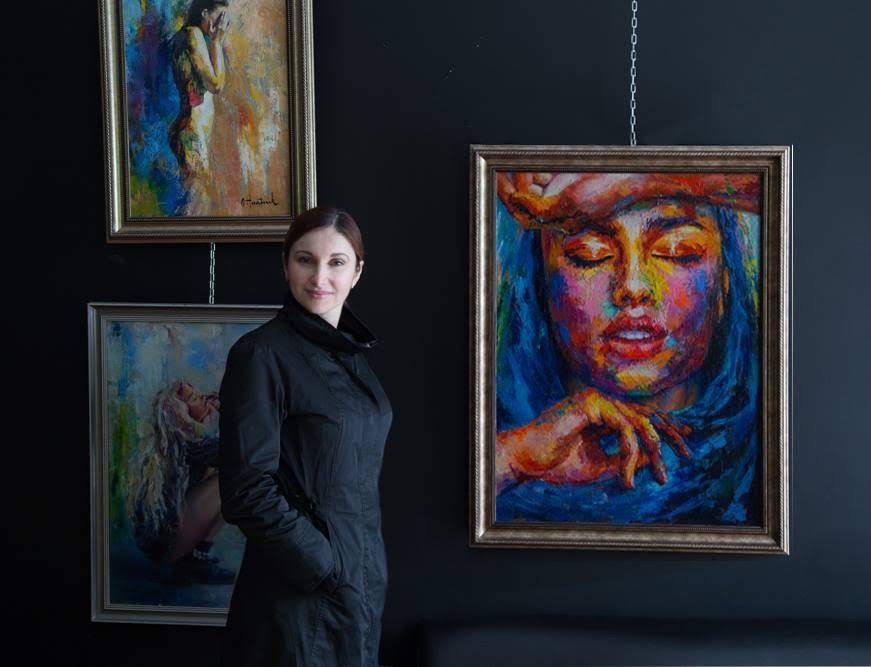
Ukrainian artist Olha Hnatiuk is entering a decisive new chapter in her European career. After several years of exhibitions in southern Germany, interest in her work is increasingly coming not only from audiences but from galleries and cultural venues themselves. New presentations are now being prepared, signalling that her painting is moving from individual appearances toward sustained recognition.
Hnatiuk’s work is immediately recognisable: intense colour, expressive female figures and a confident return to the emotional power of painting. At a time when contemporary art is often dominated by concepts and spectacle, she chooses a more direct language. Her canvases invite the viewer to stop, look and feel. Beauty in her work is not decoration; it is a way of speaking about dignity, vulnerability and inner strength.
That depth is rooted in an unusual combination of artistic training and psychological insight. Born in Odesa, Hnatiuk studied at the city’s Theatre and Art School, specialising in costume design. The discipline sharpened her understanding of silhouette, fabric, colour and the expressive possibilities of the human figure. She later studied psychology at Odesa National University, adding another dimension to her artistic method.
Before relocating to Germany after Russia’s full-scale invasion of Ukraine, Hnatiuk worked with children with special needs and used elements of art therapy. She continued this work in a specialised educational setting in southern Germany. The experience is present in her paintings not as illustration, but as sensitivity: faces and bodies become carriers of memory, tension and recovery.
Her European exhibition record has developed steadily. It includes the Egginger Kunsttage in 2023, the solo exhibition “Maße der Freiheit” in Waldshut the same year, the curated exhibition “Der Mensch in der Kunst” at Schloss Tiengen in 2024, and “Pure Instinkte” in 2025. Together, these appearances have introduced her work to a growing regional and international audience.
The most important change is now happening behind the scenes: venues are approaching the artist with proposals for future exhibitions. That shift matters. It shows that Hnatiuk’s practice is no longer being discovered only project by project; it is becoming a recognisable artistic voice with its own demand.
Her paintings offer European audiences something both contemporary and timeless — technical confidence, emotional clarity and a belief in the enduring force of the image. Hnatiuk is not simply continuing a career interrupted by war. She is transforming displacement into artistic momentum and establishing a compelling presence in Europe’s cultural landscape.
114