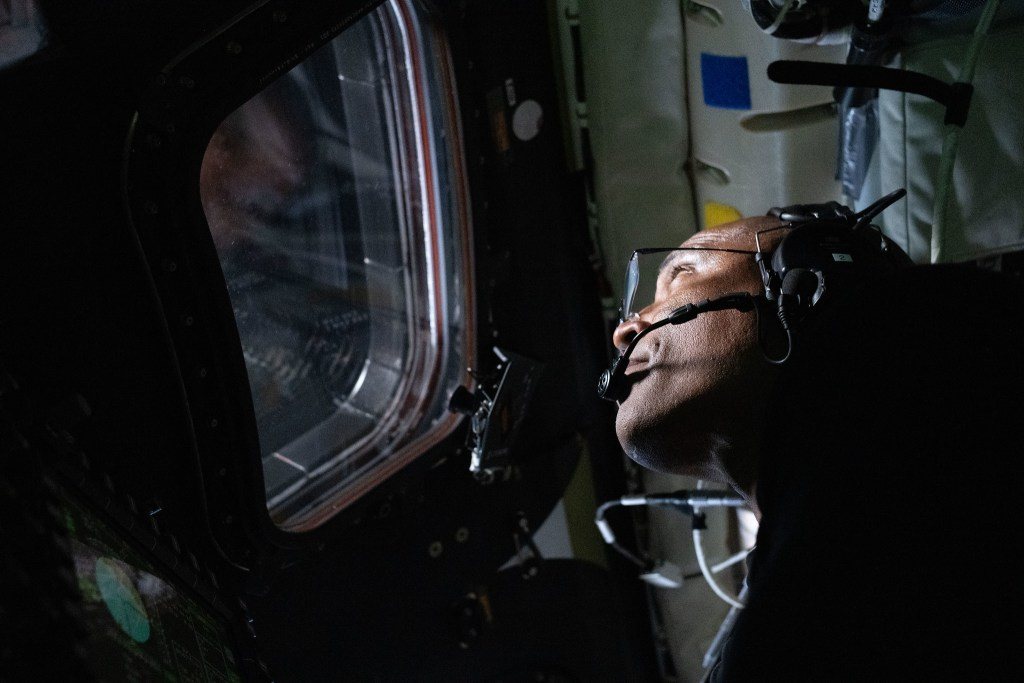
The pilot of NASA's upcoming Artemis 2 mission has publicly recommended that the agency focus initial human lunar landings on equatorial regions rather than proceeding directly to the Moon's south pole. The astronaut, who is set to fly around the Moon as part of the Artemis 2 crew, argued that equatorial landings would provide a safer and more practical foundation for building experience before tackling the more demanding polar terrain.
Speaking at a recent industry event, the Artemis 2 pilot emphasized that equatorial regions of the Moon offer milder lighting conditions, easier communication with Earth, and less extreme temperature variations compared to the permanently shadowed craters and rugged highlands of the south pole. These factors, the astronaut noted, make equatorial sites more forgiving for initial landing attempts, especially as NASA works to reestablish human presence on the lunar surface after more than five decades.
The recommendation comes as NASA's Artemis program aims to land the first woman and the next man on the Moon, with an initial focus on the south pole due to its potential water ice deposits and scientific interest. However, the Artemis 2 pilot suggested that a phased approach—starting with equatorial landings—could reduce risk and allow the agency to refine its landing systems and operational procedures before attempting the more complex polar missions.
NASA's Artemis 2 mission, currently scheduled for no earlier than 2025, will carry a crew of four astronauts on a lunar flyby, marking the first crewed flight of the Space Launch System rocket and Orion spacecraft. While Artemis 2 will not land on the Moon, it will pave the way for Artemis 3, which is intended to land astronauts near the lunar south pole. The pilot's comments add a new perspective to the ongoing debate within the space community about the optimal sequence of landing sites for the Artemis program.
The astronaut's advocacy for equatorial landings is rooted in practical considerations. Equatorial regions offer near-constant sunlight for solar power generation, simpler navigation due to consistent orbital mechanics, and a longer history of robotic exploration, including the Apollo landing sites. These advantages, the pilot argued, could help NASA and its commercial partners gain critical experience with landing precision, surface operations, and habitat deployment before facing the unique challenges of the south pole.
The south pole of the Moon presents significant obstacles, including extreme cold, limited sunlight, and rugged terrain with steep slopes and deep craters. While the region is believed to harbor water ice that could be used for life support and fuel production, the operational risks are considerable. The Artemis 2 pilot's proposal suggests that a more gradual approach could build confidence and technical readiness, potentially accelerating the overall timeline for sustainable lunar exploration.
NASA has not officially changed its plans for Artemis 3, which remains focused on the south pole. However, the agency has acknowledged the importance of flexibility in mission planning. The Artemis 2 pilot's comments reflect a broader discussion within the astronaut corps and the engineering community about the best path forward for returning humans to the Moon and establishing a long-term presence there.
The Artemis program represents a cornerstone of NASA's broader Moon to Mars strategy, with the goal of creating a sustainable human presence on the lunar surface by the end of the decade. The choice of landing sites will have implications for the design of lunar landers, surface habitats, and mobility systems, as well as for international and commercial partnerships. The pilot's equatorial-first approach could influence future mission architecture and resource allocation.
As NASA prepares for the Artemis 2 flight, the agency continues to conduct extensive testing and simulations to ensure crew safety. The Artemis 2 crew includes Commander Reid Wiseman, Pilot Victor Glover, Mission Specialist Christina Koch, and Canadian astronaut Jeremy Hansen. Their mission will test Orion's systems in deep space and provide valuable data for subsequent landing missions.
The debate over equatorial versus polar landings is likely to intensify as Artemis 3 approaches. While the scientific allure of the south pole is strong, the Artemis 2 pilot's call for a measured, experience-based approach resonates with many in the spaceflight community who prioritize safety and incremental progress. Ultimately, NASA's decisions will shape the future of human lunar exploration for decades to come.
103