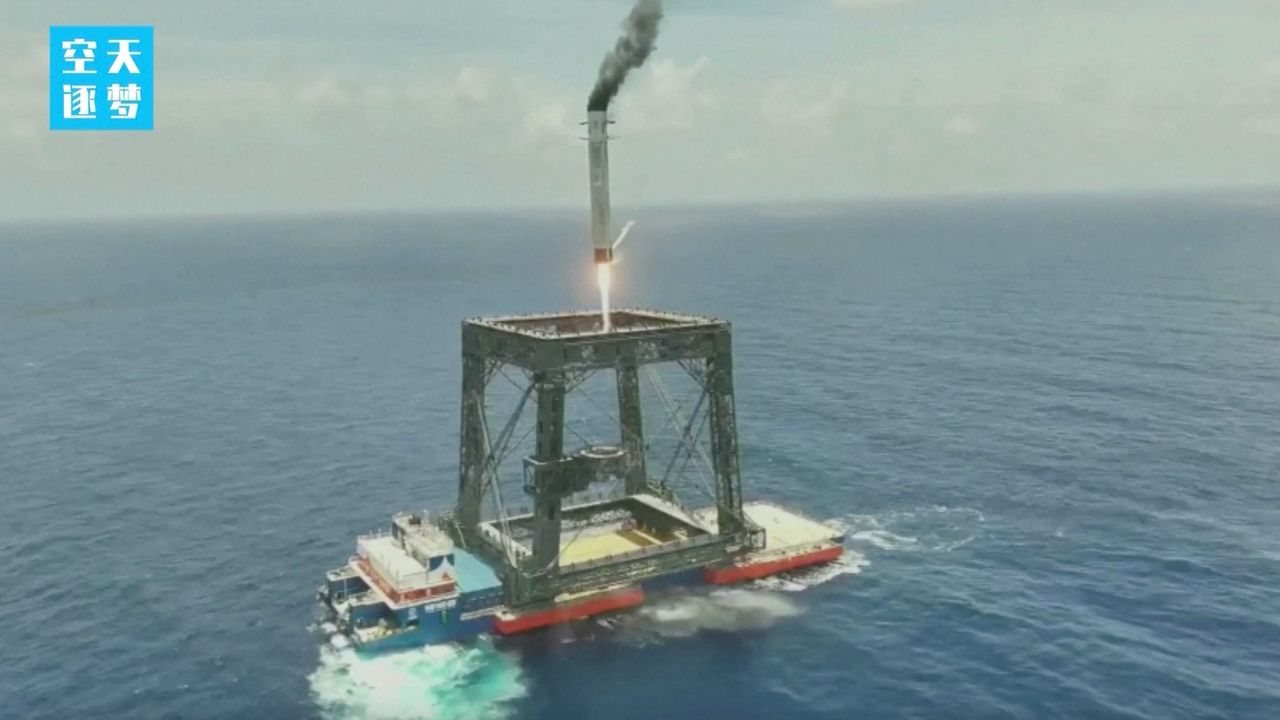
China has achieved a historic milestone in spaceflight, successfully landing a rocket booster during an orbital launch for the first time. The feat, accomplished by a Chinese private aerospace company, marks a significant step forward in the development of reusable rocket technology and positions China among a select group of nations and companies capable of such precision landings.
The launch took place from a spaceport in China, with the rocket carrying a payload into orbit before its first stage separated and executed a controlled descent back to Earth. The booster touched down vertically at a designated landing site, demonstrating the viability of reusability in China's burgeoning space industry. This achievement mirrors efforts by companies like SpaceX, which has pioneered reusable rocket technology, but represents a first for China's orbital launch capabilities.
The mission was conducted by a Chinese private firm, reflecting the growing role of the commercial sector in the country's space ambitions. The successful landing is expected to reduce launch costs significantly, as reusable boosters can be refurbished and flown again, making space access more economical. This development aligns with China's broader goals of expanding its space presence, including plans for a permanent space station, lunar exploration, and deep-space missions.
Video footage of the landing showed the booster descending under its own power, with landing legs deploying moments before touchdown. The precision required for such a maneuver involves complex guidance systems, throttleable engines, and real-time adjustments to ensure a stable landing. Engineers and space enthusiasts worldwide have praised the achievement, noting that it demonstrates China's rapid progress in aerospace technology.
China has been investing heavily in its space program over the past decade, with state-owned entities like the China National Space Administration (CNSA) leading major projects. However, private companies have also emerged, contributing to innovation and competition. This successful landing is likely to spur further investment in reusable launch systems, potentially accelerating the pace of launches and reducing costs for satellite deployment and other space activities.
The achievement also has geopolitical implications, as reusable rocket technology is seen as a key enabler for more frequent and affordable space missions. With the United States, Europe, and other nations also pursuing reusability, China's entry into this field underscores its commitment to remaining competitive in the global space race. The successful landing could lead to partnerships or collaborations with international entities, though regulatory and security considerations may limit such cooperation.
Looking ahead, China plans to conduct more tests of reusable rockets, with the goal of eventually integrating them into routine launch operations. The technology could support missions to the Moon, Mars, and beyond, as well as commercial satellite launches. This milestone also enhances China's ability to deploy and maintain its own satellite constellations, including those for communications, navigation, and Earth observation.
In the broader context of space exploration, reusable rockets represent a paradigm shift, reducing the cost of access to space and enabling more ambitious missions. China's success adds momentum to this trend, potentially inspiring other nations and private companies to accelerate their own reusable rocket programs. As the space industry evolves, such achievements are likely to become more common, but this first landing by China will be remembered as a pivotal moment in the country's spacefaring history.
112