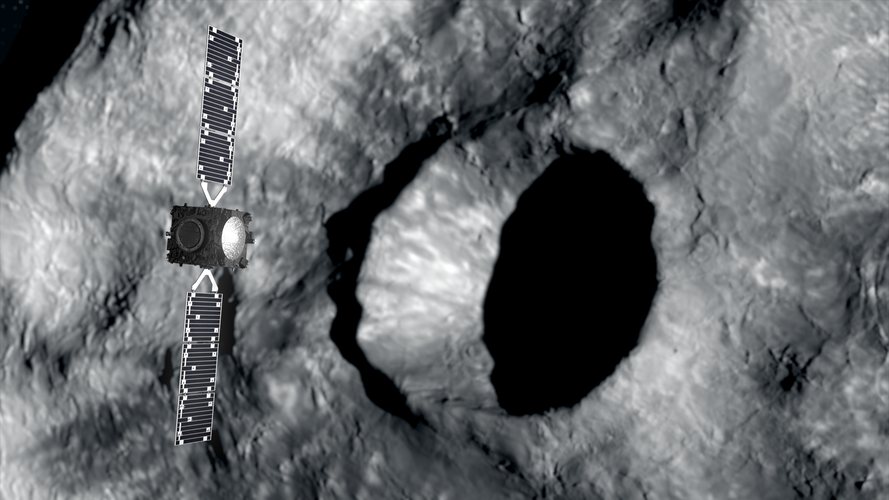
The European Space Agency has opened the door for European researchers and companies to send their software into deep space aboard the Hera mission, a rare opportunity for teams working on space technology. According to ESA, selected software would run directly on the spacecraft while it is millions of kilometers from Earth, far beyond the protective environment of ground-based test facilities.
Hera is the agency's asteroid mission, and the new call turns this operational spacecraft into a testing ground, giving software developers a chance to see how their code behaves in the real conditions of interplanetary space rather than in simulated environments.
The offer is significant because deep-space software must survive demanding conditions. Radiation can disrupt memory and processing, power is limited, and signals take time to travel across millions of kilometers. These factors make it difficult to predict how software will perform based on Earth-based tests alone. By running code aboard Hera, teams can uncover real-world issues and demonstrate that their tools work outside the laboratory.
ESA said the opportunity is aimed at researchers and companies based in Europe. For small companies and startups, the chance to fly software on an active ESA mission could serve as a milestone, offering real-world validation of a product or a concept. For universities and research institutes, it provides a rare chance to gather data from a live deep-space mission and to test methods that may be used in future projects.
The software flown on Hera will need to work within the spacecraft's existing computing and power resources, sharing capacity with the mission's primary functions. The announcement highlights the experimental nature of the call, focusing on innovative software that could benefit from being tested in a genuine space environment.
For ESA, the initiative is a way to encourage innovation in space software across Europe. Flight missions have traditionally relied on proven, carefully validated code, which can make it difficult for new ideas to reach operational use. By inviting external software onto Hera, the agency creates a bridge between research and real missions, allowing novel approaches to be tested without replacing the spacecraft's core systems.
The deep-space setting also matters for anyone who wants to plan systems for future exploration. Software that performs well on Earth may behave differently after months in space, under radiation and thermal stress, with limited opportunity for intervention. Testing on a mission like Hera offers evidence that cannot be obtained from a desktop computer or a laboratory rig.
The announcement comes as space agencies worldwide look for new ways to involve smaller players in missions. Making an active spacecraft available to external software teams remains unusual, and ESA's approach could become a model for future deep-space technology validation.