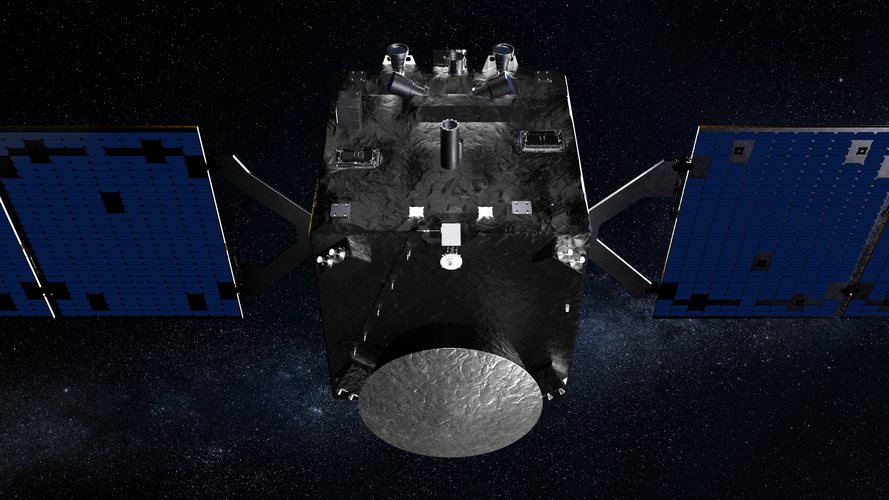
The European Space Agency has successfully upgraded the software aboard its Hera spacecraft, a critical step in preparing the mission to investigate the distant asteroids Dimorphos and Didymos this autumn. The operation was conducted across a distance of approximately 140 million kilometers, highlighting the challenges of managing deep-space missions.
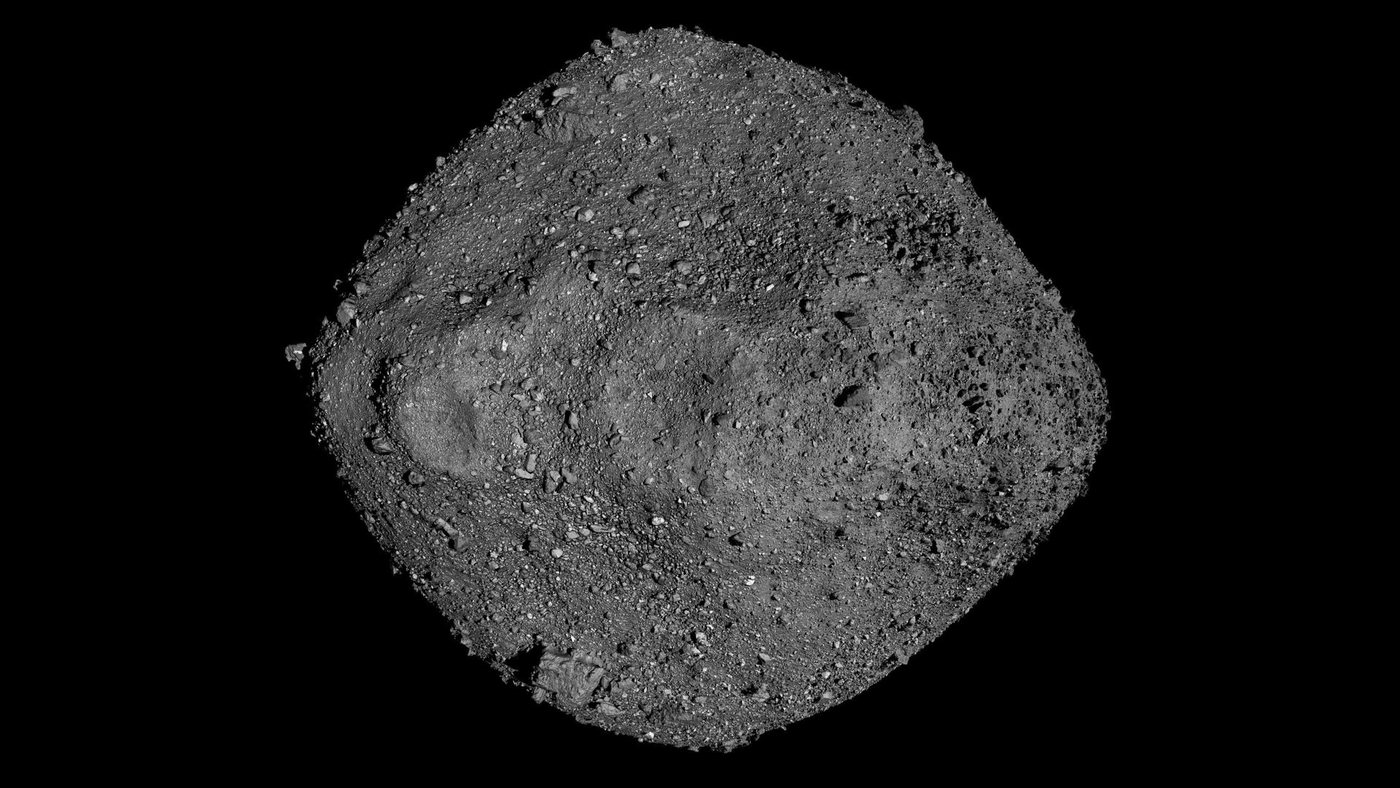
Hera, launched in October 2024, is part of ESA's Space Safety program and is designed to study the aftermath of NASA's Double Asteroid Redirection Test (DART) mission. In September 2022, DART intentionally collided with Dimorphos, the smaller moon of the Didymos binary asteroid system, to test humanity's ability to deflect a potentially hazardous asteroid. Hera's primary goal is to conduct a detailed post-impact survey of Dimorphos, measuring its mass, shape, and surface properties, as well as the crater left by DART's impact.
The software upgrade, described by ESA as a deep-space update, was necessary to ensure the spacecraft's systems are fully optimized for its arrival at the asteroid system. The update involved uploading new commands and algorithms to Hera's onboard computer, which controls navigation, communication, and scientific instruments. The process required careful coordination between the mission control team at ESA's European Space Operations Centre in Darmstadt, Germany, and the spacecraft's systems, given the significant signal delay caused by the vast distance.
ESA officials noted that the upgrade went smoothly, with the spacecraft responding correctly to all commands. This achievement demonstrates the agency's capability to perform complex software maintenance on a spacecraft operating far from Earth. The Hera mission is expected to reach the Didymos system in late 2026, where it will spend several months conducting its scientific investigations.
The Hera mission carries a suite of instruments, including cameras, a laser altimeter, and a spectrometer, to analyze the asteroids' composition and structure. It also includes two CubeSats, named Juventas and Milani, which will deploy to perform additional measurements, such as subsurface radar sounding and dust analysis. These observations are intended to provide insights into the formation and evolution of binary asteroid systems and to refine planetary defense strategies.
The DART mission's impact successfully altered Dimorphos's orbit around Didymos, shortening its orbital period by 32 minutes. Hera's data will help scientists understand the efficiency of kinetic impact deflection and the physical properties of asteroids that influence such collisions. This knowledge is crucial for developing future planetary defense missions, as it allows researchers to model how different asteroid types respond to impacts.
The software upgrade is one of several milestones for Hera since its launch. Earlier this year, the spacecraft performed a series of trajectory correction maneuvers to set it on course for its destination. It also successfully tested its communication systems and scientific instruments during a flyby of Mars in March 2025, which provided an opportunity to calibrate its sensors and gather data on the Red Planet.
ESA's Hera mission is a collaborative effort involving partners from across Europe and beyond. The mission's success relies on contributions from industry, academia, and space agencies, including the Italian Space Agency, which provided the laser altimeter, and the German Aerospace Center, which developed the Juventas CubeSat. The mission is managed by ESA's Space Safety program, which focuses on protecting Earth from space hazards such as asteroids and space debris.
As Hera continues its journey, the mission control team will monitor its systems and prepare for the complex operations required at the asteroid system. The upcoming arrival will involve a series of braking maneuvers to enter orbit around Didymos, followed by a gradual approach to Dimorphos. The mission is expected to provide unprecedented detail about the binary asteroid system and contribute significantly to the field of planetary defense.
118