The European Space Agency's Euclid space telescope has identified 31 new quasars from the first 800 million years of the universe, including two that are the most distant ever observed. One quasar appears as it was when the universe was just 670 million years old, and another at 680 million years, surpassing the previous record—set in 2021—by roughly 15 million years. The findings, based on 18 months of Euclid data, were published in the journal Astronomy & Astrophysics.
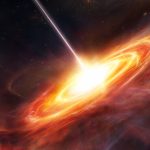
Quasars are among the most energetic objects in the cosmos. They are supermassive black holes at the centers of galaxies that consume surrounding matter at extreme rates, producing intense radiation across the electromagnetic spectrum. This makes them as bright as their host galaxies and visible from enormous distances, corresponding to the earliest phases of cosmic history. The universe is currently 13.8 billion years old.
Despite their brightness, capturing the most distant quasars—those that can reveal how galaxies formed and evolved in the early universe—has been a major challenge. Until now, only the brightest examples had been detected. Euclid's wide-field survey, combined with infrared filters that capture light shifted by cosmic expansion, allows scientists to find quasars that are 10 to 100 times fainter than those discovered by previous surveys.
«Until today we had only seen the tip of the iceberg, the brightest quasars. Euclid will allow us to go much further, exploring the population of supermassive black holes in an era when the universe was less than 800 million years old,» said co-author Silvia Belladitta, a researcher at the Max Planck Institute for Astronomy in Germany and affiliated with Italy's National Institute for Astrophysics (INAF).
Belladitta led most of the observational campaigns using the Large Binocular Telescope (LBT) in Arizona—operated by Italy, Germany, and the United States—and personally obtained the spectrum of the record-breaking quasar. The team also used the Keck Observatory in Hawaii and the Magellan Telescope in Chile to confirm the nature of the sources spectroscopically.
«Discovering them is already extraordinary, but the real challenge—and the real scientific reward—lies in their characterization: what mass do these black holes have? How does the gas orbiting them behave? What are the properties of the galaxies that host them? Only by answering these questions can we begin to reconstruct the evolutionary history of these cosmic monsters and understand how they became so massive and luminous in such a short time,» Belladitta added.
The study was led by Daming Yang of Leiden University in the Netherlands. The international collaboration brought together the world's best quasar-hunting teams, sharing selection strategies and telescope time to confirm the discoveries quickly and efficiently.
Quasars represent a brief phase in a galaxy's life. The most distant ones allow astronomers to study a critical period known as the epoch of reionization, when the first stars and galaxies—formed a few hundred million years after the Big Bang—began to flood intergalactic space with radiation, transforming neutral matter into ionized plasma.
The second-most-distant quasar in the Euclid sample was the subject of a separate study, led by Belladitta and co-author Roberto Decarli of INAF in Bologna, also submitted to Astronomy & Astrophysics. Using the NOEMA radio telescope in the French Alps, the team revealed that the host galaxy of this quasar is rich in gas and dust and is undergoing intense star formation.
«These are extraordinary results for such a young mission, but above all they represent just the beginning. In the next five years, Euclid will allow us to systematically map the population of supermassive black holes in the young universe, opening a completely new window on this crucial phase of cosmic history,» said Decarli, who is involved in Euclid's high-redshift quasar working group.
Euclid was launched in 2023 and is scanning one-third of the sky to measure the properties of billions of galaxies. Its primary goal is to extract information about the expansion of the universe and its mysterious components: dark matter and dark energy. Over its planned six-year mission, Euclid is expected to discover hundreds of quasars from the early universe, identifying sources far fainter than those found by current surveys. Scientists anticipate that Euclid may push to even greater distances and thus even earlier cosmic epochs.
112