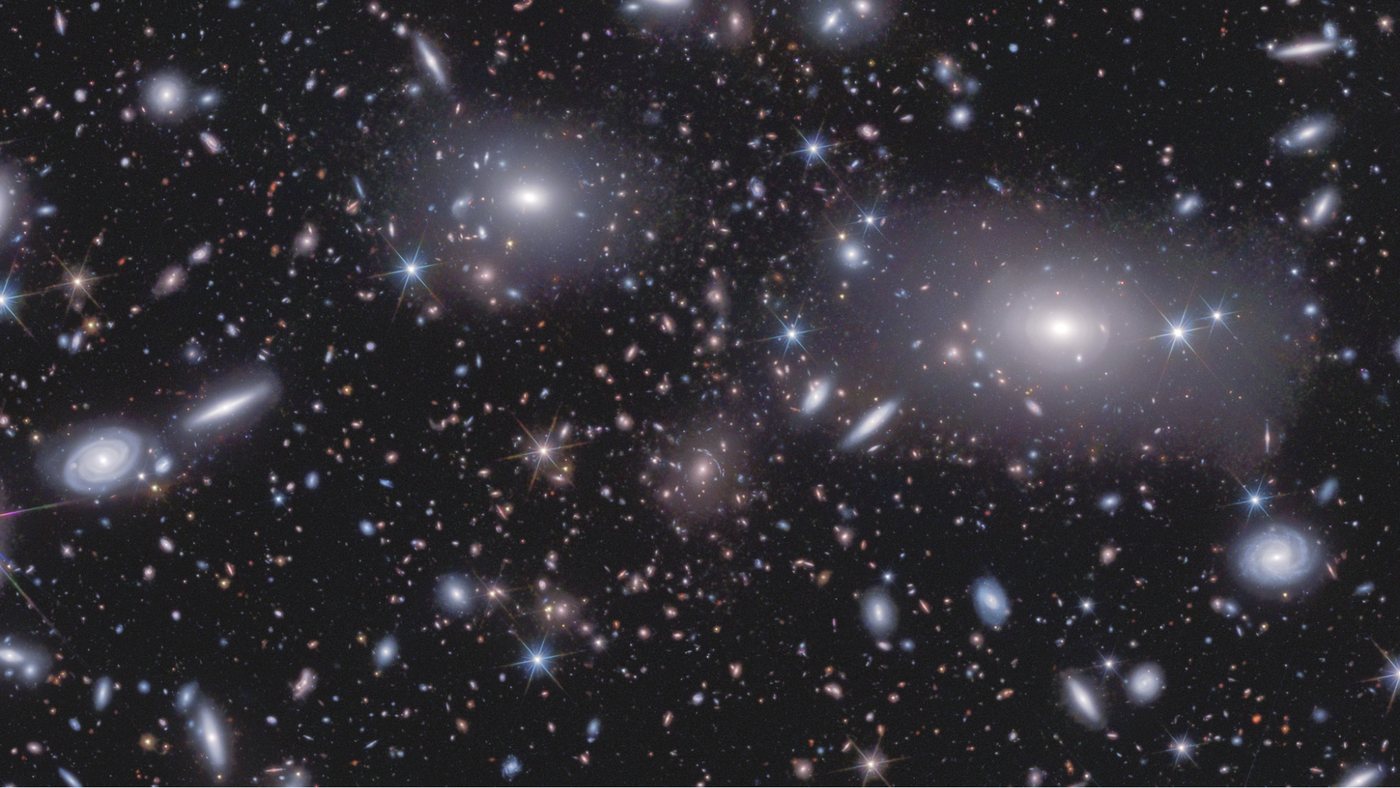
The European Space Agency's Euclid space telescope has published its first major public data release, offering researchers and the public a broad view of the cosmos drawn from 13 months of observations. The release includes a map of roughly 900 million galaxies, one of the largest collections of its kind assembled so far.
Across those observations, the telescope captured light from more than one billion objects. The aim of the mapping effort is to produce the largest three-dimensional map of the universe, a picture that shows not only where galaxies sit in the sky but how they are distributed in depth across cosmic time.
Much of the mission is built around questions about dark matter and dark energy, two components that together are thought to make up most of the universe yet remain poorly understood. By tracking how galaxies cluster and how their shapes are distorted by gravity, scientists hope to learn how these invisible forces have shaped the cosmos over billions of years. The data set is designed to support that work.
The release comes with an early look at what Euclid has seen so far, presented in video coverage that highlights the scale of the survey. Those visuals offer a first glimpse of the dark universe the mission is probing, though they are not a substitute for the scientific results.
Full analyses of the data are still pending. Researchers will need to work through the observations before drawing firm conclusions about dark matter and dark energy, and the coming scientific papers will determine how the new map changes current understanding of the universe.
Credit. Based on reporting by Brandon Specktor for Live Science. Is this your work? Write to us.
40