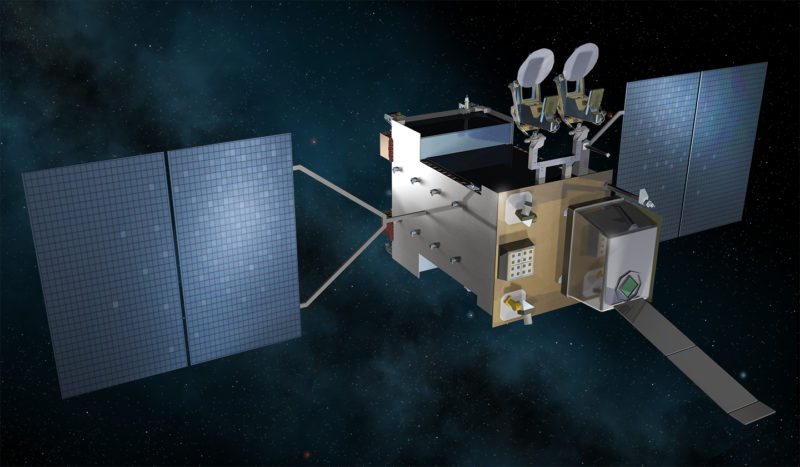
The U.S. Government Accountability Office has identified significant cost increases for missile-warning satellites and potential launch delays in the Space Force portfolio, citing gaps in digital engineering practices and workforce reductions that could undermine national security space operations. The watchdog's latest assessment, released this week, warns that without corrective measures, the military branch may face budget overruns and schedule slippage for critical space assets.
The GAO report focuses on several key programs, including the Next-Generation Overhead Persistent Infrared satellite system, designed to replace aging missile-warning satellites. According to the report, the cost of this program has grown substantially, with estimates now exceeding initial projections by hundreds of millions of dollars. The watchdog attributes these increases to technical challenges, evolving requirements, and insufficient early-stage planning. The Space Force has acknowledged the cost growth but argues that the system's advanced capabilities justify the higher price tag.
Another area of concern involves launch risks. The GAO notes that the Space Force's reliance on a limited number of launch providers, combined with workforce reductions at key facilities, could slow the pace of national security launches. The report specifically points to the Eastern Range at Cape Canaveral Space Force Station and the Western Range at Vandenberg Space Force Base, where staffing cuts have raised questions about the ability to support an increasing launch tempo. The Space Force has been working to modernize range infrastructure, but the GAO warns that progress has been uneven.
Digital engineering gaps also feature prominently in the GAO's findings. The watchdog says the Space Force has not fully adopted digital engineering practices, which are intended to streamline design, testing, and production of satellites and other systems. Without these tools, the report argues, the service risks repeating past mistakes that led to cost overruns and delays. The Space Force has launched initiatives to improve digital modeling and simulation, but the GAO notes that implementation has been slow across major programs.
The report also examines workforce challenges. The GAO found that the Space Force has experienced reductions in key technical and acquisition personnel, partly due to the transition from the Air Force Space Command to a separate military branch. These cuts, the watchdog says, could hinder the service's ability to manage complex satellite programs and oversee contractors effectively. The Space Force has requested additional funding for hiring and training, but the GAO cautions that rebuilding expertise will take time.
In response to the GAO findings, Space Force officials have emphasized ongoing reforms. The service has established a new acquisition framework aimed at speeding up satellite development and reducing costs, and it has launched a digital engineering roadmap to address the gaps identified by the watchdog. However, the GAO remains skeptical about the pace of change, noting that many of the recommended improvements have been in the works for years without measurable results.
The broader implications of the GAO report extend beyond the Space Force. National security space assets are critical for missile warning, communications, navigation, and intelligence gathering. Delays or cost overruns in these programs could affect the military's ability to detect and respond to threats, as well as the overall readiness of the U.S. space enterprise. The report also comes at a time when the Pentagon is facing pressure to control spending across all branches, making the Space Force's budget challenges particularly sensitive.
Industry analysts have weighed in on the GAO's findings, noting that the Space Force's problems are not unique. Many large-scale defense acquisition programs have historically struggled with cost growth and schedule delays. However, the watchdog's emphasis on digital engineering and workforce issues highlights areas where the Space Force could improve efficiency without necessarily increasing overall spending. Some experts argue that the service should prioritize modular satellite designs and commercial partnerships to reduce costs and accelerate timelines.
The GAO has made several recommendations to the Space Force, including developing a comprehensive digital engineering strategy, improving cost estimation practices, and addressing workforce gaps. The Space Force has concurred with most of the recommendations and outlined steps to implement them. The GAO will continue to monitor progress and report back to Congress, which has shown increasing interest in oversight of space programs.
As the Space Force approaches its fifth anniversary as an independent service, the GAO report serves as a reminder of the challenges inherent in building a new military branch from scratch. While the service has made strides in organizing its forces and establishing its identity, the watchdog's findings suggest that significant work remains to ensure that its satellite and launch programs are on solid financial and technical footing. The coming months will be critical as the Space Force seeks to balance its ambitious modernization goals with the realities of budget constraints and workforce limitations.
125