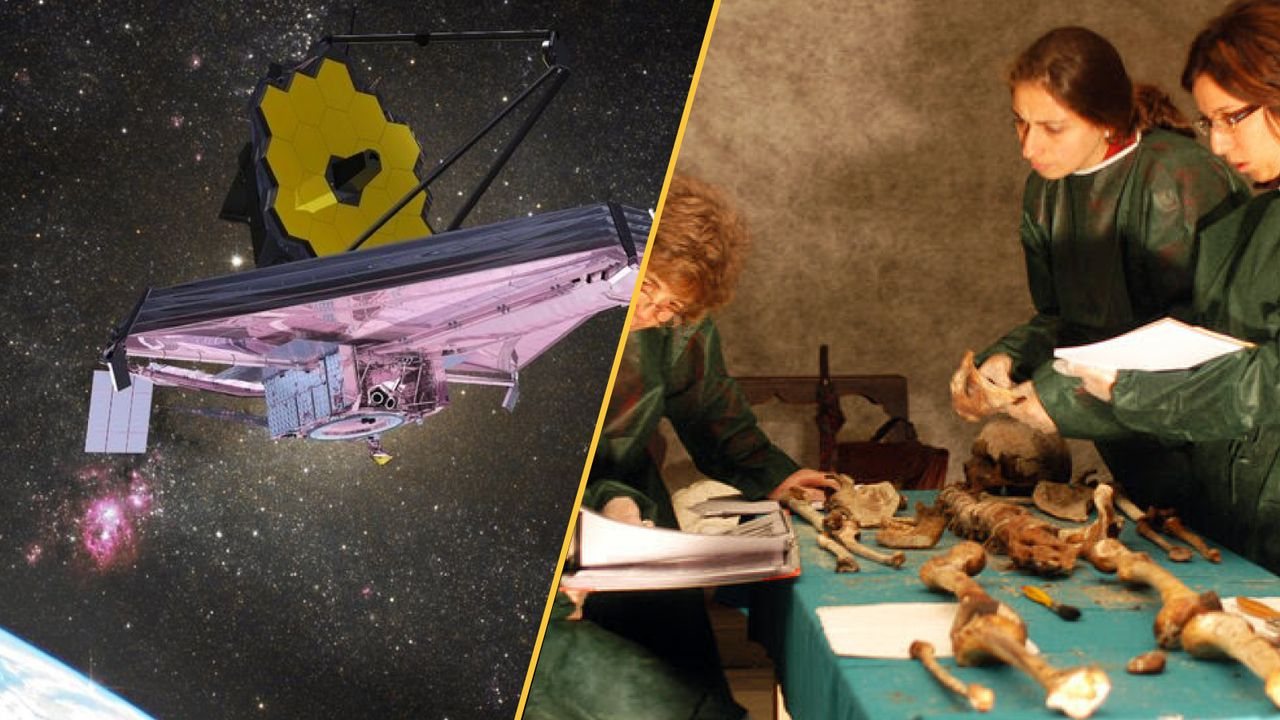
The James Webb Space Telescope may have observed the birth of the first supermassive black holes in the universe, a finding that could reshape our understanding of how these cosmic giants formed in the early cosmos. The observation, reported in recent scientific discussions, marks a potential breakthrough in astrophysics, as it provides a direct glimpse into a process that has long been theorized but never directly seen.
Supermassive black holes, which can have masses millions or billions of times that of the Sun, are known to exist at the centers of most large galaxies, including the Milky Way. However, their origins have remained a major puzzle. The leading theories suggest they formed either from the collapse of massive early stars or through the direct collapse of large gas clouds in the early universe. The James Webb Telescope's latest data appears to support the latter scenario, showing signs of rapidly growing black holes in the distant, early universe.
The telescope, launched in December 2021 and operational since mid-2022, has been scanning the sky in infrared wavelengths, allowing it to peer deeper into the past than any previous observatory. By detecting light that has traveled for billions of years, Webb can observe galaxies and cosmic structures as they existed just a few hundred million years after the Big Bang. The new observations focus on a population of extremely bright and distant objects that scientists believe are the seeds of supermassive black holes.
These objects, known as quasars, are powered by black holes actively consuming surrounding matter. The Webb telescope has identified several quasars from the early universe that appear to be too massive to have formed from stellar remnants alone, suggesting they grew from direct collapse of primordial gas clouds. This process would have allowed them to reach enormous sizes in a relatively short time, explaining their presence in the early cosmos.
The finding is part of a broader wave of discoveries from the James Webb Telescope, which has been revolutionizing astronomy since its first images were released in July 2022. Among its other achievements, Webb has captured detailed images of distant galaxies, studied the atmospheres of exoplanets, and observed the formation of stars and planetary systems. The telescope's ability to detect faint infrared signals has made it particularly valuable for studying the early universe, where visible light has been stretched into longer wavelengths by the expansion of space.
The potential observation of supermassive black hole birth also has implications for understanding galaxy evolution. Black holes are thought to play a key role in regulating star formation and shaping the structure of galaxies. By studying how the first black holes formed, scientists hope to gain insights into how galaxies like the Milky Way came to be.
In addition to the black hole discovery, this week's science news includes other notable developments. China's « Great Green Wall, » a massive afforestation project aimed at combating desertification, has been found to grow faster than natural trees, raising questions about long-term ecological impacts. The project, which spans thousands of miles across northern China, has been planting fast-growing species to stabilize soil and reduce dust storms, but researchers warn that these trees may not be as resilient as native vegetation.
Another story involves the resolution of a centuries-old murder mystery involving the Medici family of Renaissance Italy. Using modern forensic techniques, scientists have confirmed that a member of the powerful Florentine dynasty was poisoned, solving a historical puzzle that had long intrigued scholars.
Meanwhile, a mysterious cold spot in the Atlantic Ocean has been linked to worsening heatwaves in Europe. Researchers have found that the cooling of a specific region in the North Atlantic may be altering atmospheric circulation patterns, leading to more intense and prolonged heatwaves on the continent. This finding adds to the growing understanding of how ocean temperatures influence global weather systems.
Finally, a new treatment aimed at rejuvenating aging cells has shown promise in early trials. The therapy, which targets cellular senescence—a state where cells stop dividing and accumulate with age—could potentially slow or reverse aspects of the aging process. While still in experimental stages, the treatment represents a step forward in the field of regenerative medicine.
The James Webb Telescope's ongoing observations continue to generate excitement in the scientific community. As more data becomes available, researchers expect to refine their understanding of the early universe and the processes that shaped it. The potential observation of supermassive black hole birth is just one example of how Webb is pushing the boundaries of human knowledge.
132