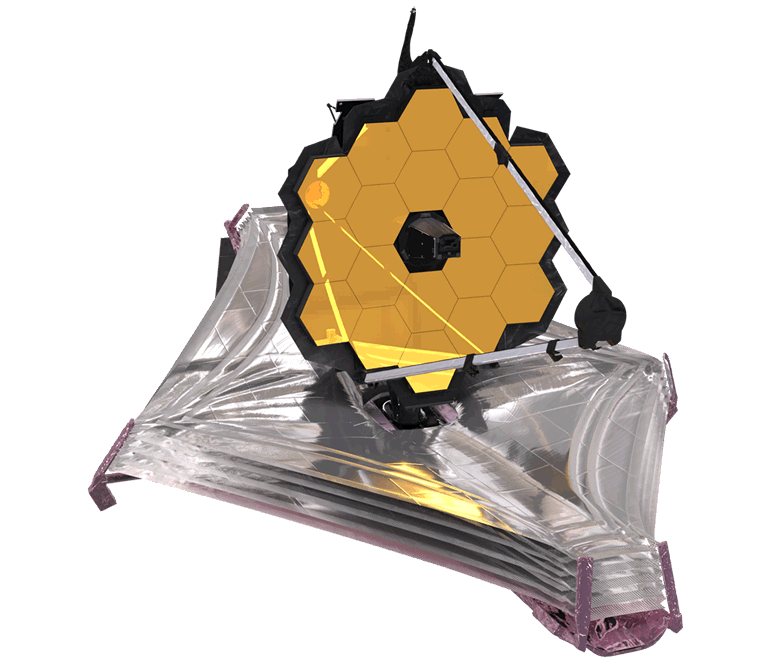
A galaxy named LAP1-B, reported to be about 13 billion years old, has been identified with the James Webb Space Telescope, and it may hold clues about the first stars that formed after the Big Bang. If the age estimate holds, the object would date from a period when the universe was still very young, a time that astronomers can study only indirectly.
The finding was described in a report published on a consumer website called Jeri4Homes, which characterized LAP1-B as a possible "cosmic fossil," a galaxy that could preserve the physical conditions of the early universe much as a fossil preserves traces of ancient life. Galaxies from this early era are rarely observed in such detail, which is why the reported discovery has drawn attention. The report also suggested that the galaxy could offer insight into when and how the first generations of stars came into being.
The account carries important limits. The report did not identify the original research paper, the authors, or the institution behind the work, and it did not come from a peer-reviewed journal or a space agency. The exact age of the galaxy and the claims about the first stars have not been independently verified against primary scientific literature. Until the underlying study is published and examined by other researchers, the details should be treated as preliminary.
Webb, launched in 2021, is designed to observe the most distant light in the cosmos, which is stretched into the infrared by the expansion of the universe. That capability has allowed astronomers to detect galaxies that formed within the first few hundred million years after the Big Bang. Any confirmed observation of a galaxy of this age would add to a growing body of evidence about how quickly the universe built its first structures.
Credit. Based on reporting for Custommapposter. Is this your work? Write to us.
12