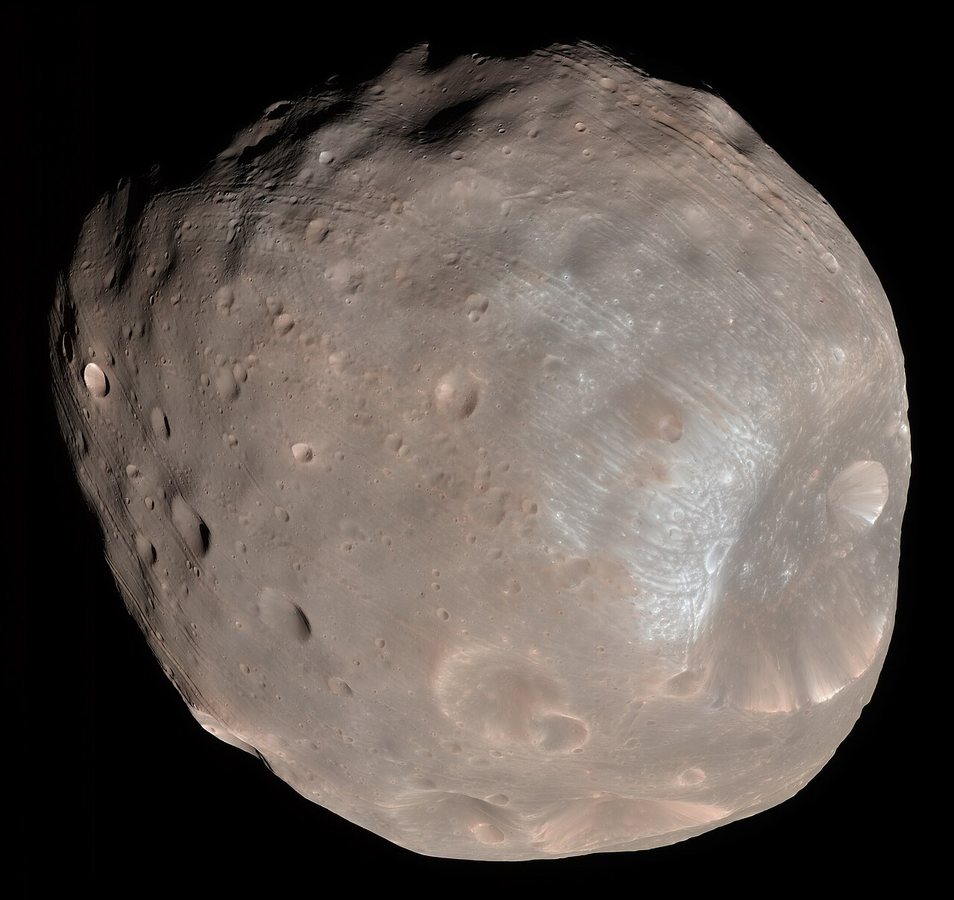
Japan is preparing to launch the world's first mission to bring back samples from Phobos, one of the two small, potato-shaped moons orbiting Mars. The Japanese space agency is leading the five-year effort, which scientists hope will reveal how Phobos and its smaller sibling Deimos formed and may even offer clues about the origins of life in the solar system.
The mission targets a body that has never been visited by a sample-return spacecraft. Phobos and Deimos are among the least understood objects in the inner solar system, and their origin remains an open question. Researchers have long debated whether the two moons are captured asteroids, remnants of a larger body that broke apart, or material thrown into orbit by a massive impact on Mars itself. Samples collected directly from Phobos could give scientists the physical evidence needed to distinguish between these competing explanations.
The five-year timeline reflects the complexity of the undertaking. The spacecraft must travel from Earth to Mars, enter orbit around the Red Planet, and then carry out a close approach to Phobos, a small and irregularly shaped target with very weak gravity. Collecting material from such a body is a delicate operation, and returning the samples to Earth adds further engineering demands. The mission is being described as one of the most ambitious planetary science efforts attempted by Japan, which has already built a reputation for successful sample-return missions to other small bodies in the solar system.
Beyond the question of the moons' formation, scientists see the samples as a potential window into the early history of the solar system. Material from Phobos may preserve records of conditions in the Martian neighborhood billions of years ago, including whether the moon contains any organic material or water-bearing minerals. Such findings would be relevant to broader questions about how life-supporting chemistry arises and whether the ingredients for life were distributed widely across the early solar system.
The mission also carries significance for the study of Mars itself. Because Phobos orbits close to the Red Planet, material from the moon could include debris ejected from the Martian surface by ancient impacts. If so, the samples would offer a indirect but valuable look at Martian material without the cost and difficulty of a full Mars sample-return campaign. That prospect has drawn interest from researchers who study the planet's climate history and its potential to have hosted life.
The announcement places Japan at the forefront of a small group of nations pursuing sample-return missions to deep space. The country's space agency has previously demonstrated the ability to reach distant asteroids, collect surface material, and bring it back to Earth for laboratory analysis. Those earlier successes have given Japanese scientists valuable experience in the navigation, sampling, and reentry technologies that the Phobos mission will require.
The mission is expected to take about five years from launch to the return of samples. If successful, it would be the first time material from a Martian moon has been delivered to Earth, giving laboratories worldwide a new class of extraterrestrial samples to study. Scientists involved in the effort say the results could reshape understanding of how small bodies form and evolve, and how the Martian system fits into the wider history of the solar system.
18