NASA's Phoenix Mars lander began its journey to the Red Planet on Aug. 4, 2007, lifting off from Cape Canaveral Air Force Station in Florida aboard a Delta II rocket. The spacecraft was bound for the Martian arctic, a polar frontier that no lander had ever reached, and its goal was to study the frozen soil and subsurface ice there for signs that the environment might once have been habitable.
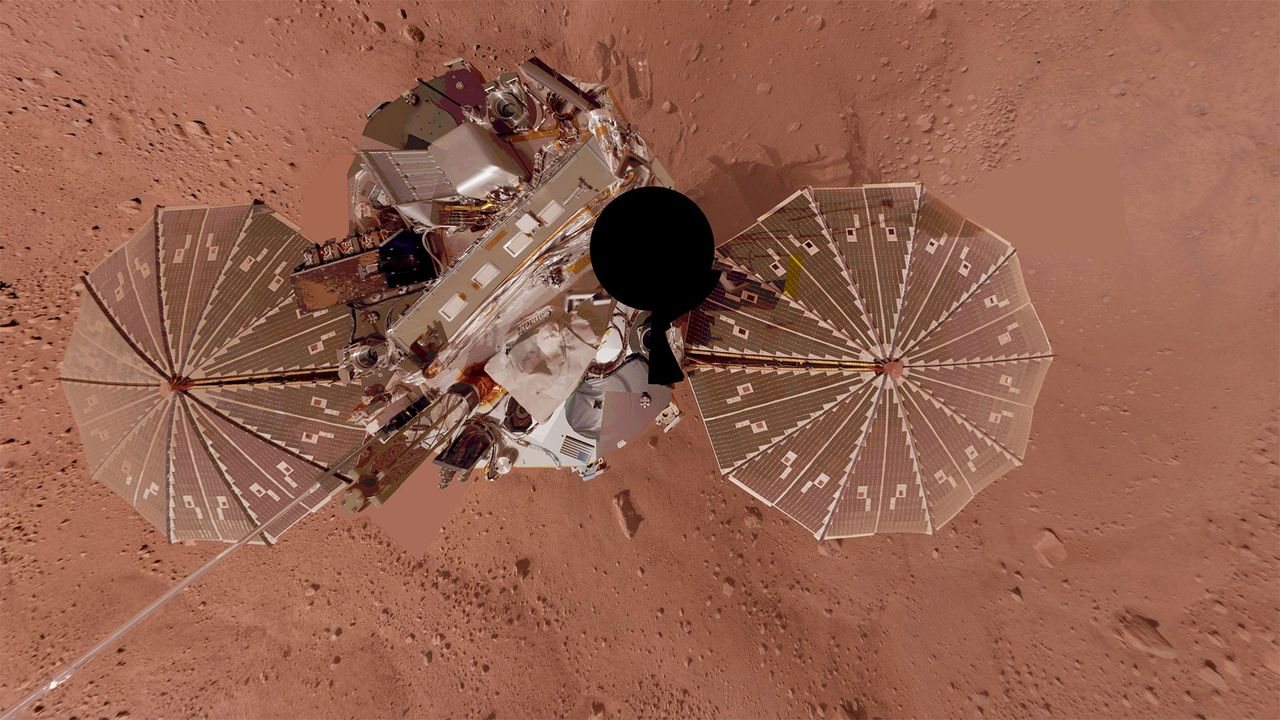
Phoenix was a stationary lander rather than a rover, a design that allowed it to carry a focused suite of instruments to a single carefully chosen site. Its main tool was a robotic arm built to dig into the permafrost and deliver samples to small onboard laboratories. These included a wet chemistry cell that could dissolve soil in water, an optical microscope, and an oven-like analyzer that heated samples and measured the gases released as the material changed.
The mission was managed by NASA's Jet Propulsion Laboratory and led by the University of Arizona; Lockheed Martin built the spacecraft. It was part of NASA's Discovery program, a line of lower-cost, focused missions intended to do bold planetary science on a tighter budget. The lander's name was meant to evoke the mythical phoenix, in part because the spacecraft was a revival of a previously canceled mission. The hardware was originally developed for the Mars Surveyor 2001 Lander, which was shelved in 2000 after NASA decided to restructure its Mars plans. Dusting off that design let Phoenix move from approval to launch relatively quickly.
Phoenix launched on the first scheduled attempt and, after a nine-month cruise, reached Mars on May 25, 2008. It touched down in Vastitas Borealis, a broad plain near the planet's north polar ice cap. The landing site had been chosen from orbit because radar and other measurements suggested that water ice lay beneath the surface. With that touchdown, Phoenix became the first spacecraft to land successfully in the high northern latitudes of Mars.
The mission's central discovery came almost immediately. When the robotic arm dug its first trenches, it uncovered a bright white layer under the reddish dust. Observing that the material faded over several days, scientists confirmed it was water ice that had been exposed to the thin Martian atmosphere and was turning directly into vapor. Later in the mission, the lander photographed small icy chunks in the trenches that also vanished, providing additional confirmation. Phoenix also recorded snowlike particles falling from clouds high in the Martian sky, a phenomenon never before measured on the planet.
Beyond the ice, Phoenix carried out the first wet chemistry experiment ever conducted on another planet. The results showed that the soil at the landing site was slightly alkaline and contained perchlorate salts, compounds that have since become central to discussions about Martian chemistry. The lander's thermal analyzer found water vapor and carbon dioxide released from heated soil samples, and the microscope revealed grains of mineral material, including carbonates. Together, the measurements painted a picture of a polar environment that was colder and drier than Earth's, but chemically more dynamic than expected.
The mission met its primary goals during its planned three-month lifetime and then kept working deeper into the Martian summer. As the season changed and sunlight on the solar panels began to fade, controllers on Earth saw a sharp drop in power. The last signal from Phoenix was received on Nov. 2, 2008, and NASA subsequently declared the mission complete. Even after contact was lost, scientists spent years analyzing the data Phoenix had transmitted.
The mission's legacy extended well beyond the arctic. Phoenix helped prove that water ice was abundant just below the surface in a broad portion of Mars, a fact that influenced the landing site choices and science planning of later missions. It also demonstrated that a medium-size Discovery-class lander could perform sophisticated chemistry on the surface of another world. Today, Phoenix is remembered as the first mission to touch and taste Mars's water in its polar region, and as one of the key steps in the ongoing effort to understand whether the Red Planet ever supported life.