NASA's Nancy Grace Roman Space Telescope, a next-generation observatory designed to unravel the mysteries of dark energy and discover thousands of exoplanets, is moving steadily toward its launch window, which opens in October 2026 and extends through May 2027. The mission, previously known as the Wide-Field Infrared Survey Telescope (WFIRST), represents a major leap in space-based astronomy, offering a field of view 100 times larger than that of the Hubble Space Telescope.
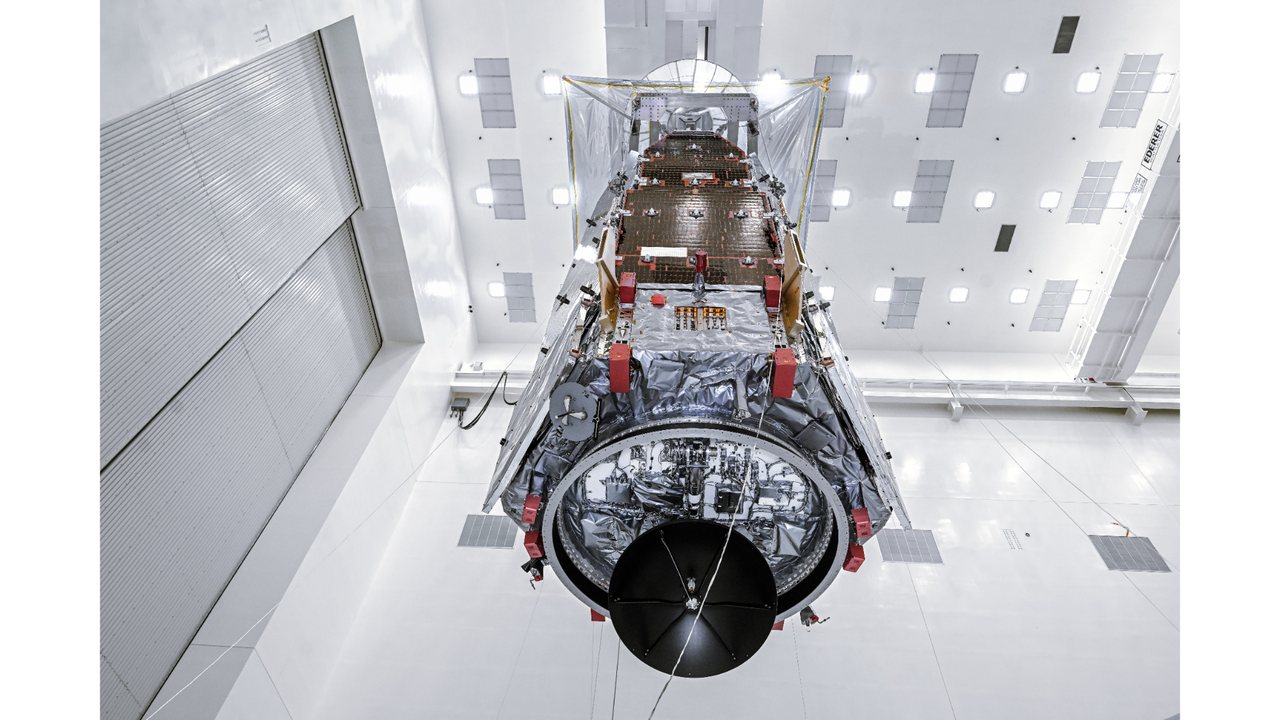
The Roman Space Telescope is currently undergoing final assembly and testing at NASA's Goddard Space Flight Center in Greenbelt, Maryland. Engineers have completed integration of the spacecraft's primary mirror, a 2.4-meter diameter reflector identical in size to Hubble's but significantly lighter. The mirror, along with the telescope's two scientific instruments — the Wide Field Instrument and the Coronagraph Instrument — will allow Roman to capture high-resolution infrared images across vast swaths of the sky.
One of the telescope's primary scientific goals is to investigate the nature of dark energy, the mysterious force driving the accelerated expansion of the universe. By mapping the distribution of galaxies and measuring cosmic distances with unprecedented precision, Roman will help astronomers understand whether dark energy is a constant force or one that changes over time. The mission is expected to survey billions of galaxies over its five-year primary mission, creating a three-dimensional cosmic map that will serve as a legacy dataset for decades.
In addition to cosmology, Roman will conduct a large-scale exoplanet census using microlensing — a technique that detects planets by measuring the gravitational bending of light from a background star when a foreground star with planets passes in front. This method is sensitive to planets that are difficult to detect with other techniques, including small, rocky worlds in the habitable zones of their stars. Scientists anticipate that Roman will discover thousands of new exoplanets, dramatically expanding the known population of worlds beyond our solar system.
The Coronagraph Instrument, a technology demonstration, will directly image exoplanets by blocking the blinding light of their host stars. This instrument uses advanced starlight suppression techniques, including deformable mirrors and masks, to achieve contrast ratios millions of times greater than current capabilities. If successful, the coronagraph will pave the way for future missions aimed at characterizing the atmospheres of Earth-like planets for signs of life.
Roman's launch will be carried out by a SpaceX Falcon Heavy rocket from Launch Complex 39A at NASA's Kennedy Space Center in Florida. The telescope will operate from a halo orbit around the Sun-Earth Lagrange Point 2 (L2), a gravitationally stable location about 1.5 million kilometers from Earth. This orbit provides a stable thermal environment and an unobstructed view of the cosmos, similar to the orbit used by the James Webb Space Telescope.
The mission is named after Nancy Grace Roman, NASA's first chief astronomer and a pioneering figure who played a key role in the development of the Hubble Space Telescope. Often called the «mother of Hubble,» Roman championed space-based astronomy at a time when the concept was still controversial. The telescope named in her honor continues her legacy of expanding humanity's understanding of the universe.
Roman's data will be publicly available immediately after processing, following NASA's policy of open science. The mission's wide-field surveys are expected to generate massive datasets that will be analyzed by astronomers worldwide, enabling discoveries ranging from the structure of the Milky Way to the most distant quasars. The telescope's ability to observe large areas of the sky quickly will also allow it to identify transient phenomena such as supernovae and gamma-ray bursts in real time.
As the launch date approaches, the Roman team is conducting a series of environmental tests to ensure the spacecraft can withstand the rigors of launch and the harsh conditions of space. These tests include vibration, acoustic, thermal vacuum, and electromagnetic interference assessments. The telescope's sunshield, which will keep the instruments cool, has also been tested for deployment. With each milestone, the mission moves closer to its goal of transforming our view of the cosmos.
135