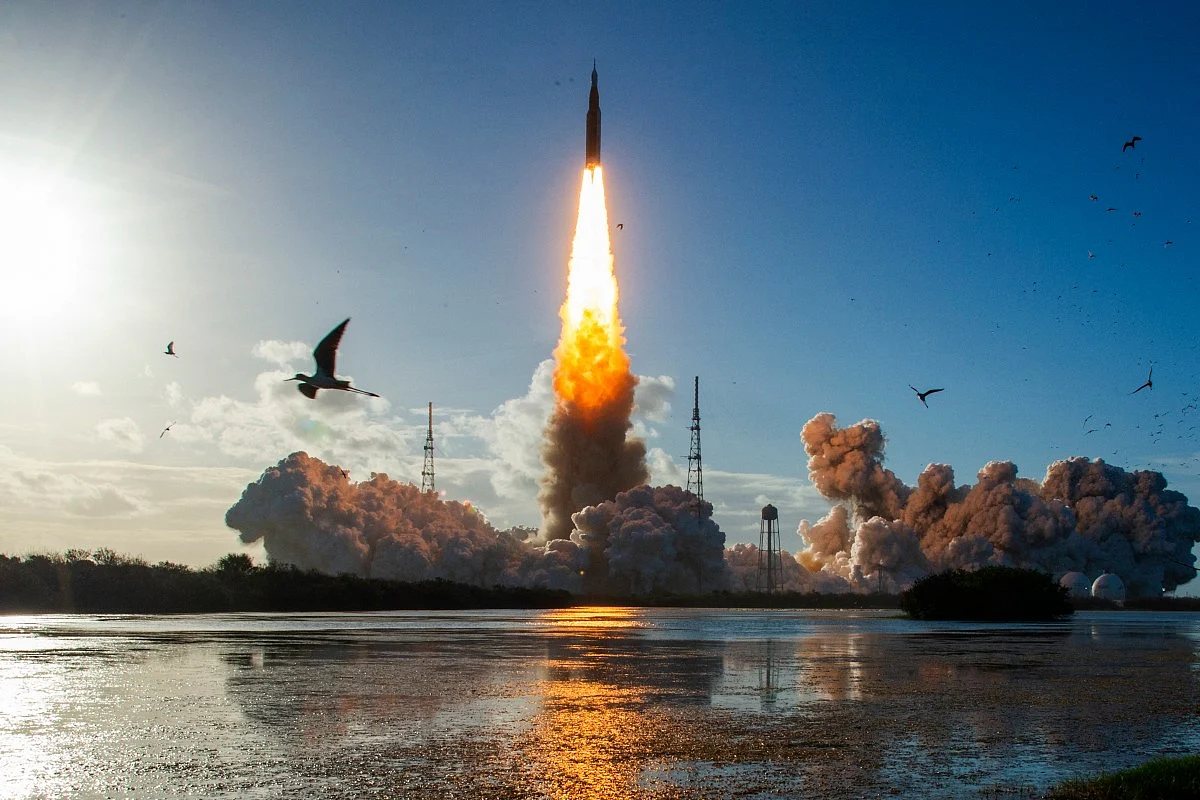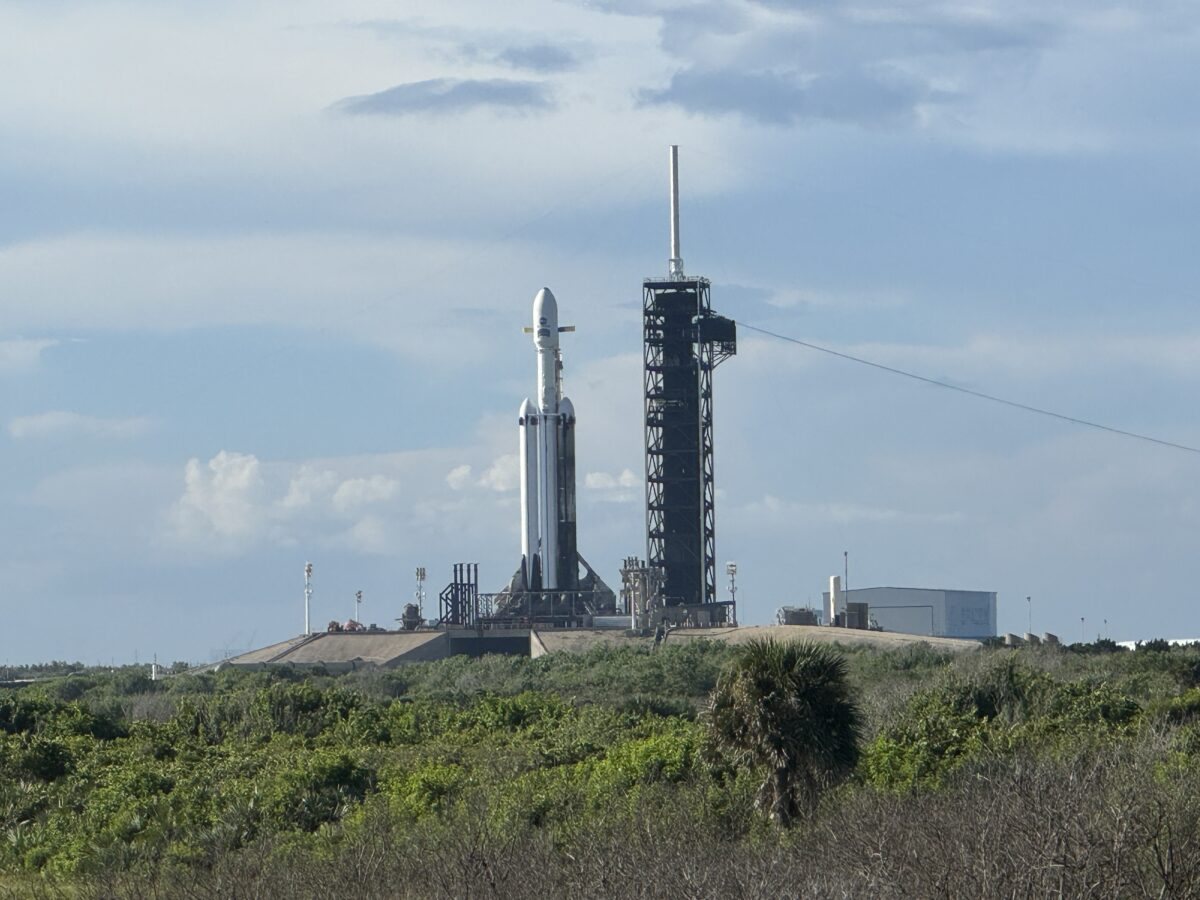
The Nancy Grace Roman Space Telescope launched successfully from Kennedy Space Center in Florida, opening a new chapter in the effort to understand dark energy and the accelerating expansion of the universe. The observatory, developed over more than a decade, carries a field of view 100 times larger than that of the Hubble Space Telescope, a capability expected to deliver an unprecedented volume of observational data.
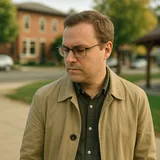
Rebekah Hounsell, an associate research scientist at the University of Maryland, Baltimore County's Center for Space Sciences and Technology, has worked on the mission since 2015, when she began at the University of Illinois. She continued the work at multiple institutions and has been involved at NASA Goddard Space Flight Center since 2020. Hounsell is co-principal investigator and project manager of the Roman Supernova Cosmology Project Infrastructure Team, a group of more than 60 supernova scientists from around the world.
The team's task is to determine the most effective way for the telescope to collect data on type Ia supernovae and to build the tools that will convert raw observations into usable cosmology products. Hounsell has spent 11 years optimizing the survey design for the High Latitude Time Domain Survey, which aims to capture the best sample of type Ia supernovae ever assembled.
Type Ia supernovae occur when a carbon-oxygen white dwarf, the dense remnant core of a star like the Sun, exceeds roughly 1.4 solar masses and destroys itself in a thermonuclear explosion. That threshold can be reached when a white dwarf pulls material from a companion star or when two white dwarfs merge. Because the explosion is triggered at a consistent mass, the light released is remarkably similar from one event to the next, earning them the name «standardizable candles.» Astronomers use their observed brightness, along with corrections for color and light-curve shape, to calculate distances across the cosmos.
In the late 1990s, samples of these objects revealed that distant supernovae were fainter than expected, evidence that the expansion of the universe is accelerating. That finding led to the concept of dark energy. Current leading studies rely on roughly 1,500 to 2,000 type Ia supernovae. Dark energy was long assumed to be constant, but recent results suggest it may be evolving, and far more data are needed to settle the question.
Roman is expected to find tens of thousands of type Ia supernovae, including many at greater distances and in larger numbers than previously identified. With that larger sample, researchers hope to refine their understanding of dark energy or uncover entirely new physics.
Hounsell described the launch as both amazing and anxiety-inducing. «This has been my career for over a decade, and I'm expecting it to be my career for a decade more,» she said. On launch day, she sat in the viewing area with friends and colleagues, trying to stay calm. «Then it launched, and seeing it go up was so fast, precise, and beautiful,» she recalled. «Having something you've poured so much time into actually going up, and knowing it's doing the work we planned, feels really special.»
The telescope is now undergoing commissioning, a phase in which teams verify that all systems are functioning as intended. The first images are expected to be released to the public early next year, and all data will be made public immediately. Hounsell said her main focus remains running the infrastructure team to produce high-quality products that enable the wider community to conduct research in the years ahead, while also using those products for her own science. She recently received a $1.2 million grant for work using data from the telescope.
Looking ahead, Hounsell said she is most excited about what the broader community will do with the data. «The data is public as soon as it's ready—for researchers, students, citizen scientists, anyone,» she said. She noted the possibility that a young student somewhere might look at the images, spot something unusual, reach out, and end up making a real discovery. «This mission is for everybody,» she said. Plans for citizen-science projects are already in development, building on earlier survey efforts.
11