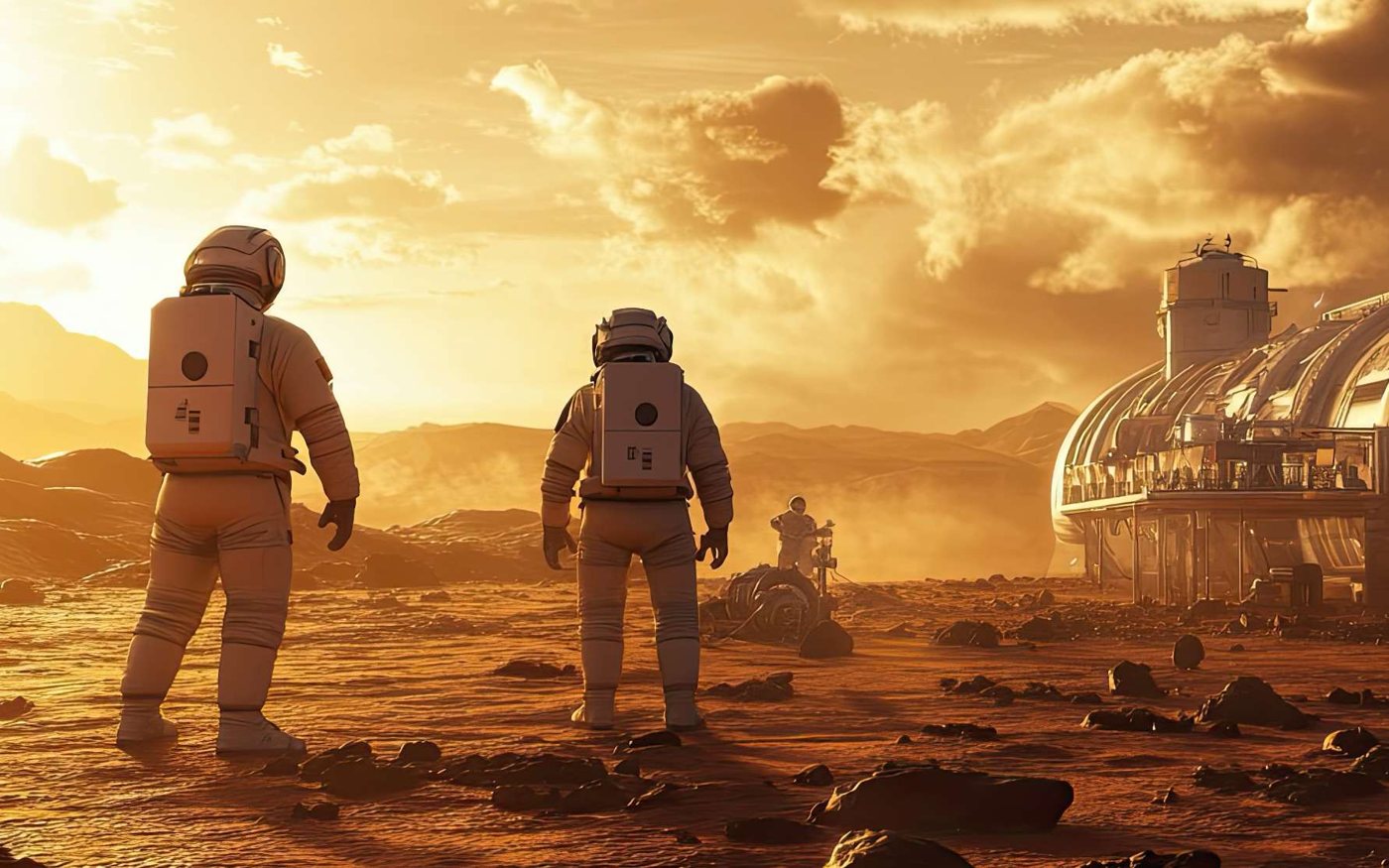
NASA is recruiting volunteers for a unique mission that will confine participants for an entire year inside a simulated space base on Earth, designed to replicate the conditions of a journey to Mars. The goal is to prepare for future crewed expeditions to the Moon and Mars by testing human resilience, teamwork, and psychological endurance under extreme isolation.
The simulation, part of NASA's Crew Health and Performance Exploration Analog (CHAPEA) program, will take place at the Johnson Space Center in Houston, Texas. Volunteers will live and work in a 1,700-square-foot 3D-printed habitat called Mars Dune Alpha, which is designed to mimic the cramped and resource-limited environment of a Martian outpost. Participants will face challenges such as simulated equipment failures, communication delays with Earth, and limited supplies of food and water, all while performing tasks like scientific research, habitat maintenance, and robotic operations.
NASA has already conducted one such mission, which began in June 2023 and is ongoing. The agency is now seeking applicants for a second mission, scheduled to start in spring 2025. To qualify, candidates must be healthy, non-smoking U.S. citizens or permanent residents aged 30 to 55, with a master's degree in a STEM field (science, technology, engineering, or mathematics) and at least two years of professional experience, or a minimum of 1,000 hours of piloting experience. Applicants must also pass a rigorous physical and psychological screening process.
The selection process is highly competitive, reflecting the demanding nature of the mission. Volunteers will be paid for their participation, though NASA has not disclosed the exact compensation. The agency emphasizes that the mission is not a vacation but a serious scientific endeavor aimed at understanding how humans cope with the stresses of long-duration spaceflight, including isolation, confinement, and separation from family and friends.
This recruitment effort comes as NASA advances its Artemis program, which aims to return humans to the Moon and eventually establish a sustainable presence there as a stepping stone for Mars exploration. The simulated missions provide critical data on crew dynamics, resource management, and psychological well-being that cannot be obtained through computer models alone. Insights from CHAPEA will help NASA design better habitats, schedules, and support systems for real deep-space missions.
Participants will have limited contact with the outside world, with communication delays of up to 22 minutes each way, simulating the lag that astronauts would experience on Mars. They will also be required to wear sensors and complete regular surveys to monitor their physical and mental health. The habitat includes private quarters, a kitchen, workstations, and a medical station, but no windows to the outside, reinforcing the sense of isolation.
NASA's call for volunteers has generated widespread interest, with thousands of applications expected. The agency plans to select four crew members for each mission, ensuring a diverse mix of skills and backgrounds. The first CHAPEA mission, which began last year, has already provided valuable lessons on how to maintain morale and productivity in a confined environment over an extended period.
For those who dream of space exploration but cannot travel beyond Earth, this simulation offers a rare opportunity to contribute directly to humanity's journey to the stars. As NASA continues to push the boundaries of human exploration, the data gathered from these analog missions will be indispensable in overcoming the challenges of living and working on another world.
129